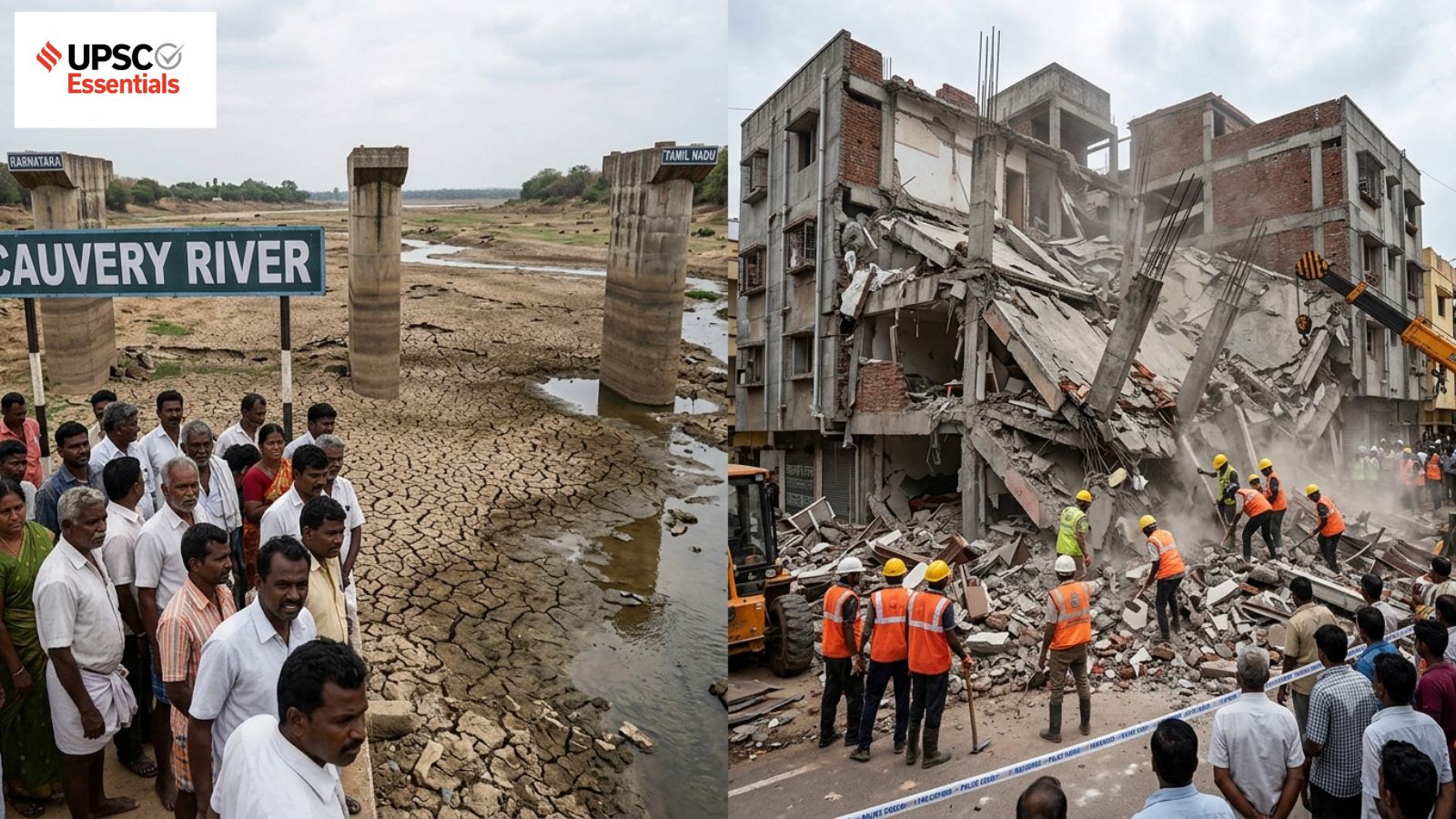
A comprehensive guide for UPSC CSE 2027 aspirants focusing on the complexities of GS-2 topics: Inter-state river water sharing and the crisis of urban building safety implementation.
- The lack of a 'distress-sharing' formula in the 2018 SC framework is a primary hurdle in the Cauvery dispute.
- Urban governance in India faces a systemic gap between statutory safety regulations and ground-level enforcement.
- Cooperative federalism requires moving beyond judicial mandates toward collaborative water management.
Inter-state river water disputes serve as a critical litmus test for India's federal structure. Despite the existence of judicial and institutional mechanisms, the equitable sharing of water remains an elusive goal. The ongoing friction between states highlights the limitations of legal settlements when faced with hydrological uncertainties and political pressures.
The Cauvery Conflict: A Case Study in Institutional Struggle
The Cauvery dispute exemplifies the failure of institutional mechanisms during periods of water scarcity. The primary flaw in the 2018 Supreme Court framework is the absence of a specific formula for water distribution during drought years. While sharing is manageable during normal monsoons, a deficit year triggers a clash between Karnataka's drinking water needs and Tamil Nadu's agricultural requirements in the delta region.
The establishment of the Cauvery Water Management Authority (CWMA) and the Cauvery Water Regulation Committee (CWRC) was intended to streamline this process. However, their directives often meet with political resistance and legal appeals, as water has become a potent electoral tool in both states. The proposed Mekedatu reservoir further complicates the dynamic, pitting upstream storage needs against downstream supply security.
Why This Matters
BozokMedia analysis shows that the intersection of climate change and rapid urbanization—particularly the exploding water demand of cities like Bengaluru—makes traditional allocation-based methods obsolete. Without a dynamic, distress-sharing compact, judicial interventions will only provide temporary respite rather than permanent solutions.
"Court adjudication can resolve allocation issues, but long-term water governance necessitates collaboration over shortage."
Urban Governance and the Building Safety Gap
Parallel to resource disputes is the crisis of urban governance. India's rapid urbanization has outpaced its regulatory capacity, leading to a dangerous gap between building safety laws and their implementation. Despite the 74th Constitutional Amendment, municipal bodies often lack the autonomy and technical expertise to enforce safety norms.
The proliferation of unauthorized constructions and the disregard for fire and structural safety codes are symptoms of a deeper institutional decay. This is often exacerbated by a lack of accountability within local bodies and a failure to integrate modern urban planning with regulatory enforcement.
Frequently Asked Questions
Q1: Why is the Mekedatu project controversial?
Answer: It is a proposed dam by Karnataka for drinking water, which Tamil Nadu opposes fearing it will restrict the flow of water to its delta regions.
Q2: What is the main cause of building safety failures in Indian cities?
Answer: The primary causes are inadequate municipal oversight, corruption in the approval process, and a lack of strict penalties for regulatory violations.