Colorado River experts suggest gradually moving water from Lake Powell to Lake Mead as drought pushes both reservoirs to critically low levels. The plan aims to provide a long‑term water‑security solution for millions in the western United States.
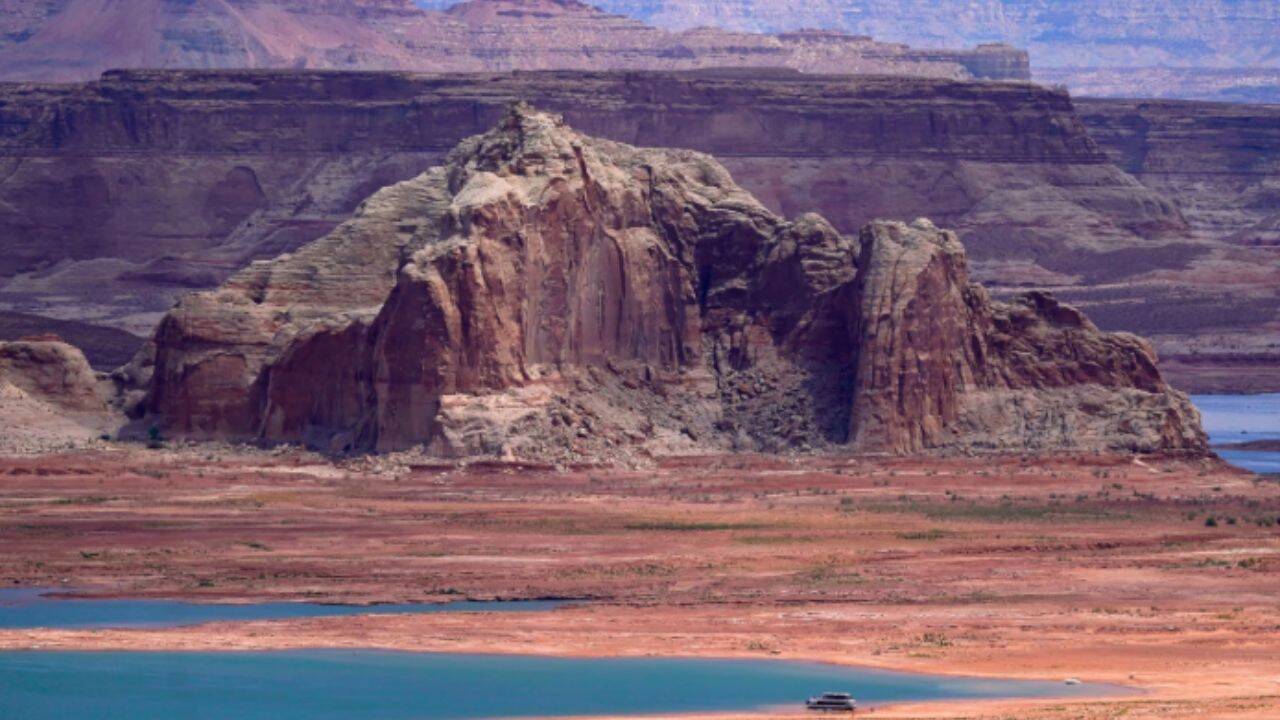
Lake Powell and Lake Mead are both experiencing historically low water levels, threatening the water supply of roughly 40 million people across the western U.S. Scientists have put forward a bold strategy: slowly drain Lake Powell and store the water in Lake Mead.
Background and Why Powell Is Problematic
Glen Canyon Dam was constructed in the 1960s under the assumption that the Colorado River would deliver far more flow than it does today. Since 2000, river flows have fallen about 20 percent, leaving the dam with far less water than engineers anticipated. Moreover, the dam lacks a low‑level outlet, meaning roughly 6 million acre‑feet of water trapped below a certain elevation cannot be released downstream. Consequently, although the reservoir is reported to be about 23 percent full, a large portion of that volume is effectively unusable.
The Proposed Transfer Plan
The scheme calls for tunnels built around the base of Glen Canyon Dam to convey water from Powell to Mead. Once the water moves, the Colorado River would once again flow freely through Glen Canyon, while the dam would remain as an emergency backup reservoir for wetter years. Hydropower generation at the dam would cease, a development already looming as falling lake levels threaten its electricity‑producing capacity.
Government Stance and Long‑Term Outlook
The U.S. Bureau of Reclamation notes that Congress has required joint management of Powell and Mead under the 1968 Colorado River Basin Project Act. A bureau spokesperson told Newsweek that Powell remains vital for water supply, power generation, and protecting downstream infrastructure, and that the agency is working with tribes, partners, and stakeholders to craft new operating guidelines based on the best available science.
Implications and Challenges
If executed, the transfer could raise Mead’s usable capacity by up to 30 percent, offering a larger buffer for agriculture, municipal use, and power generation. However, exposing Glen Canyon could spark environmental and tourism concerns, and the loss of hydropower at Glen Canyon Dam would need to be offset elsewhere. Experts warn that short‑term emergency measures are insufficient; a strategic re‑thinking such as this could lay the groundwork for sustainable river basin management for decades to come.