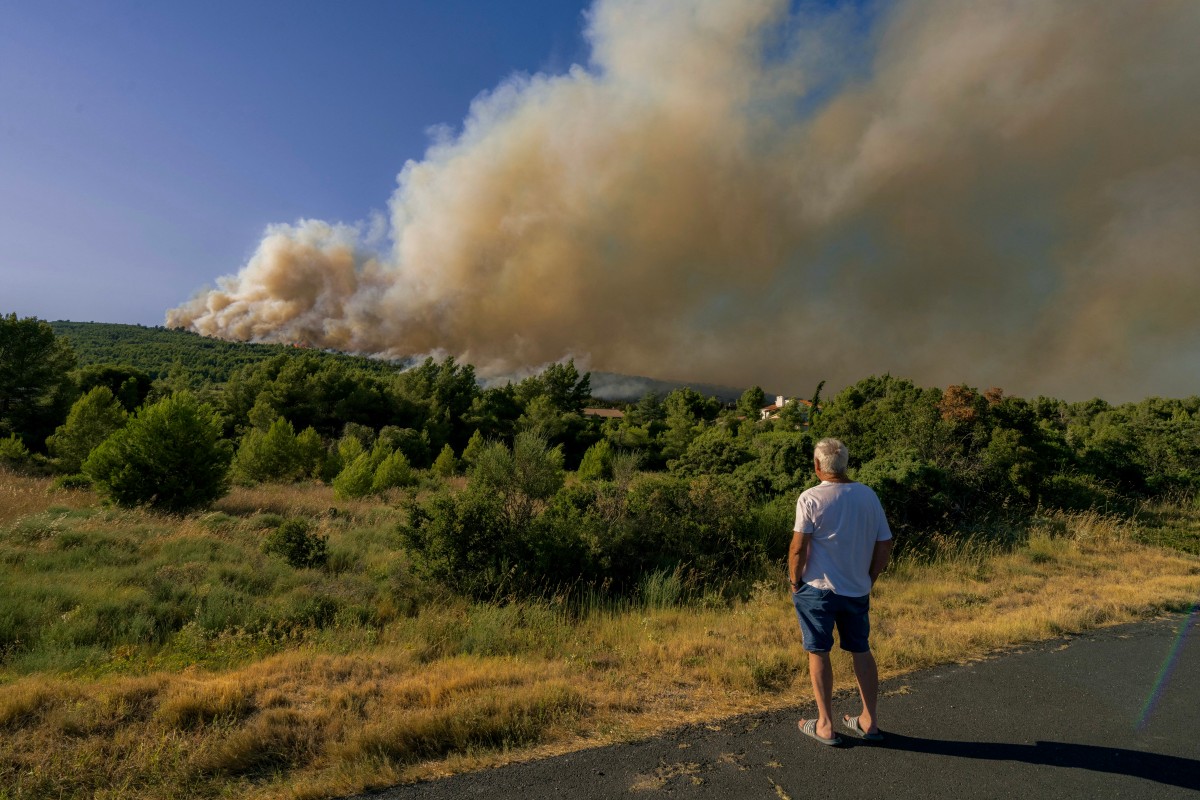
A rapidly spreading wildfire in Almería, driven by scorching temperatures and strong winds, claimed 11 lives and injured several others. The disaster underscores the growing heatwave threats across southern Europe and highlights urgent challenges in evacuation and climate resilience.
Key Takeaways
- 11 fatalities reported in Almería wildfire.
- Record‑high temperatures and gusty winds accelerated the blaze.
- The incident highlights Europe’s broader climate‑change and emergency‑response challenges.
A fast‑moving wildfire erupted overnight in Almería, southern Spain, leaving 11 people dead and making it one of the deadliest fires in the nation’s modern record. Temperatures soaring above 40 °C combined with strong gusts turned a small spark into a ferocious inferno that swept through semi‑arid scrubland and forested slopes.
Incident Overview
On the night of July 9‑10, 2026, a fire broke out in a hamlet near the Sierra de Los Filabres mountains. Residents reported that a fallen power line may have ignited the dry vegetation, though the exact cause remains under investigation. Spain’s emergency services deployed roughly 150 firefighters and 220 soldiers from the military emergency unit, but the blaze’s speed overwhelmed initial containment efforts.
Casualties and Rescue Operations
Many victims were found inside burnt‑out vehicles, while others attempted to flee on foot through a dry riverbed that turned into a “death trap,” according to Antonio Sanz, head of Andalusia’s emergency services. Four of the deceased were identified as British nationals, with several other foreign citizens among the dead. Eight people suffered injuries, and 19 remain unaccounted for as authorities continue search‑and‑rescue missions.
Environmental and Climate Context
Spain has endured a series of intense heatwaves in recent years, frequently recording temperatures above 40 °C. The European Union’s Copernicus Climate Change Service warns that Europe is warming twice as fast as the global average, making the continent the world’s fastest‑warming region since the 1980s. Such conditions enable small ignitions to balloon into large‑scale wildfires, as witnessed in Almería.
Historical Comparison and Future Outlook
According to the European Forest Fire Information System, Spain’s 2025 fire season burned more than 393,000 hectares—an area twice the size of London—and resulted in four deaths. In neighboring Portugal, a 2017 wildfire claimed 66 lives, illustrating the lethal potential of rapid‑moving fires. Experts warn that climate‑driven heat and dryness will increase both the frequency and intensity of wildfires across Europe, demanding stronger mitigation, forest‑management, and evacuation protocols.