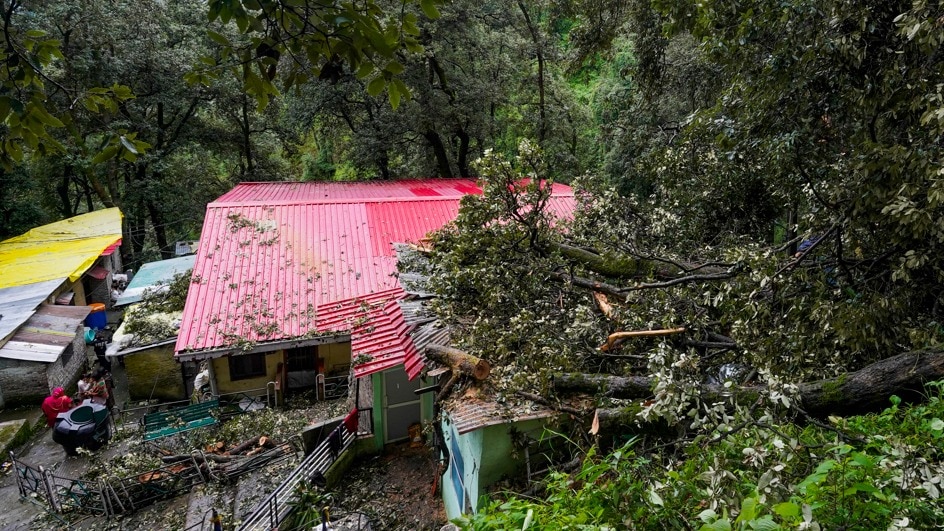
The National Green Tribunal has ordered the UP Pollution Control Board to recover over ₹2.65 crore from Banaras Hindu University for the unauthorized cutting of trees on its campus.
In a significant ruling aimed at upholding environmental sanctity, the National Green Tribunal (NGT) has directed the Uttar Pradesh Pollution Control Board (UPPCB) to recover an environmental compensation amounting to ₹2,65,06,877.08 from Banaras Hindu University (BHU). The penalty follows the illegal felling of 33 trees within the university's sprawling 1,300-acre campus in Varanasi.
Legal Proceedings and Findings
The legal battle began when advocate Saurabh Tiwari approached the tribunal, alleging widespread illegal deforestation within the campus. To verify these claims, the NGT appointed a joint committee for a detailed inspection. The committee's findings were damning, confirming that 33 trees—including seven high-value sandalwood trees and 26 others of various species—had been cut down without the requisite permissions or legal clearances.
The Struggle for Compliance
The tribunal had initially issued orders in August 2025, mandating the UPPCB to assess and recover the compensation within three months. However, the board failed to adhere to this timeline. Upon the filing of an execution application by the petitioner, the UPPCB cited conflicting orders from the Lucknow Bench of the Allahabad High Court and the Supreme Court as reasons for the delay. Despite these justifications, the NGT bench, led by Chairperson Justice Prakash Shrivastava and expert member Afroz Ahmad, emphasized the urgency of environmental restoration and granted a final three-month extension to complete the recovery process.
Compensatory Afforestation vs. Legal Penalty
In a bid to mitigate the damage, BHU submitted a report via the Divisional Forest Officer (DFO) stating that they had undertaken compensatory afforestation. The report claims that 978 trees were planted in 2025, with 859 saplings successfully surviving. While the NGT acknowledged these efforts toward reforestation, it maintained that the monetary penalty for the illegal act remains non-negotiable. This decision reinforces the 'Polluter Pays Principle', ensuring that environmental violations are met with strict financial deterrents regardless of the entity's status.