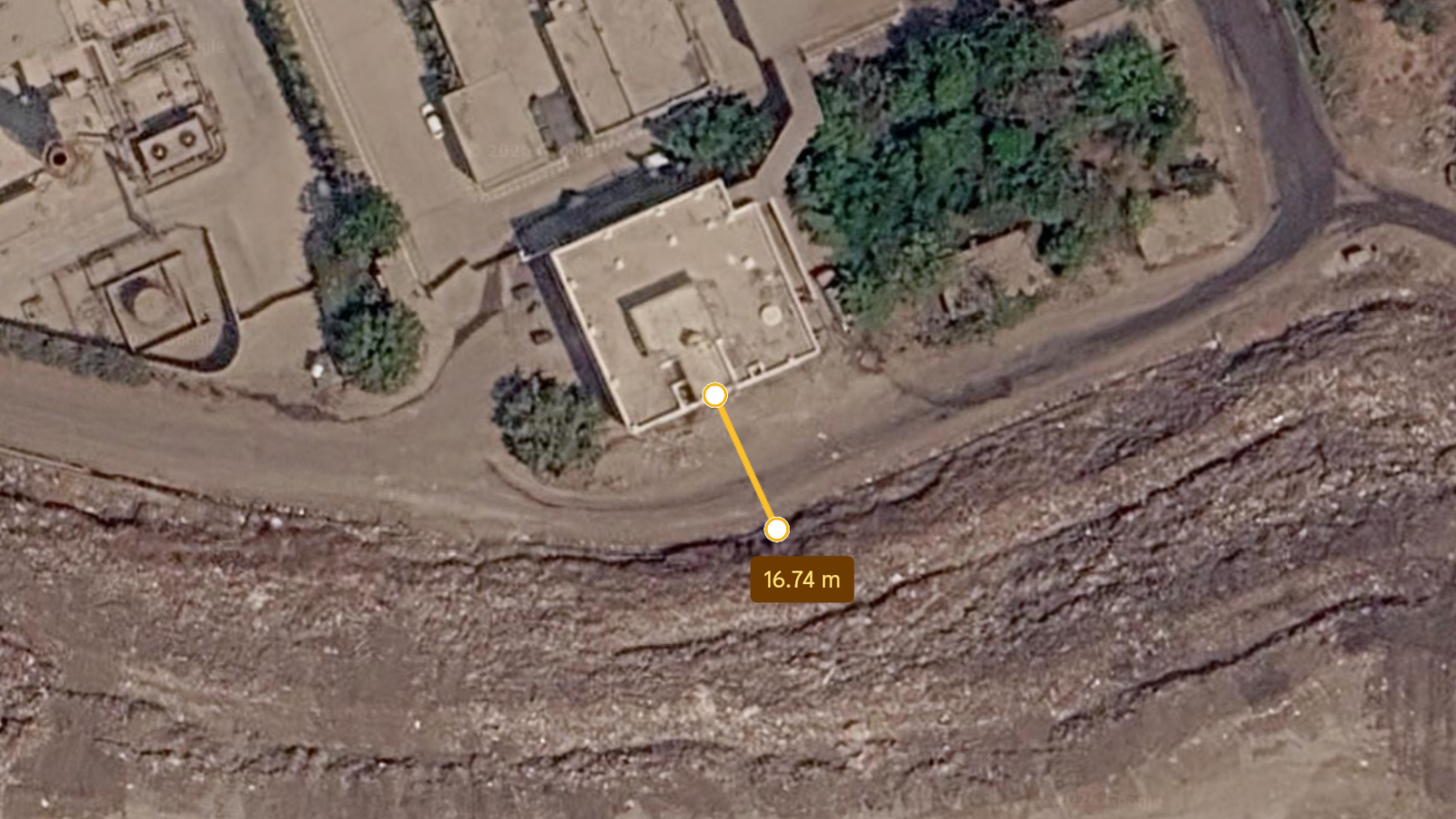
Google Earth satellite imagery shows the distance between the waste mound and the waste‑to‑energy plant office in Pune was just 16‑17 metres, not the 30 metres claimed by municipal officials. The revelation challenges earlier safety assurances and raises questions about urban waste‑management standards.
मुख्य बिंदु (Key Takeaways)
- Satellite data confirms the office was only 16‑17 m from the garbage mound, far less than the claimed 30 m.
- PCMC’s earlier safety assertions have lost credibility.
- Future waste‑to‑energy projects will need stricter siting and monitoring standards.
On July 8, a massive garbage mound at the Moshi landfill in Pune collapsed after relentless monsoon rains, crushing the three‑year‑old waste‑to‑energy plant’s office building. Initial rescue efforts saved nine workers, one was declared dead the next morning, and eight remained trapped as operations continued for more than 55 hours.
What Satellite Images Revealed
Using Google Earth’s distance‑measurement tool on imagery captured in March 2026, analysts calculated the horizontal gap between the office roof and the point where the vertical face of the garbage mound begins to be 16.76 metres. This is less than one‑half of the 30‑metre clearance PCMC officials had publicly asserted.
Official Claims vs. Measured Reality
PCMC city engineer Sanjay Kulkarni had told reporters that the building complied with all prescribed norms, citing a 30‑metre buffer as proof of adequate safety. The satellite evidence now directly contradicts that statement, putting the municipal corporation’s transparency and accountability under intense scrutiny.
Rescue Operations and Ongoing Risks
The National Disaster Response Force (NDRF), Indian Army, Pimpri‑Chinchwad Fire Department, PMRDA fire brigade and local police coordinated a massive rescue effort. All 18 workers rescued or still trapped were employees of the waste‑processing facility. The partially damaged structure remains unstable, threatening a total collapse that could hamper further rescue attempts.
Environmental and Regulatory Implications
This incident exposes glaring gaps in the regulatory framework governing waste‑to‑energy sites. Proximity to unstable waste heaps, monsoon‑induced landslide risk, and climate‑driven extreme weather events demand stricter siting distances and continuous monitoring. Experts argue that municipal bodies must overhaul approval processes, enforce robust Environmental Impact Assessments (EIAs), and mandate independent audits.
In the wake of the disaster, PCMC will likely face pressure to revise its waste‑management policies, improve data‑driven decision‑making, and ensure that future projects prioritize public safety over rapid implementation.