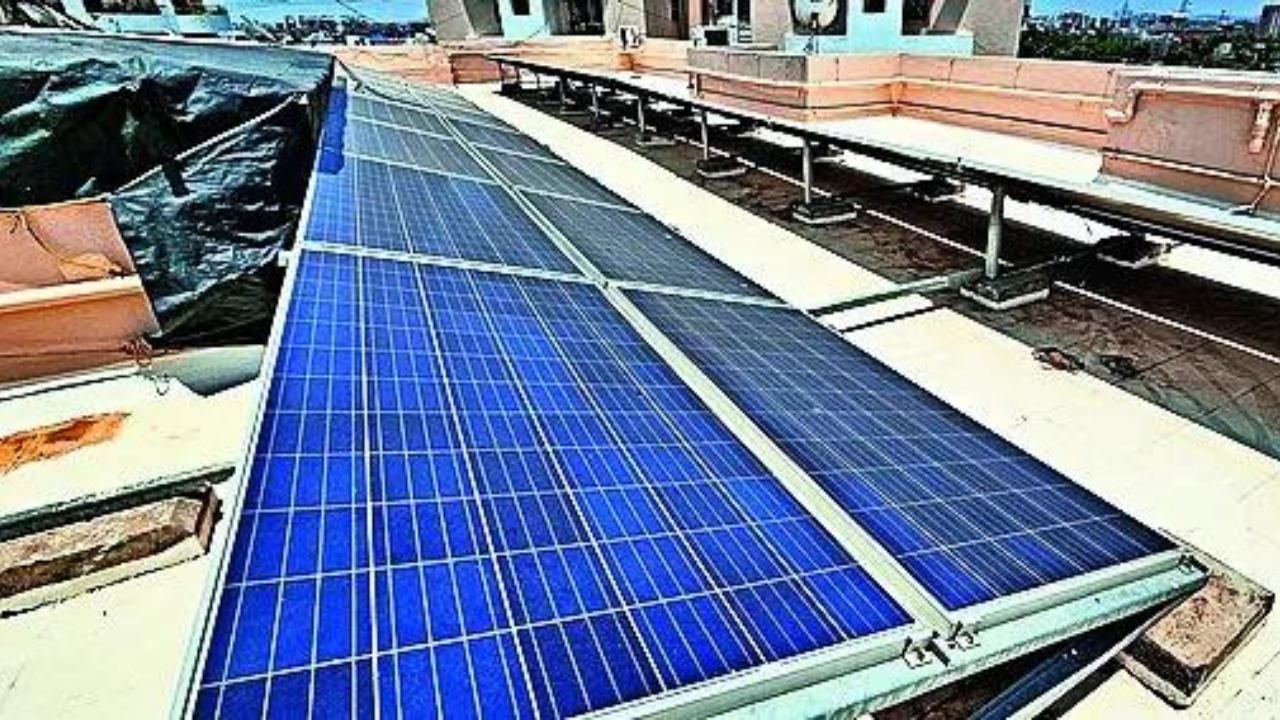
Tier‑II and tier‑III districts across India are leading the rooftop solar wave, leaving major metros behind. The Pradhan Mantri Surya Ghar Muft Bijli Yojana has installed 36.3 lakh systems, benefitting over 44 lakh households.
मुख्य बिंदु (Key Takeaways)
- Tier‑II/III cities show higher rooftop solar adoption than metros
- PM Surya Ghar scheme installed 36.3 lakh units, serving 44 lakh households
- Focus now on group housing societies and low‑income aggregation models
India’s energy transition is being driven by a surprising set of smaller urban centres. Cities such as Lucknow, Nagpur, Surat, Varanasi and Ernakulam have vaulted into the top‑50 districts for rooftop solar installations, while traditional metros like Delhi, Mumbai, Bengaluru, Chennai and Kolkata fail to make the top‑100 list. The catalyst behind this shift is the Pradhan Mantri Surya Ghar Muft Bijli Yojana, launched in February 2024 and slated to run through March 2027.
Key Features of the Scheme
The central government has earmarked ₹75,021 crore for the programme, releasing more than ₹25,000 crore as direct subsidies. For rooftop systems up to 3 kW, households receive a subsidy of ₹78,000, supplemented by state‑level incentives in many regions. To date, 36.3 lakh rooftop solar units have been commissioned, delivering free electricity to 44.1 lakh homes.
Geographic and Socio‑Economic Patterns
States like Gujarat, Maharashtra, Uttar Pradesh, Rajasthan, Kerala and Assam dominate the adoption curve. Their success is attributed to district‑level outreach teams, “discom‑level” awareness drives, and robust state‑level incentives. Over 60 % of installations fall in the 3‑4 kW bracket, reflecting the prevalence of modest‑size residential rooftops.
Urban Housing Societies and Low‑Income Focus
While independent houses have been early adopters, the government is now steering the scheme toward group housing societies. A single solar array in a society can power multiple units and common amenities, dramatically expanding the urban impact. Simultaneously, the Utility‑Led Aggregation (ULA) model is being rolled out across Andhra Pradesh, Odisha, Telangana, Bihar, Kerala, J&K, Tripura, Rajasthan, Chhattisgarh, Karnataka, Maharashtra and Delhi. Designed for low‑income consumers who cannot afford individual installations, the ULA aims to reach 30 lakh households.
Future Outlook and Potential Impact
If the current momentum persists, India will be well‑positioned to meet its 2030 renewable‑energy targets. Rooftop solar not only slashes household electricity bills but also feeds surplus power back into the grid, enhancing overall system stability. Analysts warn that sustained political will, state‑level execution, and private‑sector participation are essential to keep the growth curve steep.