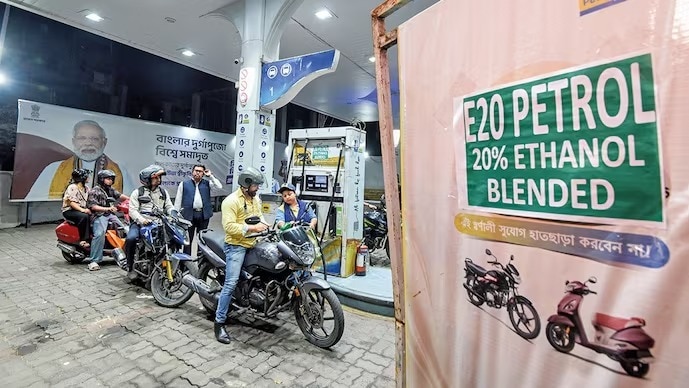
Research at IIT Kanpur shows that 20% ethanol‑blended E20 fuel leads to at most a 5% drop in mileage, but causes no engine wear or corrosion. The findings debunk viral social‑media claims and provide scientific backing for the nationwide rollout.
मुख्य बिंदु (Key Takeaways)
- E20 fuel results in less than 5% mileage reduction
- No evidence of engine corrosion, damage or technical issues
- Driving habits, road conditions and maintenance influence mileage more than fuel blend
India’s Ministry of Petroleum recently labelled 20% ethanol‑blended petrol (E20) as a “cleaner, higher‑quality and more efficient” fuel. The announcement sparked a wave of social‑media rumors suggesting that E20 would slash vehicle mileage and harm engines. In response, researchers from the Indian Institute of Technology (IIT) Kanpur’s Engine Research Laboratory conducted a series of rigorous tests that effectively put the rumors to rest.
Testing Methodology and Core Findings
Dhruv Raj Karana, Project Scientist at IIT Kanpur’s Mechanical Engineering Department, explained that the institute’s controlled experiments recorded a mileage decline of under 5% when using E20. He emphasized that this marginal dip could be attributed to variables other than fuel, such as driver behavior, road quality, and vehicle upkeep. Crucially, the extensive testing revealed no signs of engine corrosion, wear, or any other technical malfunction linked to the ethanol blend.
Historical Context and Policy Rationale
India introduced ethanol‑blended fuels in the early 2000s, initially rolling out E10 (10% ethanol) to curb carbon emissions and reduce dependence on imported crude oil. Over the years, the government has steadily increased the blend percentage, with E20 representing the latest phase of this strategy. The move aims to boost domestic ethanol production—derived largely from sugarcane and other agricultural residues—while delivering a fuel that is both environmentally friendlier and economically viable.
Practical Implications for Consumers
Karana urged motorists to follow the vehicle manufacturer’s handbook and the Ministry’s guidelines rather than relying on unverified online posts. He also highlighted that IIT Kanpur’s team, led by Professor Avinash Kumar Agarwal, has successfully tested E85 (85% ethanol) fuels, albeit those blends require specially engineered engines and fuel delivery systems. For the current fleet, E20 is deemed safe and compatible with existing engine designs.
Broader Impact and Future Outlook
The study’s conclusions reinforce the scientific basis for the government’s ethanol‑blended fuel programme, countering misinformation that could hinder public acceptance. By demonstrating that E20 does not compromise engine health and only modestly affects fuel efficiency, the research supports the broader goal of transitioning India’s transport sector toward greener, domestically sourced energy.
Conclusion
In sum, IIT Kanpur’s evidence‑based analysis confirms that E20 petrol is a reliable, low‑impact fuel choice, offering environmental benefits without sacrificing vehicle performance. This validation is likely to accelerate the nationwide adoption of higher‑ethanol blends and encourage further investment in sustainable fuel technologies.