From 'Climate Whiplash' to 'Fire Clouds,' scientists reveal why European wildfires are evolving into uncontrollable sixth-generation blazes. Discover the dangerous intersection of weather extremes and land use changes.
Key Takeaways
- 'Climate Whiplash' creates massive fuel loads through rapid wet-to-dry cycles.
- 'Fire Clouds' (pyroCb) generate lightning that ignites new fires kilometers away.
- Land abandonment in rural Europe has led to excessive combustible vegetation buildup.
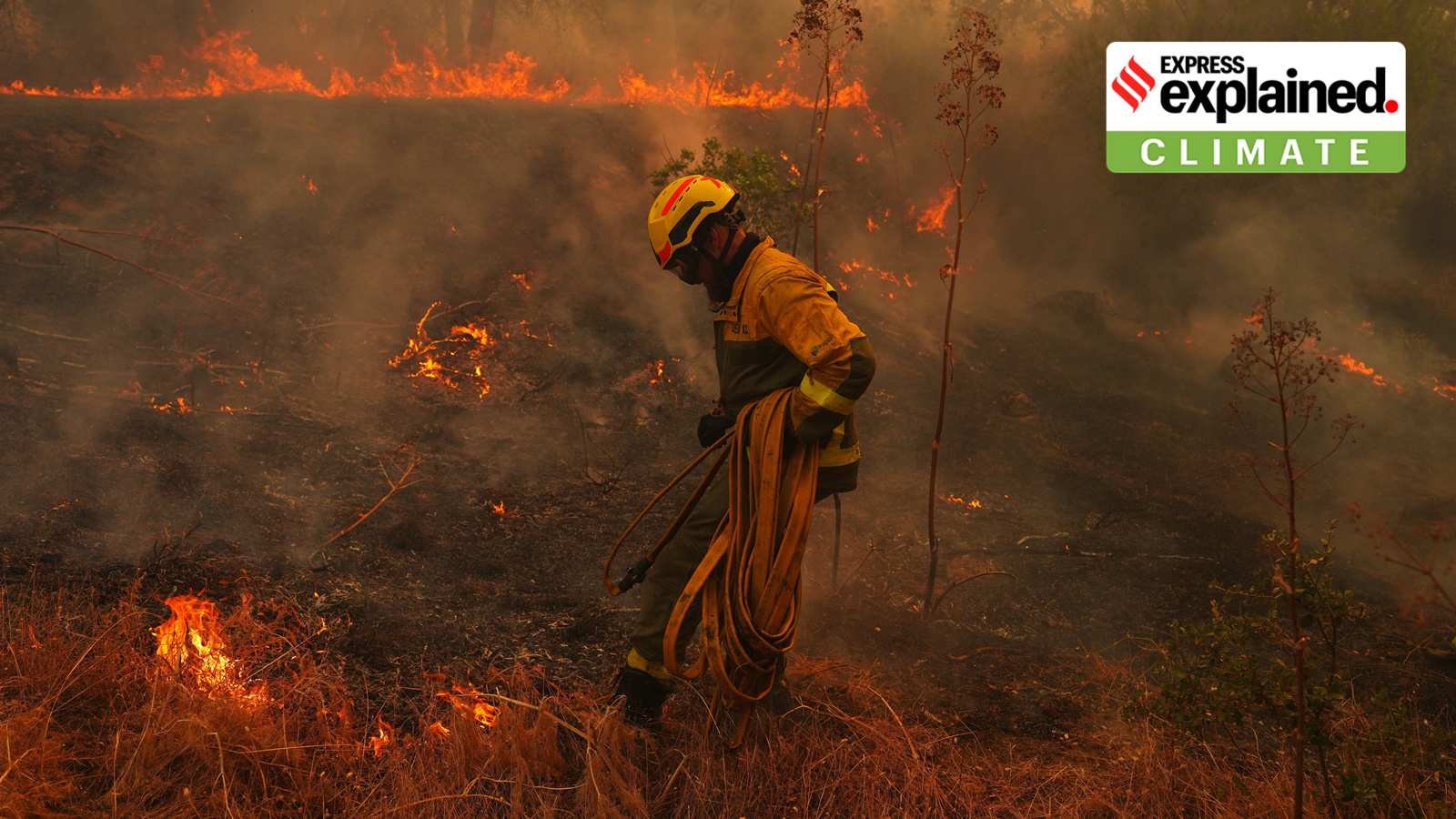
Wildfires across Europe—ranging from Greece and Spain to France and Portugal—have reached apocalyptic proportions. In Spain alone, 172,000 hectares have been incinerated, while France faced its largest peacetime evacuation. These are no longer typical seasonal fires; they are becoming more intense, hotter, and increasingly difficult for authorities to contain.
The Science of Climate Whiplash and Fire Clouds
A primary driver is a phenomenon known as 'Climate Whiplash.' This occurs when weather swings violently between extremes. For instance, an unusually wet period promotes explosive growth of vegetation, which then dries out rapidly during intense heatwaves, creating a massive reservoir of combustible fuel.
Even more terrifying is the emergence of pyrocumulonimbus clouds, or 'fire clouds.' As intense heat rises, it carries smoke and moisture high into the atmosphere, forming towering clouds that can reach the stratosphere. These clouds generate their own thunderstorms and lightning, which can strike kilometers away, starting entirely new fires and making traditional firefighting tactics nearly obsolete.
Why This Matters
BozokMedia analysis shows that we are witnessing the rise of 'sixth-generation wildfires.' These events are self-sustaining feedback loops: they release massive amounts of CO2, which accelerates global warming, leading to even more extreme weather and more intense fires.
Extreme heatwaves and prolonged droughts, intensified by climate change, are creating conditions that favour sixth-generation wildfires.
The Role of Land Management
Beyond meteorology, human land-use patterns play a critical role. As rural populations move to cities and traditional farming or grazing declines, vast areas of the European countryside are being reclaimed by dense shrubs and dry undergrowth. According to the OECD, this accumulation of fuel makes the landscape a tinderbox, allowing fires to spread faster than ever before.
| Factor | Impact on Wildfires |
|---|---|
| Climate Whiplash | Creates sudden abundance of dry fuel |
| Fire Clouds (pyroCb) | Generates lightning and unpredictable winds |
| Land Abandonment | Increases continuous combustible vegetation |
Frequently Asked Questions
1. What is 'Climate Whiplash'?
It is the rapid transition between extreme weather states, such as intense rainfall followed by severe drought.
2. How much do wildfires cost the EU?
The EU loses an estimated EUR 2.5 billion annually due to infrastructure damage and lost tourism.