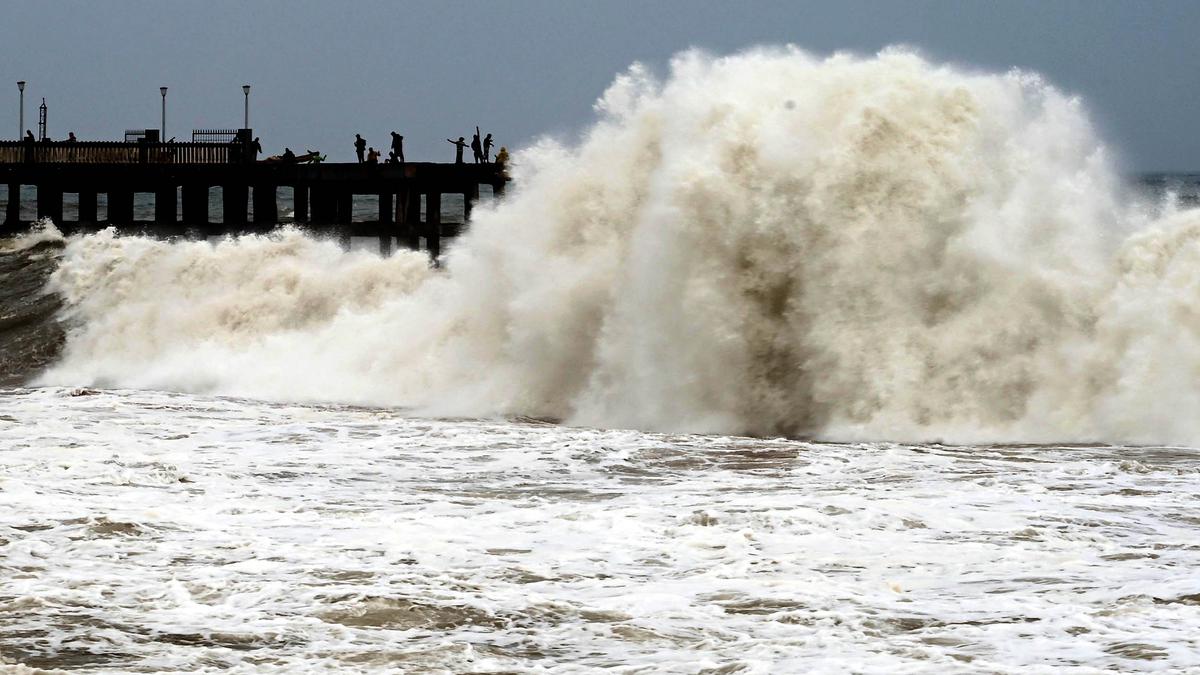
A potent combination of global warming and the Pacific Decadal Oscillation (PDO) is set to trigger more frequent equatorial cyclones. Scientists warn of heightened risks for India's coastal regions.
- The interplay between global warming and the Pacific Decadal Oscillation (PDO) threatens to increase cyclone frequency.
- Cyclones originating near the Equator are expected to become more intense due to warmer waters.
- The shift in PDO phases could significantly impact India's post-monsoon weather patterns.
A groundbreaking study published in the journal Nature Communications has raised alarms regarding the future of tropical weather patterns. Researchers suggest that the synergy between anthropogenic global warming and a long-term cyclical phenomenon known as the Pacific Decadal Oscillation (PDO) could lead to a surge in cyclones originating near the Equator, posing a significant threat to the Indian coastline.
The Shift in Equatorial Cyclogenesis
Historically, tropical cyclones forming near the Equator have been relatively infrequent. For instance, the devastating Cyclone Okchi in 2017 remains a stark reminder of such events' impact on Kerala, Tamil Nadu, and Sri Lanka. Data indicates that between 1981-2010, the occurrence of these equatorial-origin cyclones was 43% lower than in the 1951-1980 period, largely because the PDO was in a 'positive' or warmer phase.
Understanding PDO vs. ENSO
While the El Niño Southern Oscillation (ENSO)—comprising El Niño and La Niña—operates on a 2-to-7-year cycle, the PDO is a much more massive and slower-moving engine. The PDO operates on scales of 20 to 30 years. Unlike ENSO, which can be predicted annually, determining the phase of the PDO requires years of continuous ocean temperature monitoring.
Why This Matters
BozokMedia analysis shows that the convergence of a negative PDO phase and rising global temperatures creates a 'perfect storm' scenario. As the oceans absorb more heat, the moisture-holding capacity of the atmosphere increases, providing more fuel for developing storms. For a country with a vast coastline like India, this translates to higher risks of landfall for high-intensity storms.
It’s usually rare for cyclones to form near the Equator but when the waters are warm, they can gain more moisture and rise in intensity. - Dr. R.S. Ajayamohan
Meteorologists note that while a positive PDO coupled with ENSO can lead to droughts, a negative PDO phase often brings increased rainfall to India but also increases the likelihood of post-monsoon cyclonic activity. Currently, with an El Niño developing, parts of India are already witnessing rainfall deficits, but the long-term shift in PDO could redefine the disaster landscape.
Frequently Asked Questions
1. How does global warming affect cyclones?
Warmer ocean surfaces provide more thermal energy and moisture, which acts as fuel for cyclones, making them stronger and more frequent.
2. What is the role of the PDO in Indian weather?
The PDO influences long-term climate cycles; a negative phase can enhance monsoon rains but may also increase the frequency of cyclones.