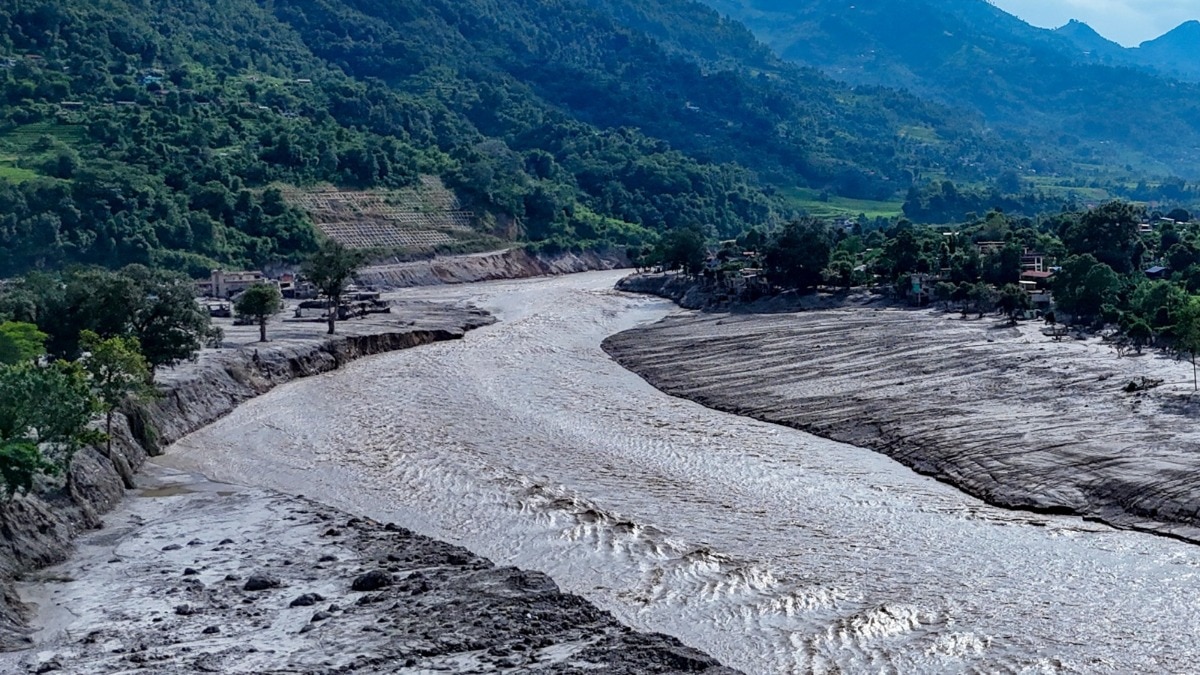
China has issued a critical warning to Nepal regarding a rapidly forming glacial lake on the upper Lhende River, which shows signs of imminent collapse. The lake's darkening color suggests instability, posing a severe new flood threat to Nepal, already grappling with devastating floods that have claimed over 580 lives. Chinese authorities are intensively monitoring the situation via drones and satellites, urging downstream communities to remain vigilant.
- China has warned Nepal about an unstable glacial lake on the upper Lhende River, threatening an imminent burst.
- The lake, formed by a blocked river flow, is rapidly accumulating water, with its color darkening as a key indicator of instability.
- This new threat comes as Nepal is already reeling from widespread floods that have killed 587 people and left many missing.
- China is conducting extensive drone and satellite surveillance and has modeled potential flood impacts.
- Downstream communities in Nepal are advised to exercise extreme caution.
KATHMANDU, NEPAL – In a critical development for disaster-stricken Nepal, neighboring China has issued an urgent alert concerning a rapidly evolving glacial lake on the upper reaches of the Lhende River, warning that it could burst at any moment. The ominous message, relayed amidst Nepal’s ongoing struggle with severe floods that have claimed 587 lives and left hundreds missing, highlights the volatile environmental challenges facing the Himalayan region.
According to the Chinese communication, the lake, which has been forming over the past few days, is exhibiting a continuous darkening of its water color, a critical indicator of increasing instability and the potential for an imminent breach. While Chinese authorities have indicated that the immediate volume of water may not lead to an overwhelming surge in downstream rivers, they have strongly advised communities in lower riparian areas to exercise extreme caution.
The genesis of this perilous lake lies in a glacial event upstream. A significant iceberg collapse on the upper Lhende River obstructed the natural flow of water, leading to the formation of this unstable body. Further exacerbating the situation, the confluence of the Chochoen River (on the Chinese side) and the Purepu River (on the Nepalese side) has also been blocked by debris from recent flood activity, contributing to the accumulating water mass.
The Chinese Ministry of Water Resources reports a continuous rise in water levels within the nascent lake. By Friday, an estimated 2.5 million cubic meters of water had accumulated, with projections indicating an additional 3 million cubic meters could collect over the next three days. This rapid accumulation intensifies the risk, despite China's current assessment that a partial breach might result in a maximum flow of 500 cubic meters per second, primarily contained within riverbanks.
Why This Matters
BozokMedia analysis shows that glacial lake outburst floods (GLOFs) represent one of the most significant and unpredictable natural hazards in the Himalayas, a region highly vulnerable to climate change. The transboundary nature of rivers originating in the Tibetan Plateau means that events in China directly impact downstream nations like Nepal. This specific warning underscores the critical need for robust cross-border early warning systems and collaborative disaster management strategies. The potential for a GLOF to compound an already dire flood situation in Nepal highlights the cascading effects of environmental degradation and climate change on human lives and infrastructure.
"The increasing frequency and intensity of glacial lake outburst floods in the Himalayas are a stark reminder of climate change's immediate and devastating impact on vulnerable communities and ecosystems."
To mitigate potential damage and provide timely warnings, China is employing advanced surveillance techniques. The entire affected region is under constant scrutiny through drone and satellite monitoring. Furthermore, sophisticated flood modeling has been conducted to assess potential impacts and inform preparedness measures. This proactive approach by China is vital for Nepal, given the immediate danger and the ongoing humanitarian crisis.
Nepal has already faced immense challenges, with earlier reports indicating 149 Indian citizens safely returned and 37 pilgrims from Maharashtra reaching Kathmandu amidst the floods. The disaster has also seen trapped laborers in hydropower tunnels, necessitating requests for assistance. The new warning from China adds another layer of complexity to Nepal's already strained emergency response efforts, demanding heightened vigilance from all stakeholders.
Frequently Asked Questions
Q1: What is a Glacial Lake Outburst Flood (GLOF)?
A GLOF is a sudden and rapid release of a significant amount of water impounded in a glacial lake. These lakes are typically formed by meltwater trapped behind natural dams of ice or glacial debris (moraines), which can fail due to factors like seismic activity, landslides, or rapid melting.
Q2: How is China assisting Nepal in this crisis?
China is providing critical early warning information to Nepal regarding the unstable glacial lake. It is also actively monitoring the affected region using drones and satellites, conducting flood modeling, and sharing data to help Nepal prepare for and mitigate the potential impacts of a lake burst.
