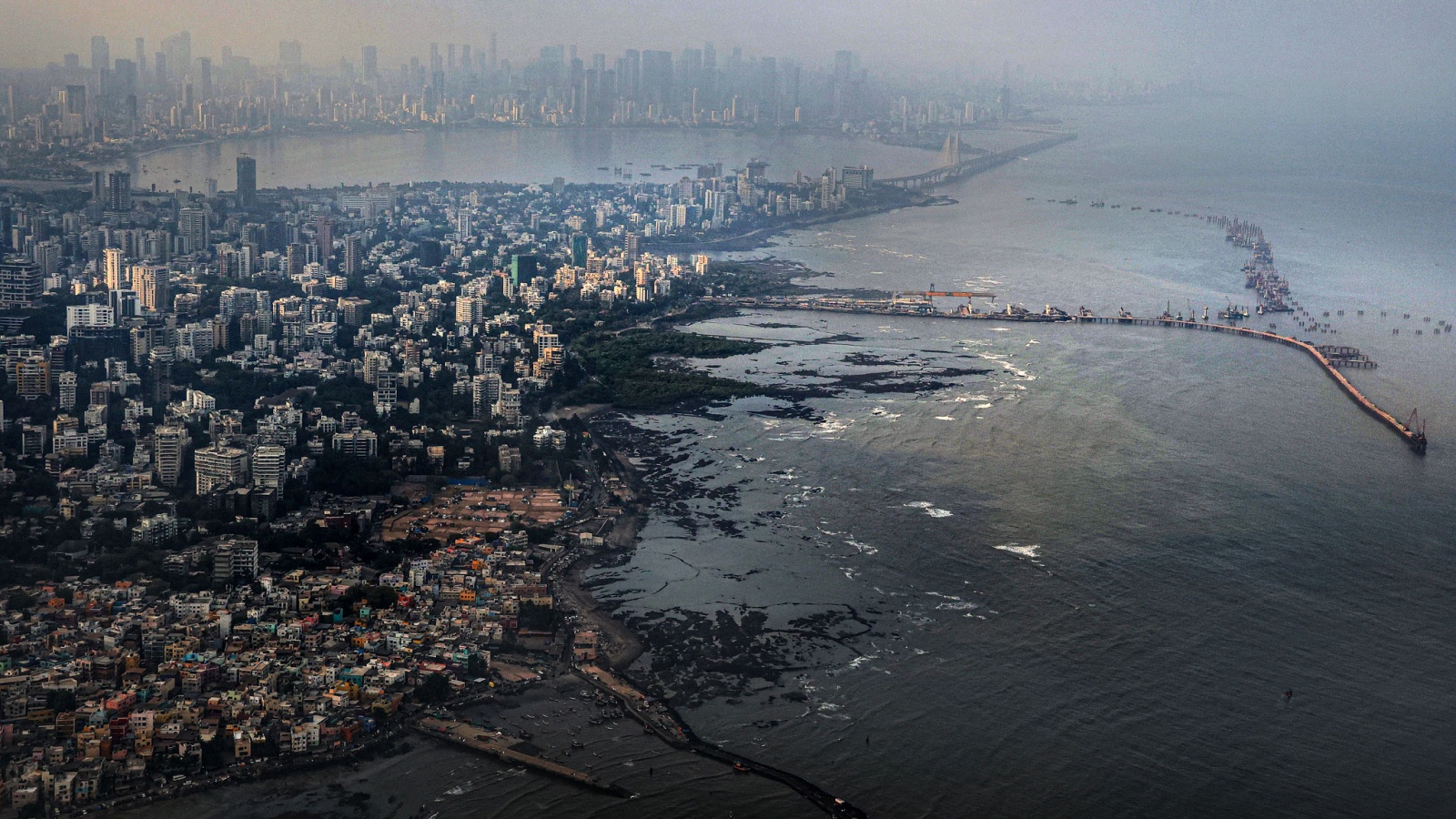
A devastating United Nations report warns that rising sea levels could permanently submerge parts of Mumbai, Kolkata, and Dhaka, threatening the homes of over 14 million people.
- Over 14 million people in South Asia face immediate risk of displacement due to rising seas.
- Mumbai faces compounded threats from land subsidence and saltwater intrusion.
- Global sea levels rose by a record 5.9 mm in 2024.
- BMC projections suggest 80% of Mumbai's island city could be submerged by 2050.
The coastal megacity of Mumbai is facing an existential threat. A new report by the United Nations (UN), submitted to the UN General Assembly, warns that rising sea levels pose a risk of permanent inundation for major South Asian hubs, including Mumbai, Kolkata, and Dhaka. The report highlights a looming humanitarian crisis, suggesting that more than 14 million people across the region could lose their homes.
According to the findings, global sea levels rose at a staggering rate of 5.9 mm in 2024, outstripping the average annual rise of 4.7 mm observed between 2014 and 2023. Projections indicate a minimum sea-level rise of 0.5 metres by 2100 under aggressive emission reduction scenarios. However, in worst-case scenarios involving the instability of the West Antarctic ice sheet, the rise could reach up to two metres, making extreme flooding an annual occurrence.
Why This Matters
BozokMedia analysis shows that the crisis for Mumbai is not merely about rising water but a multi-dimensional environmental collapse. The city is battling a 'triple threat': rising sea levels, land subsidence, and saltwater intrusion. The latter is particularly dangerous as it can contaminate freshwater aquifers and coastal wells, jeopardizing the city's water security. Furthermore, increased storm surges are expected to cripple sanitation, housing, and transport infrastructure.
Mumbai is surrounded by the Arabian Sea on three sides, and the warming of this sea is intensifying extreme rainfall and heat events.
Climate scientist Raghu Murtugudde, a visiting professor at IIT Bombay, emphasized that Mumbai’s unique geography exacerbates its vulnerability. Recent data from the Brihanmumbai Municipal Corporation (BMC) corroborates this, showing that extreme rainfall events have increased significantly, with average heavy rainfall intensity jumping from 132 mm to 182 mm over the last six years.
Historical Context and Projections
This UN warning aligns with the Mumbai Climate Action Plan (MCAP) released by the BMC in 2021. That plan had already issued a grim forecast: nearly 80 per cent of Mumbai’s island city could be underwater by 2050. The convergence of erratic rainfall patterns and rising tides creates a volatile environment for one of the world's most densely populated urban centers.
| Metric | 2014-2023 Average | 2024 Record |
|---|---|---|
| Annual Sea Level Rise | 4.7 mm | 5.9 mm |
| Heavy Rainfall Intensity | 132 mm | 182 mm |
Frequently Asked Questions
1. What is the primary driver of sea-level rise in Mumbai?
The warming of the Arabian Sea and global thermal expansion are the primary drivers, worsened by local land subsidence.
2. How many people are at risk in South Asia?
The UN estimates that over 14 million people in the region are at immediate risk of losing their homes to permanent inundation.