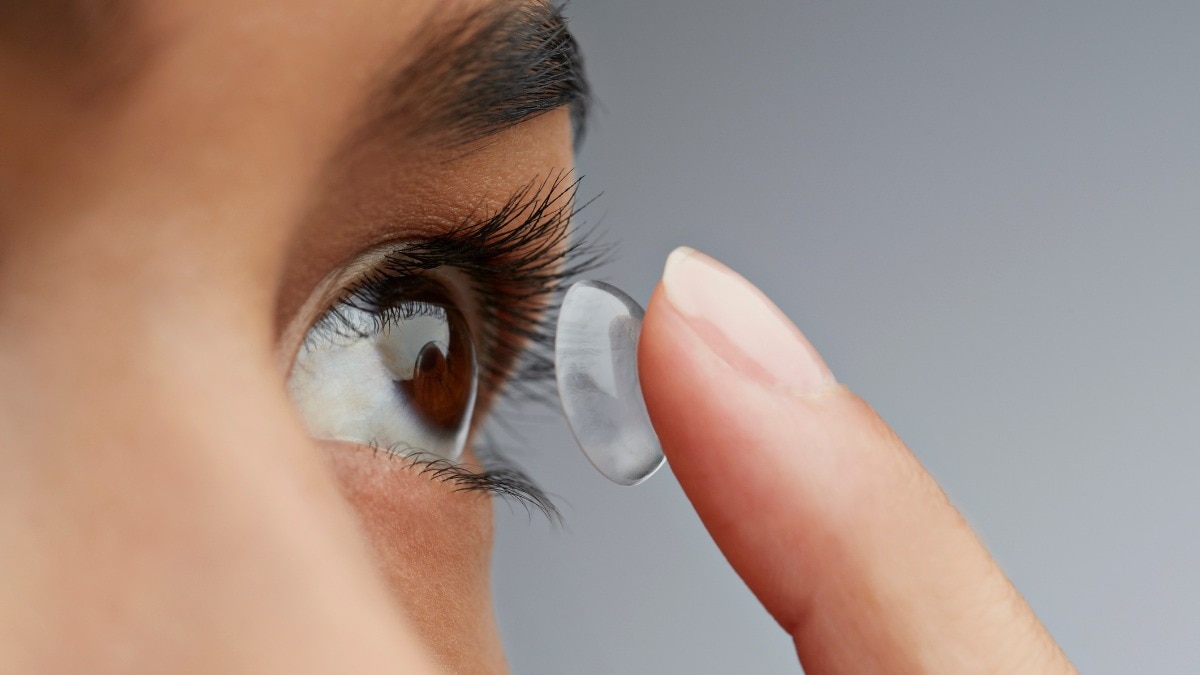
Orthokeratology (Ortho-K) uses specialized overnight rigid lenses to temporarily reshape the cornea, offering clear daytime vision without glasses. Beyond aesthetics, it is emerging as a powerful tool to slow the progression of childhood myopia.
- Ortho-K lenses are worn overnight to provide clear vision during the day.
- Can reduce myopia progression by 50-60% in eligible children.
- The process is non-surgical and completely reversible.
- Strict hygiene is mandatory to prevent sight-threatening infections.
Imagine a world where children can wake up with clear vision, free from the burden of spectacles or the discomfort of daytime contact lenses. This is the promise of Orthokeratology, or Ortho-K. These are custom-designed rigid gas-permeable lenses that gently reshape the cornea while the wearer sleeps, allowing light to focus accurately on the retina throughout the following day.
Unlike permanent refractive surgeries, Ortho-K is a temporary solution. Dr. Shreyans P. Kothari, an ophthalmologist at Agarwal Eye Hospital, emphasizes that the most significant advantage is its reversibility. If the lenses are discontinued, the cornea gradually returns to its original shape, making it a safer alternative for younger patients who are not yet candidates for LASIK.
Why This Matters
BozokMedia analysis shows that Ortho-K is shifting from being a mere 'convenience' to a 'clinical strategy' for myopia management. With the global surge in screen time, childhood myopia is skyrocketing. By slowing the elongation of the eye, Ortho-K doesn't just fix vision—it potentially prevents the development of more severe eye conditions in adulthood.
"In appropriately selected children, Ortho-K can reduce the progression of myopia by approximately 50-60%, acting as a critical brake on deteriorating vision."
The journey to clear vision involves a precise diagnostic process. An ophthalmologist uses corneal topography to map the eye's curvature, ensuring a bespoke fit. While the initial adaptation period can be uncomfortable due to the rigidity of the lenses, most users adjust within two weeks as the corneal reshaping takes full effect.
However, the 'freedom' from glasses comes with a strict trade-off: hygiene. Because the lenses remain on the eye during sleep, any contamination can lead to infective keratitis. This condition can be devastating to sight, making sterile handling and parental supervision for children non-negotiable requirements.
| Feature | Ortho-K | LASIK |
|---|---|---|
| Procedure | Non-Surgical (Lens-based) | Surgical (Laser-based) |
| Permanence | Temporary/Reversible | Permanent |
| Age Suitability | Children & Adults | Primarily Adults |
| Primary Risk | Infection (Keratitis) | Surgical Complications |
Frequently Asked Questions
Q1: Is Ortho-K a permanent cure for myopia?
No, it is a temporary correction. The lenses must be worn consistently overnight to maintain the reshaping effect.
Q2: Is everyone a candidate for Ortho-K?
No. Eligibility depends on the degree of refractive error, the shape of the cornea, and the patient's ability to maintain strict hygiene protocols.