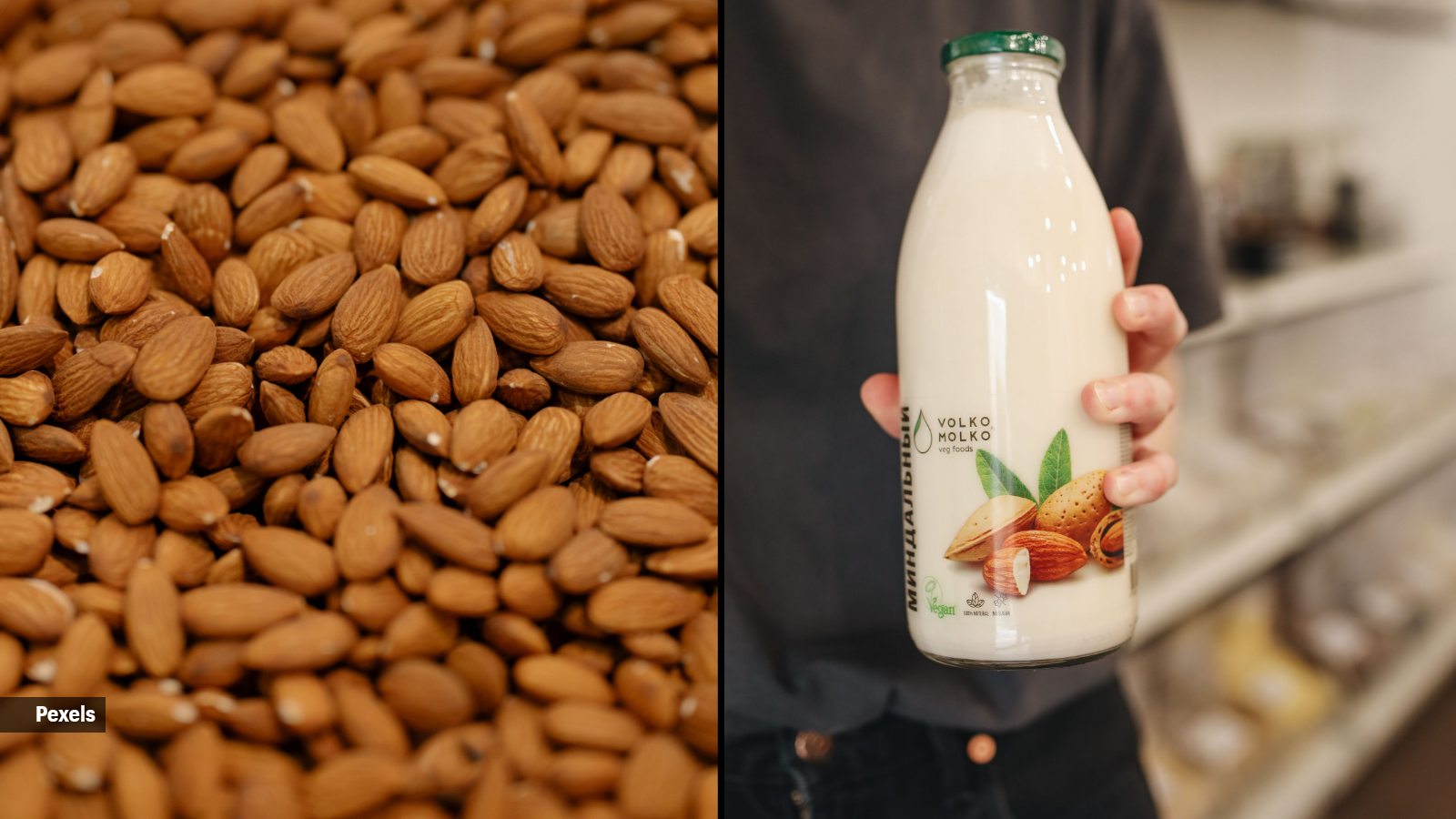
Is your glass of almond milk providing the same benefits as a handful of nuts? Nutritionists break down the stark differences in protein, fiber, and vitamins to help you choose correctly.
- Whole almonds offer significantly more protein and fiber than almond milk.
- Commercial almond milk often contains as little as 2% actual almonds.
- The straining process in milk production removes the vast majority of beneficial fiber.
- Almond milk should be viewed as a dairy substitute, not a nutritional replacement for nuts.
Almond milk has surged in popularity as a go-to dairy-free alternative for smoothies and coffees. However, a critical question remains: does drinking a glass of this beverage provide the same health advantages as eating whole almonds? According to leading nutritionists, the answer is a resounding no.
Richa Sharma, Consultant Dietetics at Kailash Deepak Hospital, explains that many consumers fall for the misconception that almond milk is simply "liquid almonds." In reality, most commercial versions are primarily water with a minimal amount of almond extract, leading to a significant drop in nutritional value.
The Nutritional Breakdown: A Stark Contrast
Whole almonds are nutritional powerhouses, naturally packed with protein, heart-healthy monounsaturated fats, fiber, vitamin E, and magnesium. These components work synergistically to promote cardiovascular health, aid digestion, and provide a feeling of satiety.
In contrast, almond milk is designed as a beverage alternative. Lakshmi Kale, Head Nutritionist at Nutrition In Sync, points out that while a 28g serving of almonds provides roughly 6g of protein and 3.5g of fiber, a cup of unsweetened almond milk typically contains only 1g of protein and almost no fiber.
| Nutrient | Whole Almonds (28g) | Almond Milk (1 Cup) |
|---|---|---|
| Protein | ~6g | ~1g |
| Fiber | ~3.5g | Negligible |
| Healthy Fats | ~14g | Very Low |
Why This Matters
BozokMedia analysis shows a growing trend of "nutritional dilution" in plant-based alternatives. While these products cater to dietary restrictions, they often create a "health halo" effect where consumers believe they are getting the benefits of the raw ingredient. Understanding this gap is crucial for those managing conditions like diabetes or hypertension, where fiber and protein intake are critical.
"I would look at almond milk as a substitute for dairy milk, not as a substitute for almonds." - Richa Sharma, Consultant Dietetics.
Choosing the Right Option for Your Goals
The choice depends entirely on your dietary needs. For those who are lactose intolerant, vegan, or allergic to dairy, unsweetened almond milk is a practical and low-calorie alternative. However, for those seeking to improve blood sugar control, support heart health, or increase satiety, whole almonds are the undisputed winner.
When it comes to store-bought versus homemade milk, homemade versions are free from additives but still lose fiber during straining. Store-bought versions are often fortified with Calcium and Vitamin D, making them more comparable to cow's milk in terms of specific micronutrients.
Frequently Asked Questions
Q1: Is almond milk good for weight loss?
Yes, because it is very low in calories, it can fit into a calorie-restricted diet, but it should not be your primary protein source.
Q2: What should I look for on an almond milk label?
Opt for "unsweetened" varieties to avoid added sugars and check for fortifications like Calcium and Vitamin D if you are replacing dairy entirely.