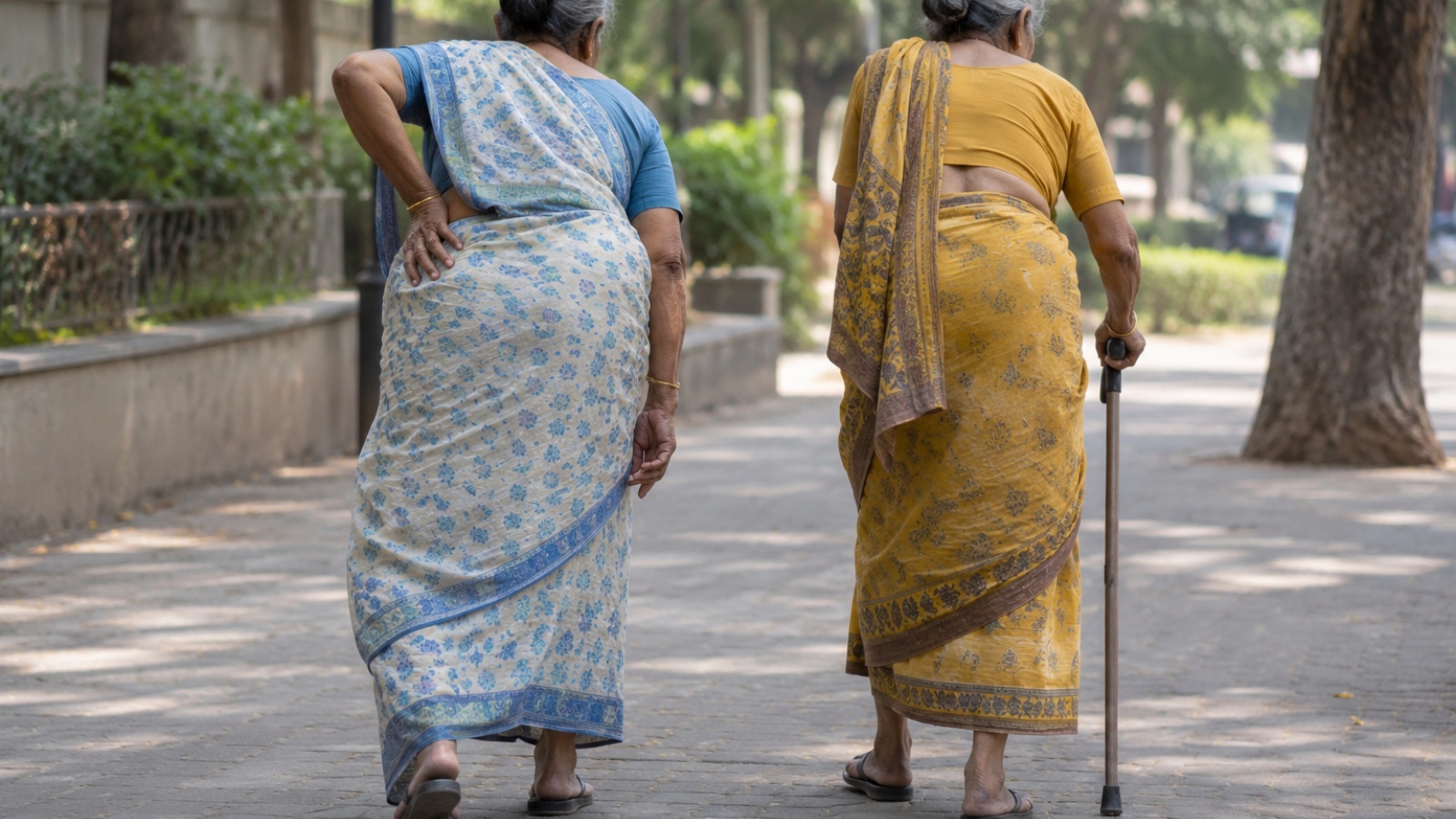
A side-to-side 'waddling' walk in women over 60 is often dismissed as aging, but experts warn it could signal significant muscle weakness or neurological issues.
- 'Waddling gait' is a side-to-side walking pattern often linked to hip muscle weakness.
- It is frequently caused by weakness in the gluteus medius and hip flexors.
- This condition can lead to secondary issues like back pain and increased fall risks.
- Early physiotherapy and strength training can mitigate the effects.
For many women crossing the age of 60, a noticeable change in how they walk—a side-to-side, swaying motion reminiscent of a penguin—becomes common. While often brushed off as a natural consequence of aging, medical professionals are warning that this 'waddling gait' requires closer inspection.
Physiotherapist Dr. Akash Singh recently highlighted this phenomenon, noting that the pattern is deeply connected to the stability of the pelvis. "That side-to-side walking pattern... can often be associated with weakness in the hip muscles, especially the gluteus medius and hip flexors," Dr. Singh explained. When the gluteus medius is weak, it fails to stabilize the pelvis during the single-leg phase of walking, causing the body to lean and compensate, resulting in the characteristic waddle.
Why This Matters
BozokMedia analysis shows that ignoring gait changes can lead to a cascading effect of physical ailments. Poor pelvic control doesn't just affect walking; it forces the lower back to compensate, leading to chronic back pain, knee instability, and a significantly higher risk of life-altering falls.
A noticeable change in gait should never be dismissed as simply an effect of aging; it is often a symptom of an underlying issue.
Dr. Gaurav Prakash Bhardwaj, a senior consultant at PSRI Hospital, emphasizes that while muscle strength naturally declines with age, a distinct waddling gait is not a mandatory part of growing older. He notes that various conditions, including hip arthritis, spinal issues, and neurological disorders, can alter a person's movement patterns.
Potential Causes of Waddling Gait
| Category | Potential Medical Condition |
|---|---|
| Muscular | Weakness in Gluteal or Hip Flexor muscles |
| Joint/Bone | Hip Arthritis or Joint Degeneration |
| Neurological | Nerve problems or Neurological disorders |
| Spinal | Spinal conditions affecting nerve signals |
The key is to identify what has changed. If the gait is accompanied by pain, stiffness, or difficulty climbing stairs, immediate medical evaluation is necessary.
Preventative Strategies and Exercises
To maintain stability and muscle mass, experts recommend a combination of strength training and mobility work. Suggested exercises include: Chair squats, side leg raises, calf raises, and supported single-leg balance exercises. Additionally, maintaining a diet rich in protein is crucial for preserving muscle mass in older adults.
Frequently Asked Questions
1. When should I see a doctor about my walking pattern?
Seek professional help if the gait is new, worsening, painful, or if you experience numbness or frequent loss of balance.
2. Can exercise really fix a waddling gait?
In many cases, yes. Targeted physiotherapy and strength training can strengthen the stabilizing muscles and restore a more natural gait.
Editor Comment
The transition into senior years should be defined by mobility, not limitation. Understanding the mechanics of our movement is the first step toward preventing long-term disability.
Hashtags
#WomensHealth #HealthyAging #GaitAnalysis #Mobility #SeniorFitness
SEO Keywords
Waddling Gait, Hip Weakness, Women's Health, Physiotherapy, Dr. Gaurav Prakash Bhardwaj