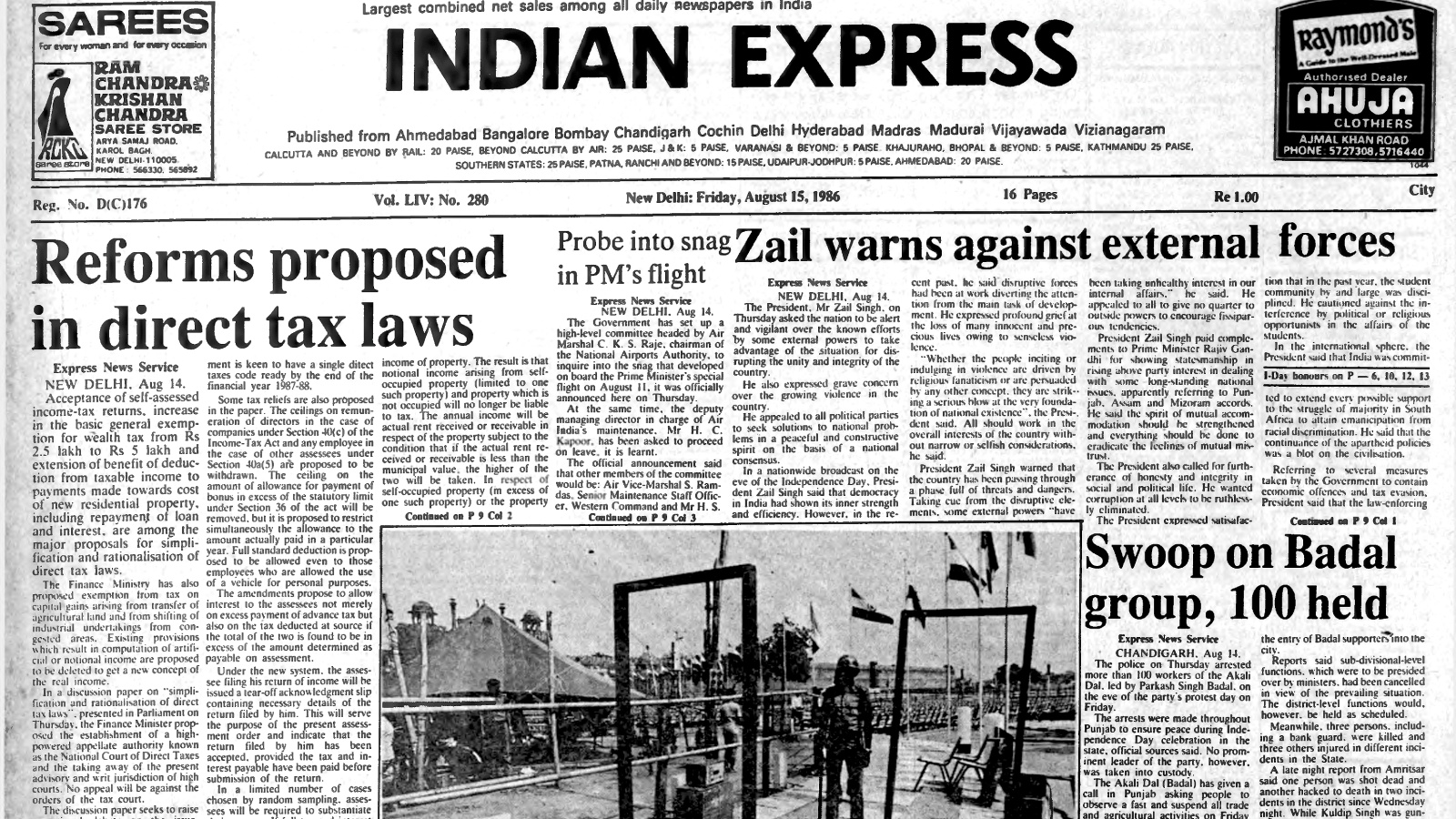
Looking back 40 years to August 15, 1986: A day marked by massive arrests of Akali Dal workers in Punjab and critical warnings from the President regarding national unity.
Key Takeaways
- Over 100 Akali Dal workers led by Parkash Singh Badal were arrested in Punjab.
- The crackdown aimed to ensure peace during Independence Day celebrations.
- SAARC ministers met in Dhaka to condemn terrorism and seek concrete action.
- President Zail Singh warned against external powers attempting to disrupt national unity.
On the eve of Independence Day in 1986, Punjab witnessed significant political tension. In a massive operation to maintain public order, police across the state arrested more than 100 workers of the Akali Dal, the party led by prominent leader Parkash Singh Badal. The arrests were strategically executed to preempt planned protests and ensure a peaceful celebration of India's independence.
The atmosphere was not just tense locally but also on the national stage. President Zail Singh issued a stern warning to the nation, urging vigilance against external forces that were attempting to exploit internal situations to undermine the unity and integrity of India.
Why This Matters
BozokMedia analysis shows that this period represented a critical juncture in India's internal security history. The convergence of political unrest in Punjab, presidential warnings about foreign interference, and the regional push for anti-terrorism measures at the SAARC level highlights the complex multi-layered security challenges India faced in the mid-1980s.
The 1986 crackdown was a defining moment in the struggle between state authority and regional political movements in Punjab.
Furthermore, the international community was also reacting to the rising tide of terror. During a two-day SAARC foreign ministers' meeting in Dhaka, member nations collectively condemned terrorism and moved toward establishing formal measures to identify and extradite offenders, distinguishing between terroristic acts and political offenses.
Historical Background
The mid-1980s were a turbulent era for Indian politics, particularly in the state of Punjab. The struggle for regional identity and the interventions of various political factions created a complex landscape that required both domestic policing and international diplomatic cooperation to navigate.
Frequently Asked Questions
1. Why were the Akali Dal workers arrested in 1986?
They were arrested to prevent protests and ensure peace during the Independence Day celebrations in Punjab.
2. What was the outcome of the SAARC meeting in Dhaka?
The meeting resulted in a collective condemnation of terrorism and a call for concrete implementation measures to fight the menace.