Discussions are intensifying regarding a potential land swap between India and Myanmar to resolve long-standing border issues, sparking intense protests in Manipur.
Key Takeaways
- India and Myanmar are discussing resolving unresolved border segments through potential land swaps.
- The proposal focuses on approximately 1.4 sq miles near Manipur's Chandel district.
- Civil society groups in Manipur, including COCOMI, have voiced strong opposition.
- The ultimate goal is to facilitate fencing to curb illegal migration and insurgency.
The long-standing issue of border demarcation between India and Myanmar is gaining momentum. Reports suggest that both nations are considering a land exchange mechanism to settle unresolved territorial segments. While the Ministry of External Affairs (MEA) has not explicitly confirmed a 'land swap,' spokesperson Randhir Jaiswal acknowledged that discussions are ongoing regarding certain undefined portions of the border.
The Focal Point: Chandel District, Manipur
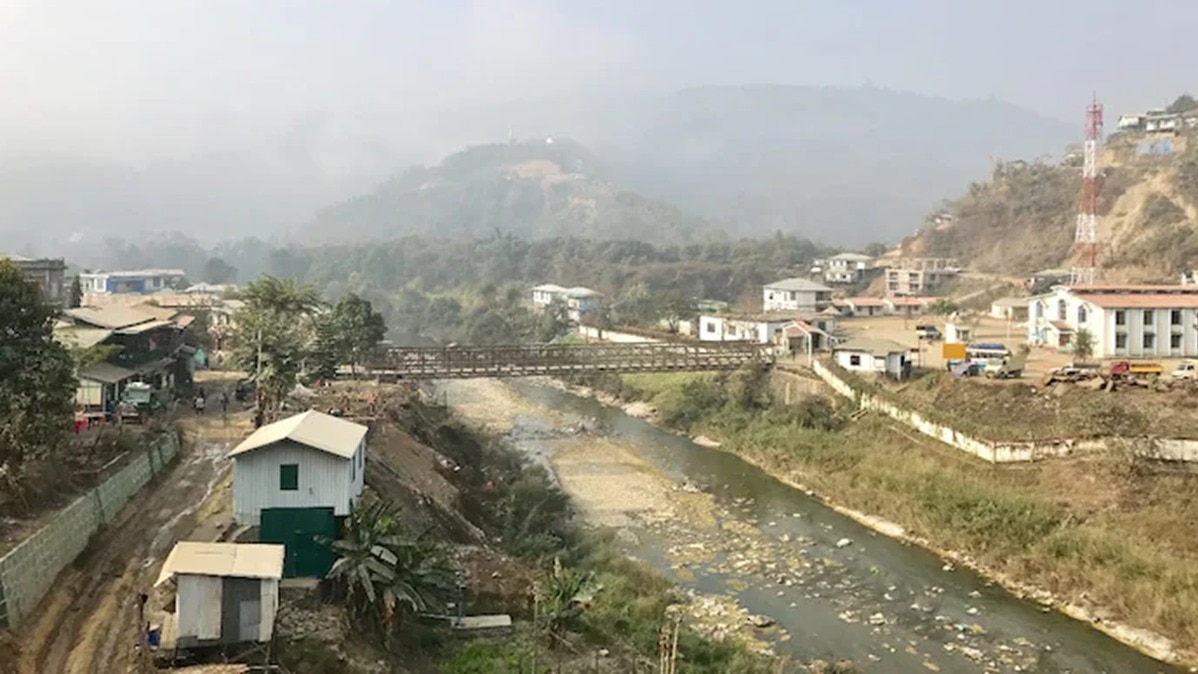
According to a report by The Diplomat, the Indian government is examining a proposal to exchange nearly 1.4 square miles of land between Border Pillars 65 and 68 on the Manipur border. This specific area lies in the Chandel district of Manipur, adjacent to the Sagaing Region's Kabaw Valley in Myanmar.
Why This Matters
BozokMedia analysis shows that resolving this dispute is crucial for India's internal security architecture. By finalizing the boundary, New Delhi aims to complete the border fencing project, which is essential to prevent illegal immigration, insurgent movement, and cross-border criminal activities that plague the Northeast region.
A clearly demarcated border is the first line of defense against transnational crimes and illegal migration.
The India-Myanmar border stretches 1,643 km across Arunachal Pradesh, Nagaland, Manipur, and Mizoram. While 1,472 km is already demarcated, approximately 171 km remains unresolved, primarily in the Lohit sector of Arunachal and the Kabaw Valley in Manipur.
Rising Tensions in Manipur
The prospect of territorial exchange has triggered significant backlash in Manipur. The Coordinating Committee on Manipur Integrity (COCOMI) has issued a stern warning, stating they will not remain silent spectators if the state's territorial integrity is compromised. They argue that Manipur's boundaries have been a heritage passed down through generations since its merger with the Indian Union in 1949.
Frequently Asked Questions
Q1: Why is India considering a land swap with Myanmar?
A: To expedite the demarcation process and enable the construction of a border fence to enhance national security.
Q2: What is the main reason for protests in Manipur?
A: Local organizations fear that any exchange of land will violate the state's territorial integrity and historical boundaries.