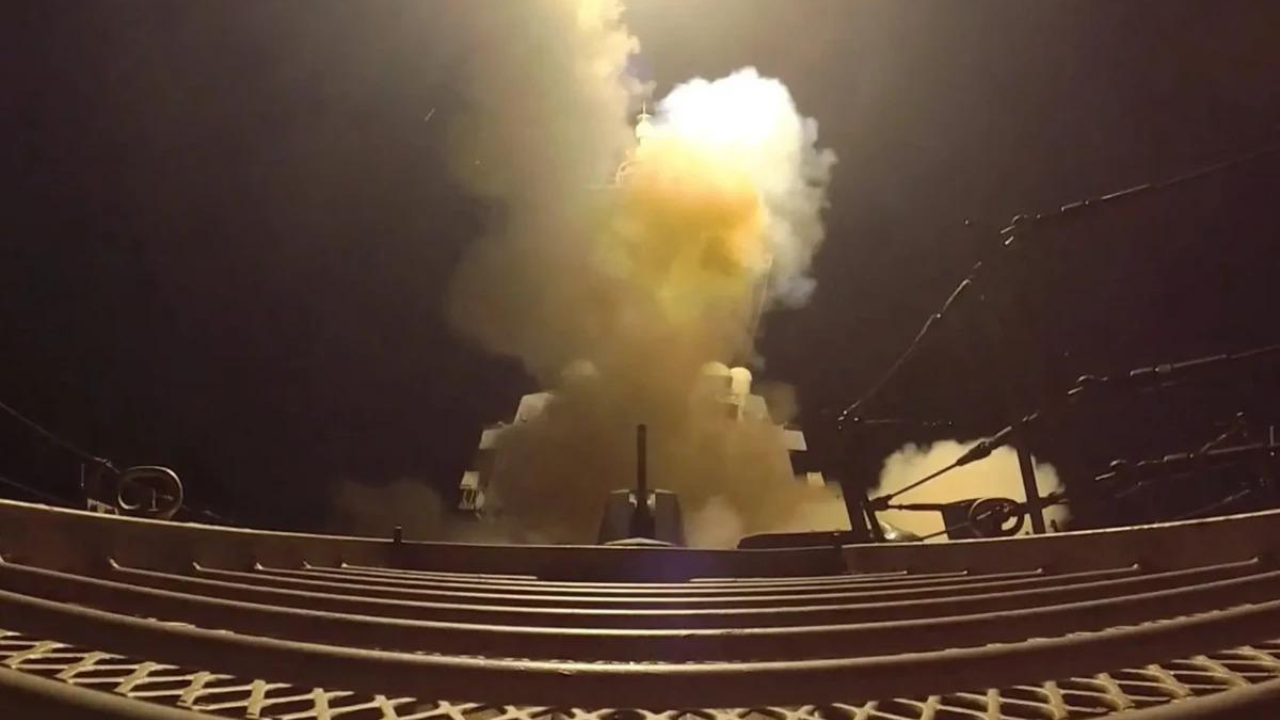
The United States carried out a new wave of airstrikes on Iran on Wednesday, focusing on coastal defence and missile infrastructure near the strategic Strait of Hormuz. Iranian media reported multiple explosions across the south, while Iran's parliament speaker called the clash an existential war with America.
Key Takeaways
- US conducts fifth straight day of airstrikes on Iranian military sites near the Strait of Hormuz
- Explosions reported in several southern Iranian cities, but official casualty figures remain unclear
- Iranian parliament speaker labels the conflict an existential war, heightening diplomatic tensions
The United States launched another round of airstrikes against Iran on Wednesday, targeting coastal defence systems and missile infrastructure linked to attacks on commercial shipping in the Strait of Hormuz. This marks the fifth consecutive day of US‑Iran military actions, intensifying the strategic pressure on the narrow waterway.
Operation Details
US Central Command (Centcom) announced on X that at 3 p.m. ET, additional strikes were initiated to "degrade Iranian military capabilities used to threaten vessels freely transiting through the Strait of Hormuz." Earlier that morning, at 6 a.m. ET, US forces struck Greater Tunb Island, destroying coastal defence batteries and cruise‑missile storage sites within a 90‑minute window.
Explosions Across Southern Iran
Iranian outlets, notably Mehr News Agency, reported explosions near Bandar Abbas, three blasts in Chabahar, and further detonations in Ahvaz following the Centcom statement. Tehran has not yet released an official assessment of casualties or material damage, leaving the full impact of the attacks uncertain.
Strategic and Economic Implications
The Strait of Hormuz handles roughly one‑fifth of global oil and gas shipments, making it a critical chokepoint for world energy markets. Shipping traffic has plummeted since Tehran announced the strait’s closure over the weekend, and Brent crude rose to a one‑month high of $84.95 per barrel on Wednesday, underscoring the market’s sensitivity to regional instability.
Political Reactions and Future Outlook
Iranian Parliament Speaker Mohammad Baqer Qalibaf described the clash as an "essential and existential war" with the United States, emphasizing that Iran’s security hinges on maintaining its "Iranian arrangements" in the waterway. Meanwhile, the Islamic Revolutionary Guard Corps warned it could expand the conflict to other regional export corridors, hinting at possible coordination with Houthi allies in Yemen to threaten the Bab el‑Mandeb Strait.
President Donald Trump, continuing his hard‑line stance, warned that US forces could target Iranian energy infrastructure and bridges if Tehran refuses to re‑engage in talks. While US negotiators have hinted at a deadline, Iran’s foreign ministry spokesperson Esmaeil Baghaei reiterated that Tehran has no immediate plans to return to negotiations, focusing instead on defence.
The renewed strikes have further eroded hopes of reviving the interim ceasefire agreement signed last month, casting doubt on any near‑term diplomatic breakthrough and raising the spectre of broader regional escalation.