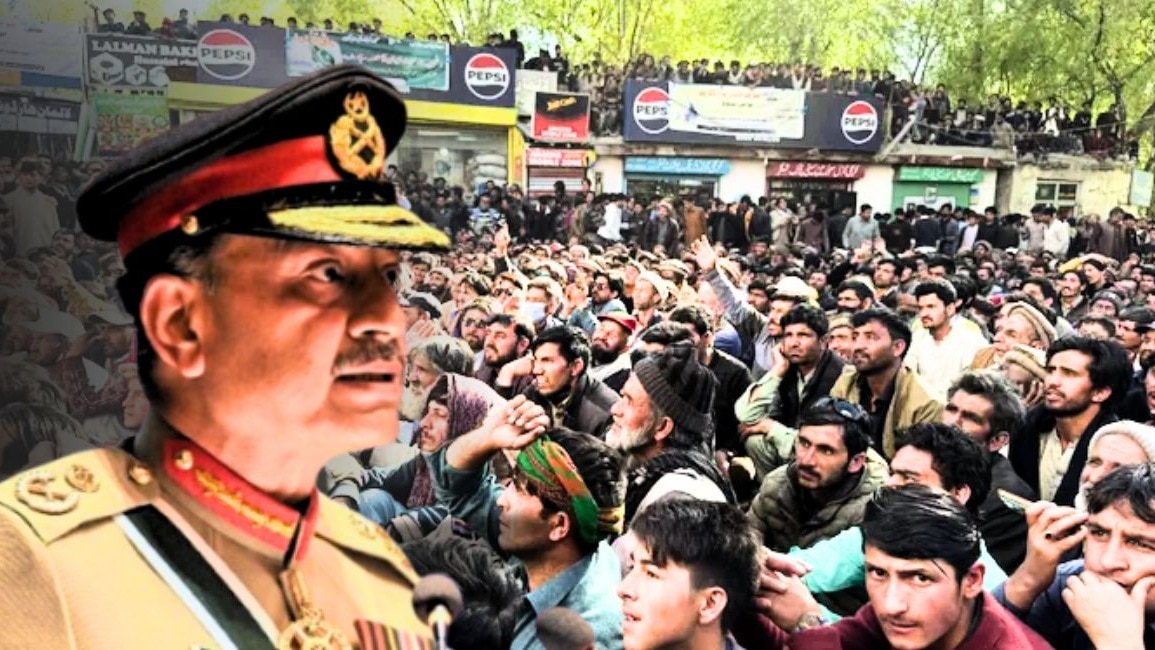
In a provocative move, the Gilgit-Baltistan assembly has passed a resolution demanding constitutional status as Pakistan's fifth province, challenging India's sovereignty.
Key Takeaways
- Gilgit-Baltistan assembly unanimously passed a resolution to become Pakistan's 5th province.
- The move seeks legislative representation in Pakistan's National Assembly and Senate.
- The resolution aims to force a constitutional amendment in Islamabad.
- India maintains that Gilgit-Baltistan is an integral part of the Indian Union.
Pakistan has once again stirred international controversy by advancing its controversial agenda regarding the Pakistan-occupied Kashmir (PoK) region. The Gilgit-Baltistan assembly has passed a landmark resolution, demanding that the Government of Pakistan amend its constitution to formally declare the region as the nation's fifth province.
Following this assembly resolution, the proposal is set to be moved to the Parliament of Pakistan. If approved, this constitutional amendment would grant Gilgit-Baltistan full provincial status, including direct representation in the National Assembly and the Senate. This move follows recent political shifts in the region, where a coalition between the PPP and PML-N has emerged after the June elections.
Why This Matters (इसके मायने क्या हैं)
BozokMedia analysis shows that this move is a strategic diversionary tactic by the Pakistani establishment. Currently, Pakistan is grappling with severe internal unrest, including escalating violence in Balochistan and rising insurgencies in Khyber Pakhtunkhwa. By pushing for provincial status in PoK, the military-led government seeks to project a sense of political stability and consolidate its hold over disputed territories to distract from the crumbling economy.
Furthermore, this move directly challenges India's long-standing stance on territorial integrity. India has consistently maintained that the entire Union Territory of Jammu and Kashmir, including Gilgit-Baltistan, is an inseparable part of India. Pakistan's unilateral attempt to change the legal status of this region is viewed by the international community as a violation of established norms and serves only to heighten geopolitical tensions in South Asia.
This legislative maneuver is a desperate attempt by Islamabad to mask its internal systemic failures through territorial posturing.
Historical Background
Currently, the Constitution of Pakistan recognizes only four provinces: Punjab, Sindh, Balochistan, and Khyber Pakhtunkhwa. Gilgit-Baltistan has historically functioned under a limited autonomous administrative setup. The seeds of this current movement were sown in August 2019, following India's decision to abrogate Article 370. While the then-Imran Khan administration floated the idea of making it a province, the current Shehbaz Sharif government is now aggressively pursuing this constitutional overhaul.
Frequently Asked Questions (अक्सर पूछे जाने वाले प्रश्न)
1. Does India recognize Gilgit-Baltistan as part of Pakistan?
No, India categorically rejects any unilateral changes made by Pakistan in PoK and maintains that Gilgit-Baltistan is an integral part of India.
2. Why is Pakistan taking this step now?
Analysts suggest it is a political move to divert public attention from economic crises and rising regional insurgencies like those in Balochistan.