Former Indian Ambassador Sanjay Verma reiterated India's innocence in the Hardeep Singh Nijjar case, calling the accusations baseless and highlighting a US investigation that attributes the killing to a gang war. He also reminded that India warned Canada about Khalistani extremist activities long before the murder.
Key Takeaways
- Former envoy Sanjay Verma labels the allegations against India as completely unfounded.
- US investigation concludes the killing was a gang war, with no Indian involvement.
- India has repeatedly warned Canada about Khalistani extremist activities since the 1980s.
New Delhi – Former Indian Ambassador to Canada Sanjay Verma staunchly defended India’s position on the Hardeep Singh Nijjar murder case, asserting that “the allegations were grave but there was no proof or fact behind them.” In an interview with ANI, Verma emphasized that the claims lacked any legally credible evidence and that India had consistently rejected them as politically motivated and later “utterly absurd.”
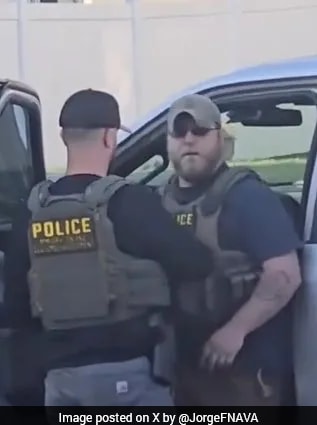
Verma pointed to recent developments in the United States, where a three‑year federal probe involving the FBI, LAPD, RCMP and European law‑enforcement agencies concluded that the assassination resulted from a rivalry between two organized‑crime factions. The investigation, released under “Operation Hard Ball,” found no link to the Indian government, officials, or diplomats.
Historical Background
Hardeep Singh Nijjar, a Sikh activist, was shot dead in Sydney, Australia in 2020. The incident quickly escalated into a diplomatic row after Canadian Prime Minister Justin Trudeau alleged India’s involvement. India countered by highlighting the threat posed by Khalistani extremist networks, a concern that dates back to the 1985 Air India Flight 182 bombing. Since then, New Delhi has submitted multiple extradition requests to Canada, none of which have succeeded.
Why This Matters (इसके मायने क्या हैं)
According to BozokMedia analysis, the case impacts two critical arenas: first, it reignites tensions in the already delicate India‑Canada relationship; second, it reshapes global understanding of transnational organized crime. By clearing India, the US indictment helps restore New Delhi’s international credibility and may mitigate future diplomatic fallout.
Moreover, the investigation underscores the expansive reach of criminal syndicates across North America and Europe, prompting nations to intensify intelligence sharing. Strengthened cooperation not only curbs illicit networks but also safeguards trade and investment flows that could otherwise be jeopardized by geopolitical mistrust.
"The U.S. inquiry demonstrates that complex international crime networks often transcend political narratives; this is a pivotal vindication for India," says security analyst Dr. Anita Singh.
Comparison Table
| Allegation (Earlier) | US Investigation Findings (Now) |
|---|---|
| India directly involved in the killing | No evidence; murder attributed to gang rivalry |
| Canadian officials blamed India | Investigation found no Indian officials or diplomats implicated |
| International community skeptical of India | ‘Five Eyes’ allies accepted the US conclusion |
Frequently Asked Questions (अक्सर पूछे जाने वाले प्रश्न)
Q1: Did the US investigation find any Indian officials guilty?
A: No. The probe concluded the murder stemmed from a gang war and found no involvement of Indian officials or diplomats.
Q2: How might this verdict affect India‑Canada relations?
A: It could reduce diplomatic strain, but both nations will need to continue transparent dialogue on Khalistani activities to prevent future disputes.