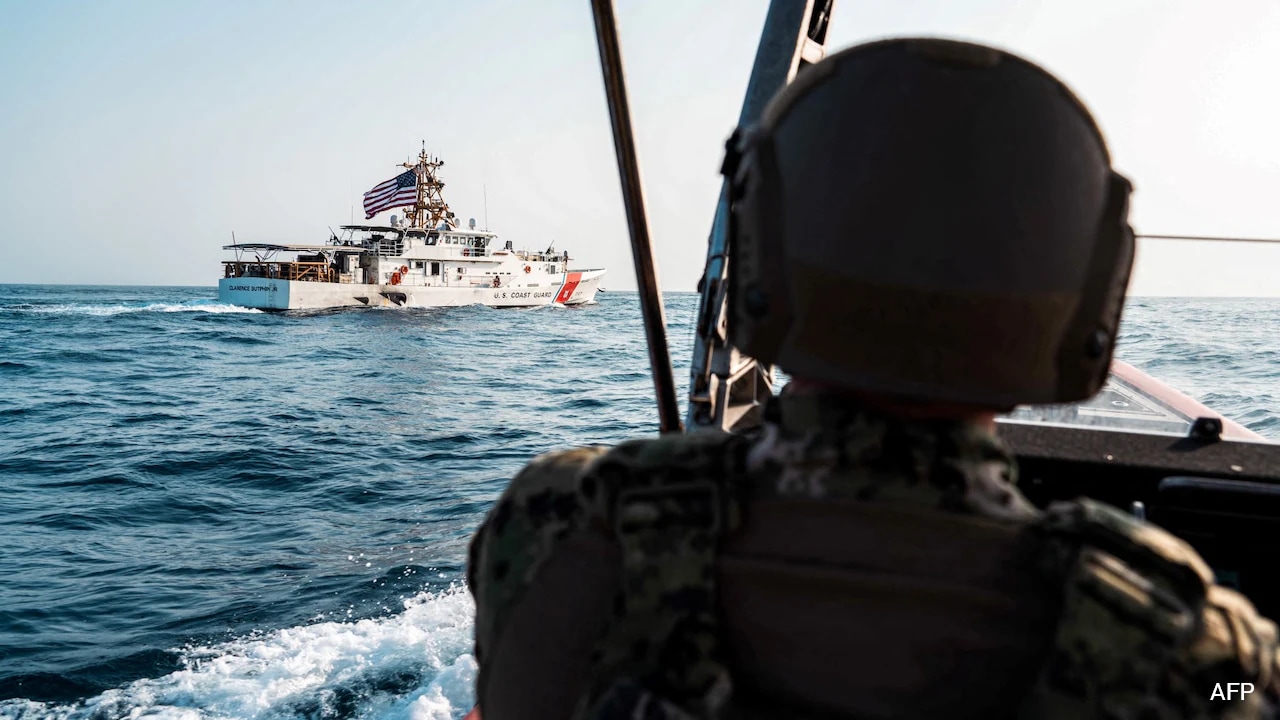
The United States has launched its tenth straight night of air strikes against Iran, aiming to reopen the strategically vital Strait of Hormuz. The Pentagon says the operation is designed to further degrade Iranian military capabilities.
Key Takeaways
- US carries out 10th consecutive night of strikes on Iran
- Goal is to reopen the Strait of Hormuz
- Strikes aim to further degrade Iranian military capabilities
The United States military announced late Monday that it was conducting its tenth consecutive night of air strikes against Iran. The campaign is part of a broader effort to reopen the Strait of Hormuz, a crucial chokepoint for global oil shipments. Defense officials said each targeted strike is intended to weaken Iran’s air‑defence systems, radar networks, and command‑control centers.
Since late 2023, the strategic waterway has been intermittently blocked due to heightened tensions between Tehran and Washington. Reopening the strait is seen as essential for stabilising global oil markets and ensuring the free flow of maritime trade. The US claims that the sustained aerial campaign is calibrated to degrade Iran’s military capacity without escalating into a full‑scale ground conflict.
Historical Background: US‑Iran relations have been fraught since the 1979 Islamic Revolution, which transformed Tehran into a staunch adversary of Washington. The 2015 Joint Comprehensive Plan of Action (JCPOA) offered a brief diplomatic thaw, but the US withdrew in 2018, reinstating severe sanctions. Since then, both sides have engaged in periodic show‑of‑force actions, with the Strait of Hormuz frequently used as a lever in Tehran’s regional strategy.
Why This Matters (इसके मायने क्या हैं)
BozokMedia analysis shows that the continued air campaign could have immediate repercussions on global oil prices and Middle‑East energy security. If the strait reopens swiftly, it may ease supply disruptions, stabilising markets that have been volatile due to the conflict.
The strikes also send a clear signal to regional powers such as India and China, which rely heavily on Hormuz‑bound oil. By attempting to neutralise Iran’s air‑defence capabilities, the US is reshaping the strategic calculus that governs trade routes and diplomatic alignments in the region.
"The security of the Strait of Hormuz underpins global economic stability; ongoing conflict there injects significant uncertainty into international markets," noted Dr. Ali Hassan, senior international security analyst.
Frequently Asked Questions (अक्सर पूछे जाने वाले प्रश्न)
Question 1: Will the strikes immediately lead to the reopening of the Strait of Hormuz?
Answer: No definitive timeline has been provided; the outcome depends on a mix of military, diplomatic, and regional factors.
Question 2: How has Iran responded to the latest US strikes?
Answer: Iranian officials have vowed to resist any further aggression and reaffirmed their commitment to defending national sovereignty.