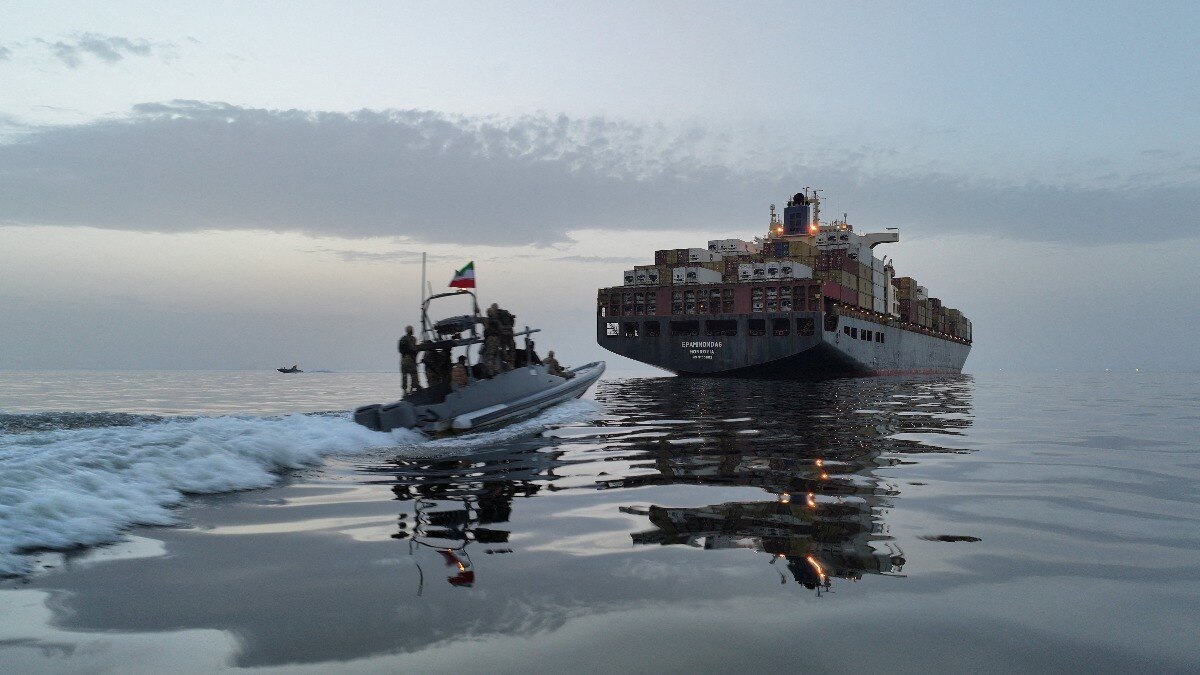
Australian Foreign Minister Penny Wong has warned that the Indo-Pacific region faces a pivotal decision regarding its response to increasing aggression in the South China Sea.
Australian Foreign Minister Penny Wong has issued a stern warning regarding the escalating tensions in the South China Sea. She stated that the region is currently at a crossroads, facing a critical choice in how it responds to the ongoing 'aggression' in these vital waters. Wong's comments underscore the growing concern over maritime stability in the Indo-Pacific.
The South China Sea is not merely a territorial dispute; it is a lifeline for global commerce. As China continues to assert its dominance through expansive maritime claims, neighboring nations find themselves in an increasingly precarious position. Australia has consistently advocated for a rules-based international order, emphasizing that all actions must align with the United Nations Convention on the Law of the Sea (UNCLOS).
Why This Matters (इसके मायने क्या हैं)
BozokMedia analysis shows that the stability of the South China Sea is inextricably linked to the health of the global economy. Any significant escalation in military presence or conflict in this region could disrupt vital shipping lanes, leading to skyrocketing insurance costs and delays in global supply chains. For the average consumer, this could eventually manifest as increased prices for imported goods and energy.
Geopolitically, the situation represents a high-stakes tug-of-war between established international norms and unilateral expansionism. For regional players, the dilemma is twofold: how to protect sovereign rights without triggering an all-out conflict that could devastate their economies, which are often deeply integrated with China. Australia's proactive stance signals a shift toward more robust regional deterrence strategies.
"The adherence to international maritime law is the only way to prevent localized disputes from spiraling into global catastrophes."
Historical Background
The disputes in the South China Sea are rooted in overlapping territorial claims involving China, Vietnam, the Philippines, Malaysia, Brunei, and Taiwan. China's 'Nine-Dash Line' claim covers a vast majority of the sea, a claim that was legally invalidated by the Permanent Court of Arbitration in 2016. Despite this, Beijing has continued to build artificial islands and militarize features to solidify its presence.
| Feature | China's Position | Australia & Regional Allies |
|---|---|---|
| Basis of Claim | Historical 'Nine-Dash Line' | International Law (UNCLOS) |
| Primary Strategy | Island building and militarization | Freedom of navigation and rule of law |
| Objective | Regional Hegemony | Maritime security and open trade |
Frequently Asked Questions (अक्सर पूछे जाने वाले प्रश्न)
Question 1: What is the core of the dispute?
Answer: The dispute involves competing claims over islands, reefs, and maritime boundaries, primarily driven by China's expansive territorial assertions.
Question 2: How does Australia view this issue?
Answer: Australia views the situation as a threat to the rules-based international order and advocates for freedom of navigation and adherence to UNCLOS.