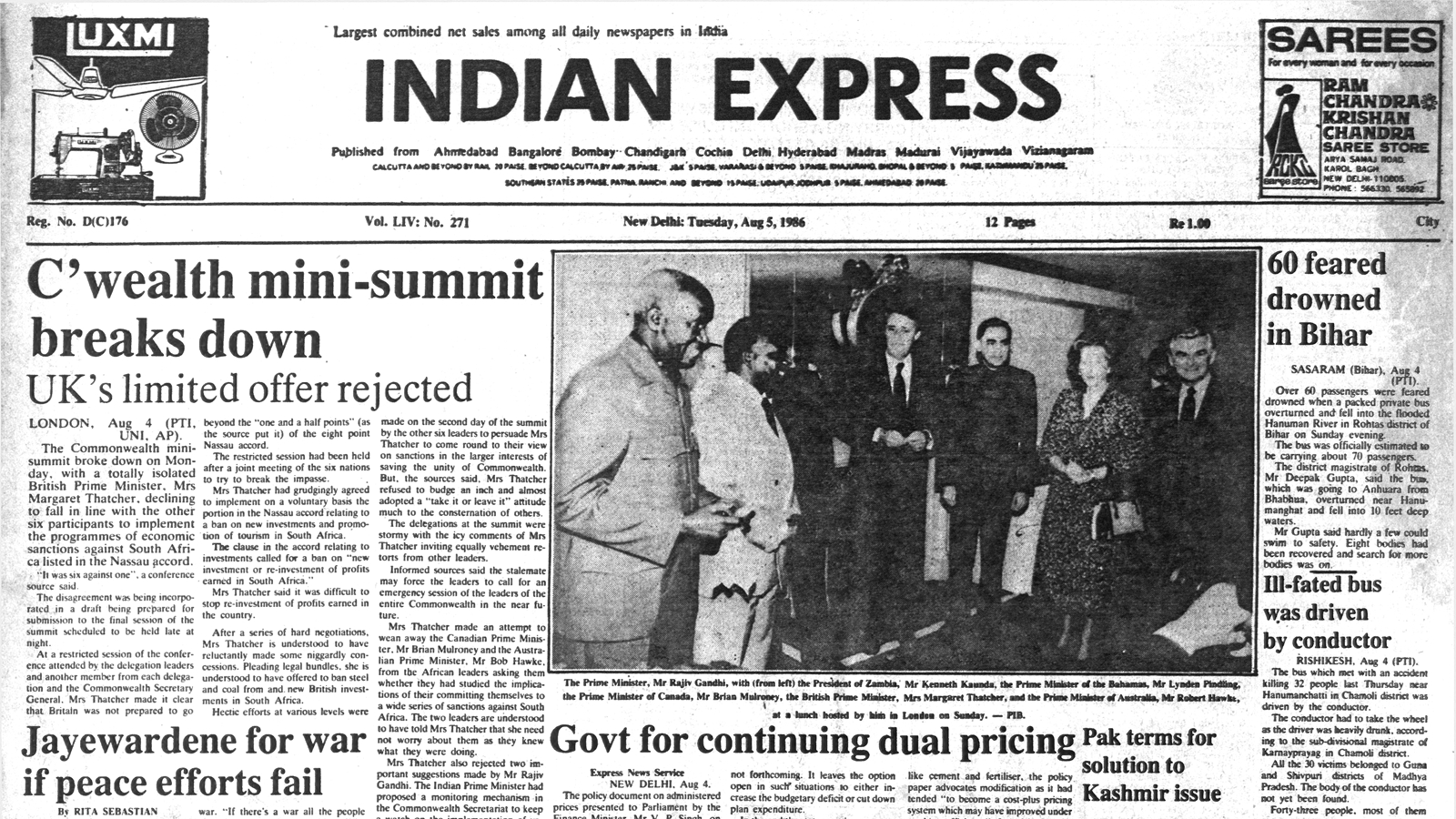
A look back at August 5, 1986: From Margaret Thatcher's diplomatic isolation at the Commonwealth summit to the escalating ethnic tensions in Sri Lanka and political shifts in India and Pakistan.
Key Takeaways
- Margaret Thatcher faced diplomatic isolation after refusing to support sanctions against South Africa.
- Sri Lankan President Jayawardene warned of military action regarding the ethnic crisis.
- Gundu Rao announced the launch of his new party, Congress (Indira Gandhi).
- Pakistan's PM Junejo expressed openness to a political solution for Kashmir.
The events of August 5, 1986, marked a significant chapter in global and regional geopolitics. The headlines of that day painted a picture of a world in transition, defined by diplomatic clashes and internal political struggles.
The Isolation of the 'Iron Lady'
During the Commonwealth mini-summit, British Prime Minister Margaret Thatcher found herself in a state of total isolation. She refused to align with the other six participating nations to implement economic sanctions against South Africa, as outlined in the Nassau Accord. A conference source famously described the standoff as "six against one," highlighting Thatcher's uncompromising stance on the issue.
Why This Matters
BozokMedia analysis shows that Thatcher's refusal to bow to collective pressure was a defining moment of her premiership, illustrating her commitment to unilateral policy even at the cost of international consensus. This event underscored the deep divisions within the Commonwealth regarding the fight against Apartheid.
"Thatcher's defiance at the summit was not just a policy disagreement, but a profound clash of political ideologies on the global stage."
Regional Instability in South Asia
While the West dealt with diplomatic friction, South Asia was grappling with intense internal pressures. In Sri Lanka, President J.R. Jayawardene issued a stern warning, stating that the government would be compelled to resort to military action to resolve the ethnic crisis if peace negotiations failed. He simultaneously sought to reassure citizens that the provincial councils' proposals would not undermine the country's unitary structure.
In India, the political landscape was shifting with former Chief Minister Gundu Rao announcing his new political entity: the Indian National Congress (Indira Gandhi). The upcoming convention at Lal Bagh was set to be a major event, featuring prominent figures like Pranab Mukherjee and Sisir Bose, signaling a significant rift within the Congress hierarchy.
Simultaneously, Pakistan's Prime Minister Mohammad Khan Junejo made a notable statement regarding the Kashmir issue, indicating Pakistan's willingness to accept a political solution based on United Nations resolutions and the Shimla Agreement.
Historical Background
The mid-1980s were characterized by the twilight of the Cold War and the intense global movement to dismantle Apartheid in South Africa. In South Asia, this era was marked by the rise of ethnic nationalism and significant shifts in domestic party politics in India and Pakistan.
Frequently Asked Questions
1. Why was Margaret Thatcher isolated at the summit?
She refused to support the economic sanctions against South Africa that the other Commonwealth members were advocating.
2. What was Gundu Rao's political move?
He launched a new political party named the Indian National Congress (Indira Gandhi).