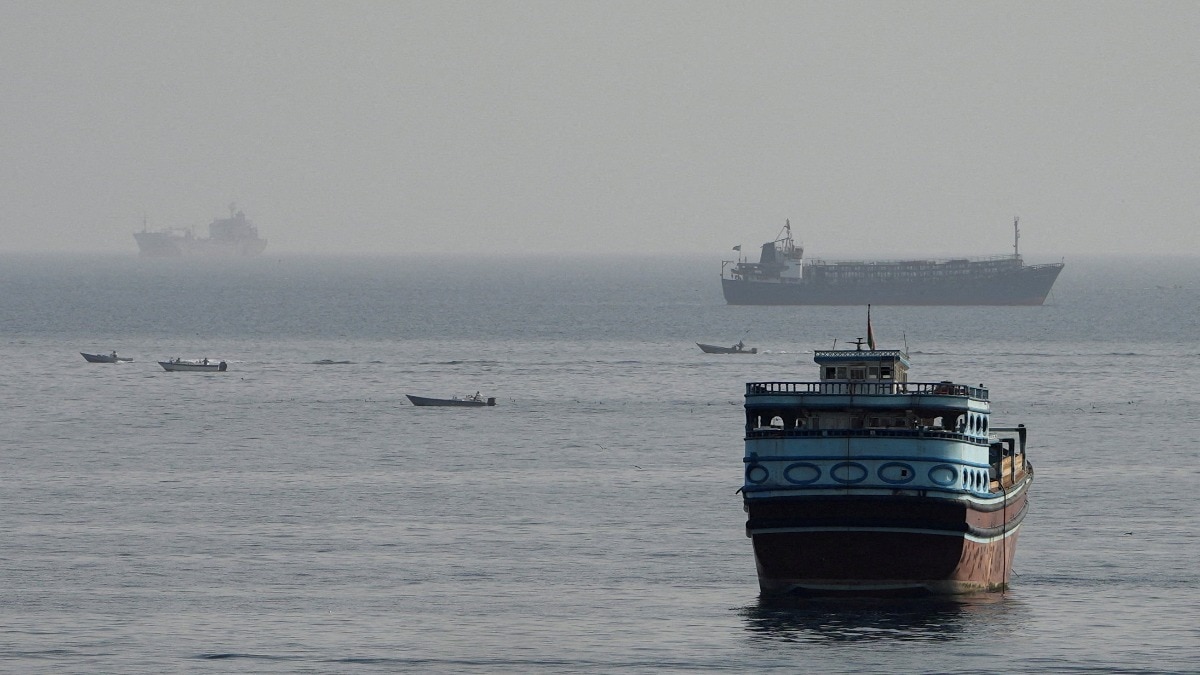
Iran and Oman are approaching a new shipping accord in the Strait of Hormuz, though Tehran insists that full reopening depends on US concessions.
Key Takeaways
- Iran and Oman are nearing a deal for shipping arrangements in the Strait of Hormuz.
- Tehran demands US concessions, including lifting sanctions, for full reopening.
- The UAE reported a recent missile attack on a carrier affiliated with its state oil company.
- The Strait remains a critical global energy artery, handling 20% of global oil/gas shipments.
Iran and Oman are reportedly nearing an agreement regarding shipping arrangements through the strategic Strait of Hormuz. However, Tehran has issued a stern warning that a bilateral deal with Muscat alone will not suffice to fully restore commercial traffic to the waterway.
Iranian Foreign Minister Abbas Araqchi stated on Saturday that Tehran and Muscat are "very close" to reaching an accord. Despite the progress, Araqchi emphasized that the complete reopening of the strait is contingent upon broader diplomatic settlements and compensation from the United States. Iran is currently negotiating a temporary shipping route while technical and legal frameworks for a permanent arrangement are finalized.
Why This Matters
BozokMedia analysis shows that the Strait of Hormuz is a vital pressure point in global geopolitics. As a corridor for roughly one-fifth of the world's oil and gas shipments, any disruption here directly impacts global energy prices and contributes to international inflationary pressures. The current tension represents a high-stakes standoff between regional stability and global economic security.
The stability of the Strait of Hormuz is not merely a regional concern but a fundamental pillar of global energy security.
While Oman has described the negotiations as "positive and constructive," the security situation remains volatile. The United Arab Emirates (UAE) recently reported that an Iranian missile struck a carrier linked to its state oil company. Although no injuries were reported, such incidents complicate the diplomatic efforts to establish a safe passage for commercial vessels.
Historical Background
The Strait of Hormuz has been a flashpoint of conflict for decades. Following the escalation of hostilities between Iran and the US in February 2026, the waterway has faced significant disruptions. The blockade and subsequent attacks have forced international maritime agencies to monitor the region closely, as the flow of energy through this narrow passage is essential for the global economy.
Frequently Asked Questions
1. What are Iran's conditions for reopening the Strait?
Tehran's conditions include an end to US military threats, the lifting of economic sanctions, and the release of frozen Iranian assets.
2. How is Oman involved in this process?
Oman is acting as a key diplomatic partner, negotiating a temporary shipping framework to ease maritime tensions.