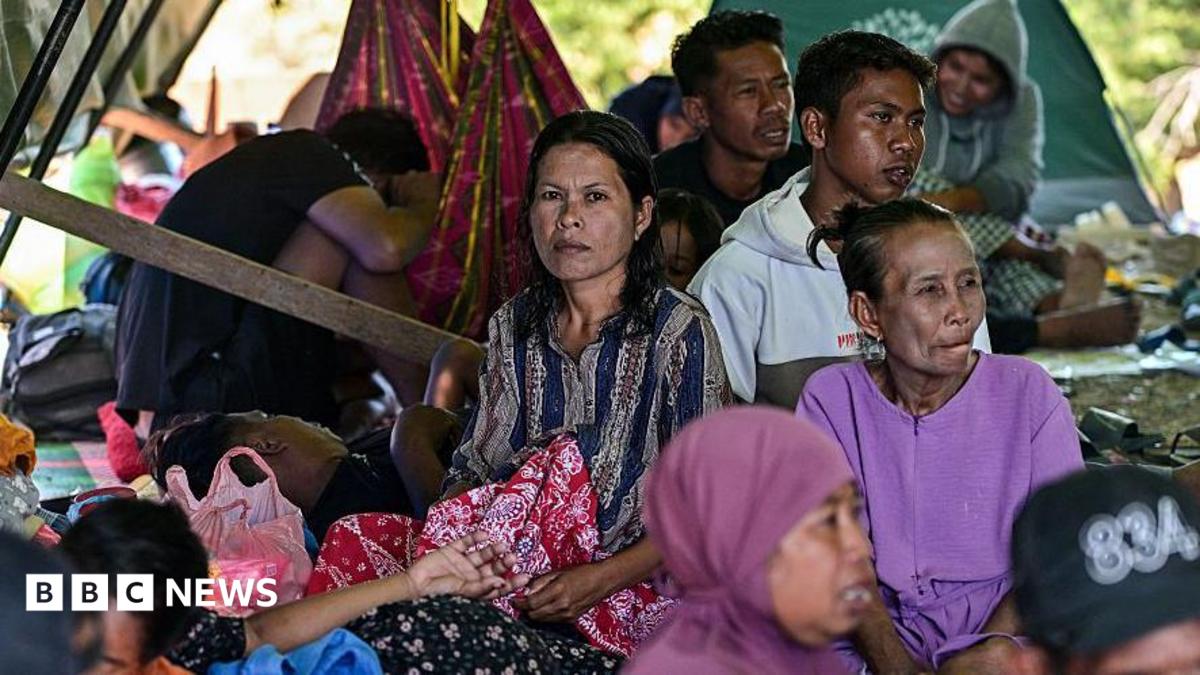
A devastating 7.7 magnitude earthquake has struck Flores, Indonesia, killing at least 53 people and leaving thousands homeless. With critical aid delayed and roads severed by landslides, survivors are now facing a dire threat of starvation.
- 7.7 magnitude quake kills at least 53 people and displaces over 5,000.
- Over 1,000 homes, schools, and health facilities severely damaged or destroyed.
- Landslides have isolated remote villages, cutting off food and medical supplies.
- Survivors are sleeping outdoors in fear of ongoing aftershocks.
The island of Flores, Indonesia, is currently grappling with the aftermath of a catastrophic 7.7 magnitude earthquake that struck early Saturday. With the epicenter located at a shallow depth of just 15km, the tremors caused widespread structural collapse and have left thousands of residents in a state of desperation. Survivors are currently enduring sweltering days and freezing nights in makeshift camps, terrified that subsequent aftershocks will bring down the remaining ruins.
The scale of infrastructure failure is immense. At the Ruteng Regional General Hospital, the collapse of the roof has rendered the pharmacy, laboratory, and operating rooms completely defunct. In a desperate attempt to provide care, medical staff have erected tents amid the rubble to serve as makeshift emergency rooms for the injured. Local officials report a staggering lack of promised medical assistance, leaving the wounded in precarious conditions.
Why This Matters
BozokMedia analysis shows that this event exposes a critical gap in Indonesia's decentralized disaster management. The reliance on regional budgets that are often insufficient for large-scale catastrophes leads to delayed responses in remote areas like Flores. When critical nodes—such as the only regional hospital—fail, the lack of a redundant emergency network turns a manageable disaster into a prolonged humanitarian crisis.
"The proximity of Indonesia to three major tectonic plates makes seismic resilience a matter of national security, not just urban planning."
In Labuan Bajo, a premier tourist gateway to the Komodo National Park, the atmosphere is one of sheer panic. Residents like farmer Anastasia Imad describe the terror of the shaking, noting that many have fled to the hills. However, this migration has created a new crisis: starvation. Local reports indicate that without government guidance or organized evacuation posts, people are running out of food and clean water.
The situation was most dire on Palue Island, specifically in Nitung Village. Cut off for nearly two full days due to life-threatening landslides, the village was only reached on Sunday night. Police reports confirm that electricity and communication lines were totally severed, leaving the community isolated in their darkest hour.
| Affected Area | Primary Damage | Current Status |
|---|---|---|
| Ruteng Hospital | Roof collapse, OT/Lab defunct | Treatment in tents |
| Labuan Bajo | Residential damage | Mass outdoor displacement |
| Nitung Village | Total isolation, home ruins | Aid arrived after 48 hours |
Frequently Asked Questions
Q1: What was the magnitude of the earthquake and the death toll?
A: The earthquake measured 7.7 magnitude, resulting in at least 53 confirmed deaths and thousands of displacements.
Q2: Why is aid not reaching the survivors quickly?
A: The primary obstacles include severe landslides blocking access roads, budget constraints at the regional government level, and the total collapse of communication networks.