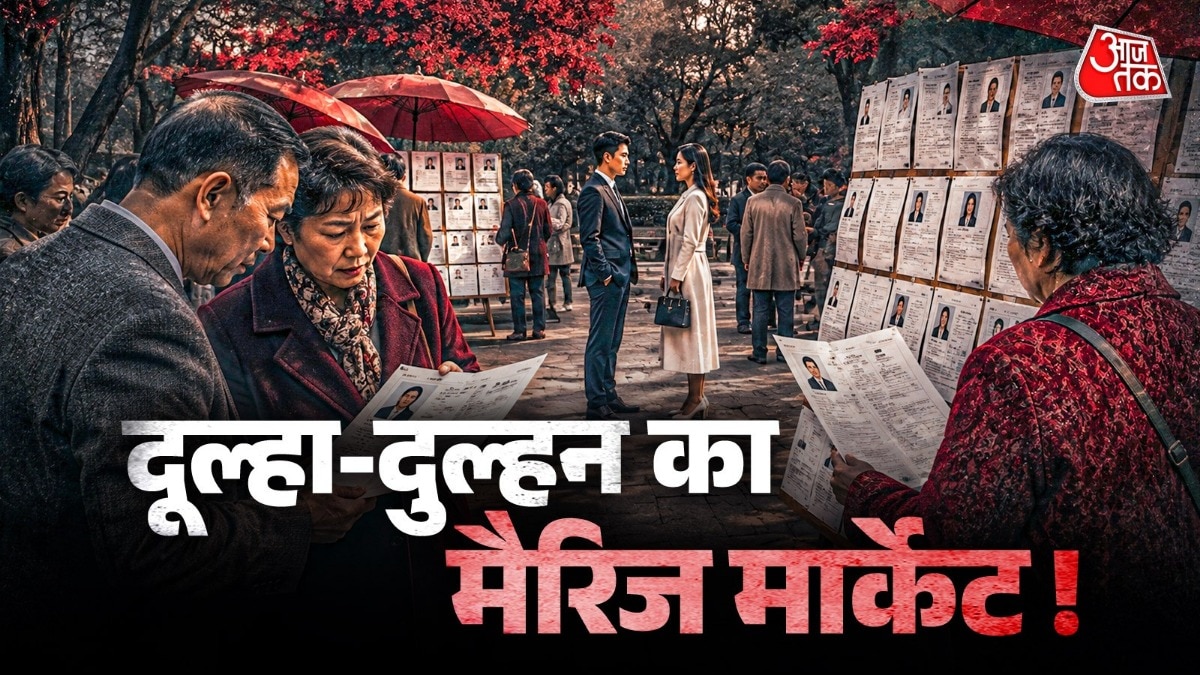
In a striking social phenomenon, parents in China visit public parks to find life partners for their children using detailed resumes. These profiles highlight education, income, and assets to facilitate matchmaking.
- Parents in China use public parks as 'marriage markets' to find partners for their children.
- Resumes detailing education, income, and property are the primary tools for matchmaking.
- Social pressures, especially regarding age and gender, play a significant role in this phenomenon.
While vegetable markets are a common sight globally, China has a much more unique version: a 'marriage market.' In various Chinese cities, public parks transform into bustling matchmaking hubs where parents gather not to buy produce, but to find suitable life partners for their sons and daughters. Instead of romantic encounters, these unions often begin with a piece of paper—a detailed resume.
The Resume: The New Identity for Marriage
In these matchmaking markets, the selection process closely resembles a corporate recruitment drive. Parents carry profiles that list essential criteria such as age, educational qualifications, current occupation, annual income, home ownership, and family background. If a potential match meets the criteria listed on the resume, families initiate direct communication to discuss the possibility of a formal alliance.
Why This Matters
BozokMedia analysis shows that this practice highlights the deep-seated tension between traditional family values and the modern economic reality in China. It underscores how marriage is often viewed as a strategic alliance aimed at ensuring socio-economic stability rather than just a romantic bond.
The Chinese marriage market is a profound reflection of how economic security and social status often supersede individual romantic preferences in traditional structures.
Interestingly, these markets are not limited to the single population. There are even designated sections or types of profiles for divorcees, indicating that the search for companionship through structured matchmaking extends across different life stages.
Historical and Social Context
Historically, marriage in Chinese culture has been seen as a union between two families, emphasizing stability and lineage. This tradition persists today, often clashing with the aspirations of the younger generation. A significant social pressure exists for women who remain unmarried past the age of 30, often disparagingly referred to as 'Sheng Nu' or 'leftover women.' This term reflects a controversial societal view that prioritizes marriageability over career and personal autonomy.
Frequently Asked Questions
1. What information is included in a marriage resume?
Key details include age, education, job status, salary, and whether the individual owns a house.
2. Do the children participate in these markets?
Primarily, it is the parents who act as matchmakers, though the younger generation is increasingly seeking autonomy in partner selection.