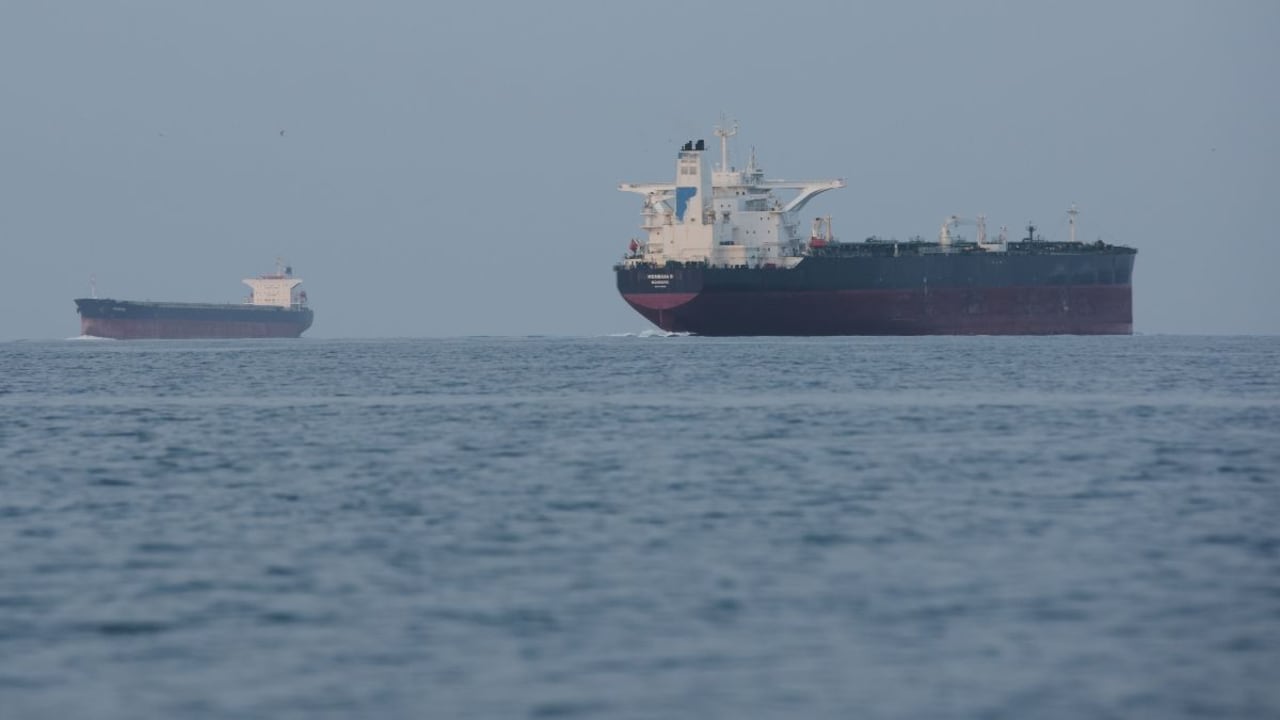
Oil prices fell as investors awaited details of President Donald Trump's new economic pressure campaign against Iran. Asian equities traded lower, while attention also focused on Nvidia's earnings and the upcoming Jackson Hole meeting.
- Brent crude fell 2.3% to around $92 a barrel.
- Trump labeled the new sanctions the "most crushing" economic operation against Tehran.
- Asian markets slipped, with tech stocks under pressure while Nvidia’s earnings loom.
Key Developments
On August 24, 2026, oil markets slid as investors braced for specifics of a U.S. plan to further isolate Iran’s economy, a strategy President Donald Trump described as the “most crushing” financial operation ever against Tehran. Brent crude dropped 2.3% to roughly $92 per barrel, and Asian equity indices opened lower.
Trump’s announcement follows a broader U.S. effort to rally allies and even China to join a fresh wave of economic pressure on Iran, a country already grappling with six months of a protracted West‑Asia conflict.
Historical Background
The United States first imposed sweeping sanctions on Iran after the 1979 Islamic Revolution. The 2015 Iran nuclear deal (JCPOA) offered temporary relief, but the Trump administration re‑imposed and intensified sanctions in 2018. This latest campaign, billed as the toughest yet, signals a further escalation in economic warfare.
Meanwhile, Asian markets were rattled by tech sector volatility. South Korea’s KOSPI slipped 1.4% after Samsung announced an $80 billion share‑buyback, while rival SK Hynix also saw its shares retreat from June highs driven by AI optimism.
Investors are also eyeing Nvidia’s upcoming earnings report. The chipmaker, a bellwether for artificial‑intelligence spending, posted a record $81.6 billion quarterly revenue, reinforcing the view that AI remains a powerful growth engine despite broader market jitters.
Why This Matters
BozokMedia analysis shows that the convergence of rising oil prices, aggressive U.S. sanctions, and volatile tech stocks creates a perfect storm that could reshape global commodity flows and investment strategies in the coming months.
"Economic sanctions remain a potent tool, but their effectiveness hinges on multilateral enforcement," says Dr. Elena Martinez, senior fellow at the Center for Global Policy.
U.S. Treasury Secretary Scott Bessent signaled that further details would be disclosed in a Monday news conference, urging Beijing and other partners to “get with the programme.” Vice President J.D. Vance described the plan as a “delicate dance,” noting that Iran may attempt to retaliate economically.
The annual Jackson Hole symposium, gathering central bankers and finance chiefs, will also be closely watched for clues on U.S. monetary policy, especially after the Treasury’s recent bond‑buying operations pushed the 30‑year yield to levels not seen since 2007.
Frequently Asked Questions
Q1: How will Trump’s new economic war affect Iran’s economy?
A: The plan targets Iran’s banking, oil export, and international financing channels, potentially slashing revenue and deepening economic isolation.
Q2: What impact could falling oil prices have on global markets?
A: Lower oil prices can ease inflation pressures for import‑dependent economies but hurt export‑driven oil producers, creating mixed effects across regions.