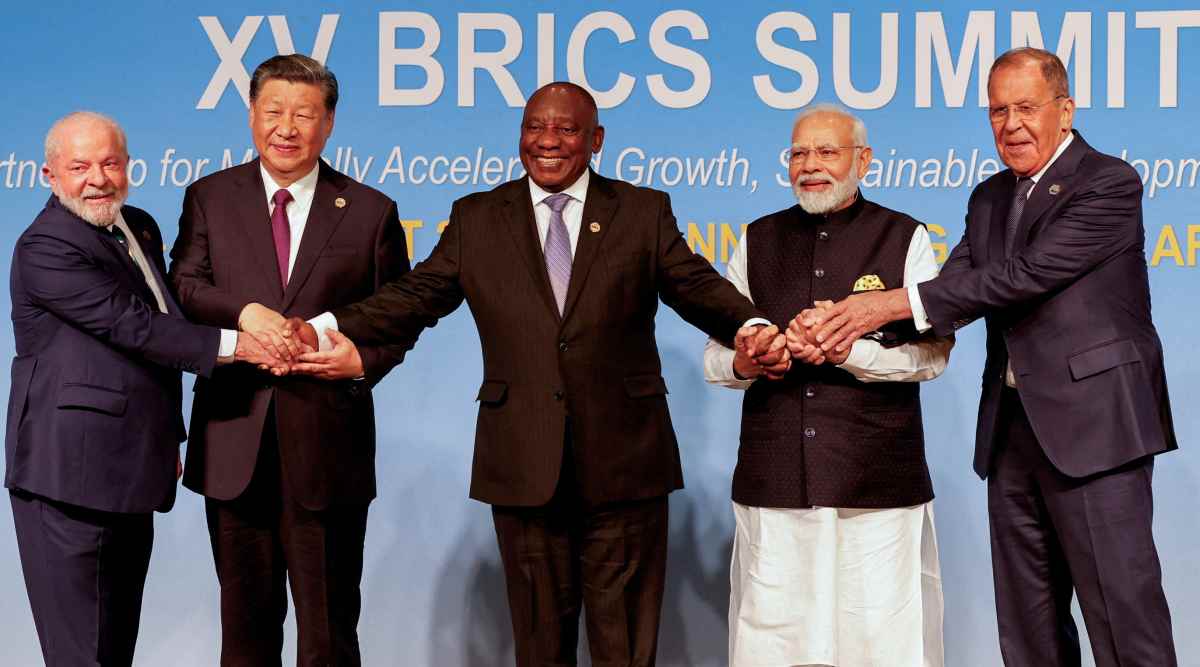
As New Delhi prepares to host the 18th BRICS Summit, the focus shifts from mere advocacy to tangible capability-building in a rapidly changing geopolitical landscape.
- India will host the 18th BRICS Summit in New Delhi on September 12-13.
- The expanded BRICS now represents 45% of the world's population and 37% of global GDP (PPP).
- The presidency aims to move beyond declarations toward practical cooperation in technology, energy, and food security.
The upcoming 18th BRICS Summit, scheduled for September 12-13 in New Delhi, arrives at a critical juncture in global history. While BRICS has long served as a platform for non-Western nations to demand a fairer international order, the expanded group now faces a crisis of delivery. In an era defined by technological competition and supply-chain disruptions, mere advocacy for reform is no longer sufficient; the world demands resilience and practical solutions.
India’s presidency is tasked with navigating the complexities of a much larger and more diverse bloc. With the inclusion of new members, BRICS now commands a massive share of global energy production and critical minerals. However, this expansion has also brought internal friction, as seen in recent diplomatic deadlocks over regional conflicts. The challenge for New Delhi is to maintain cohesion without diluting the group's strategic purpose.
Why This Matters
BozokMedia analysis shows that the credibility of BRICS will no longer be judged by the presence of heavyweight leaders like Xi Jinping or Vladimir Putin, but by its ability to translate shared interests into measurable outcomes. For the Global South, BRICS must evolve from a political forum into a functional economic and technological engine.
The significance of the summit lies in whether BRICS can turn participation into cooperation that builds actual capabilities.
A cornerstone of India's vision is the strengthening of the New Development Bank (NDB). The goal is to move NDB financing toward strategic infrastructure, such as digital grids, logistics corridors, and climate adaptation projects. Furthermore, the promotion of local currency use in trade and settlement is seen as a vital step toward reducing dependence on traditional financial structures and lowering transaction costs.
One of the most ambitious proposals discussed is a 'Digital BRICS Technology Cooperation Exchange.' This would act as a clearinghouse, matching the technological advancements of member states—such as India’s digital public infrastructure—with the urgent development needs of the Global South. This shift from 'best practice sharing' to 'transaction-based partnerships' is essential for real impact.
Historically, BRICS has functioned as a non-Western forum seeking strategic autonomy. However, to remain relevant, it must resist the trend of 'forced trade' and unilateral coercive measures. By focusing on seven key priorities—ranging from energy security to institutional reform—India seeks to ensure that the momentum of this presidency lasts well beyond 2027.
Frequently Asked Questions
1. What is the main challenge facing the expanded BRICS group?
The primary challenge is maintaining consensus and cohesion among a much more diverse set of nations with differing political and economic priorities.
2. How does India plan to strengthen BRICS' economic impact?
India is focusing on strengthening the New Development Bank, promoting local currency trade, and creating technology exchange platforms for the Global South.


