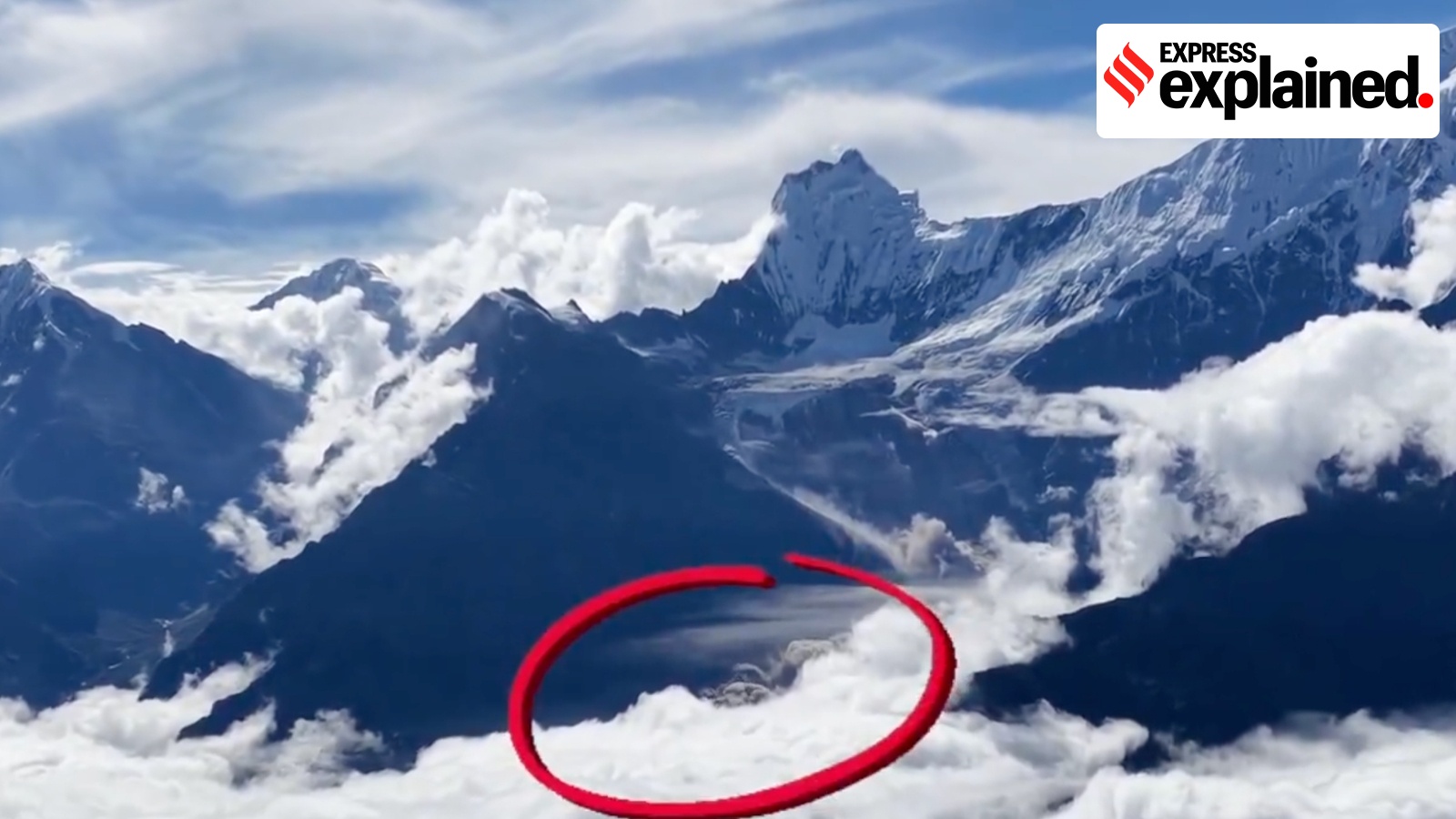
Recent flash floods in Nepal and Tibet have been linked to a massive glacial collapse in the Himalayas. Explore the science behind how melting ice and unstable terrain create these catastrophic events.
- Glacial collapse involves the sudden detachment of massive ice, rock, and water masses from steep slopes.
- Rising global temperatures create subglacial water channels that destabilize the ice structure.
- The debris can form temporary natural dams, leading to secondary, more violent flooding waves.
- Climate change is significantly increasing the frequency of these events in the Himalayan region.
The devastating flash floods that recently swept through Nepal and Tibet have been attributed to a massive glacial collapse in the Himalayas. Authenticated drone footage has provided visual evidence of the moment the collapse occurred, showing ice and rock debris hurtling into the Lhende Khola and Bhote Koshi river systems, devastating inhabited valleys below.
What is a Glacial Collapse?
A glacial collapse refers to the sudden detachment of a large mass of ice, rock, and water from a glacier situated on a steep mountain slope. This phenomenon can be triggered by various geological and environmental factors, including earthquakes, rapid temperature fluctuations, or internal structural changes within the glacier itself.
The Mechanics of Collapse
Glaciers form through the long-term accumulation and compression of snow into solid ice. As this mass grows, it becomes susceptible to gravity. Glaciologist Iqbal S. Hasnain explains that steep mountain gradients and warming temperatures are primary drivers. "Warming temperatures cause a lot of melted water to be collected in subglacial channels," Hasnain noted, adding that these channels can cause the lower portion of a glacier to collapse, releasing massive volumes of water.
The accumulation of meltwater within glacial cracks creates intense internal pressure, eventually splitting the ice structure entirely.
Why This Matters
BozokMedia analysis shows that the composition of the ground beneath the glacier plays a critical role. In the Himalayas, many glaciers rest on soft mud or clay. As water travels through networks of cracks at the base, it destabilizes the foundation. When the collapse occurs, the resulting mixture of water, loose dirt, and rocks creates a high-velocity torrent that races through narrow mountain valleys.
The Danger of Secondary Flooding
A significant complication arises when the debris from a collapse blocks river channels, creating temporary natural dams. When these dams eventually fail under the immense pressure of accumulated water, they unleash a second, often more destructive, wave of flooding—a phenomenon witnessed during the recent Nepal disaster.
Frequently Asked Questions
1. How does climate change affect glacial stability?
Climate change accelerates melting, which increases the volume of water trapped within and beneath glaciers, leading to higher structural stress and more frequent collapses.
2. Can these floods be predicted?
While sudden, advanced seismic monitoring and high-altitude early warning systems are being developed to improve detection and provide critical lead time for evacuations.