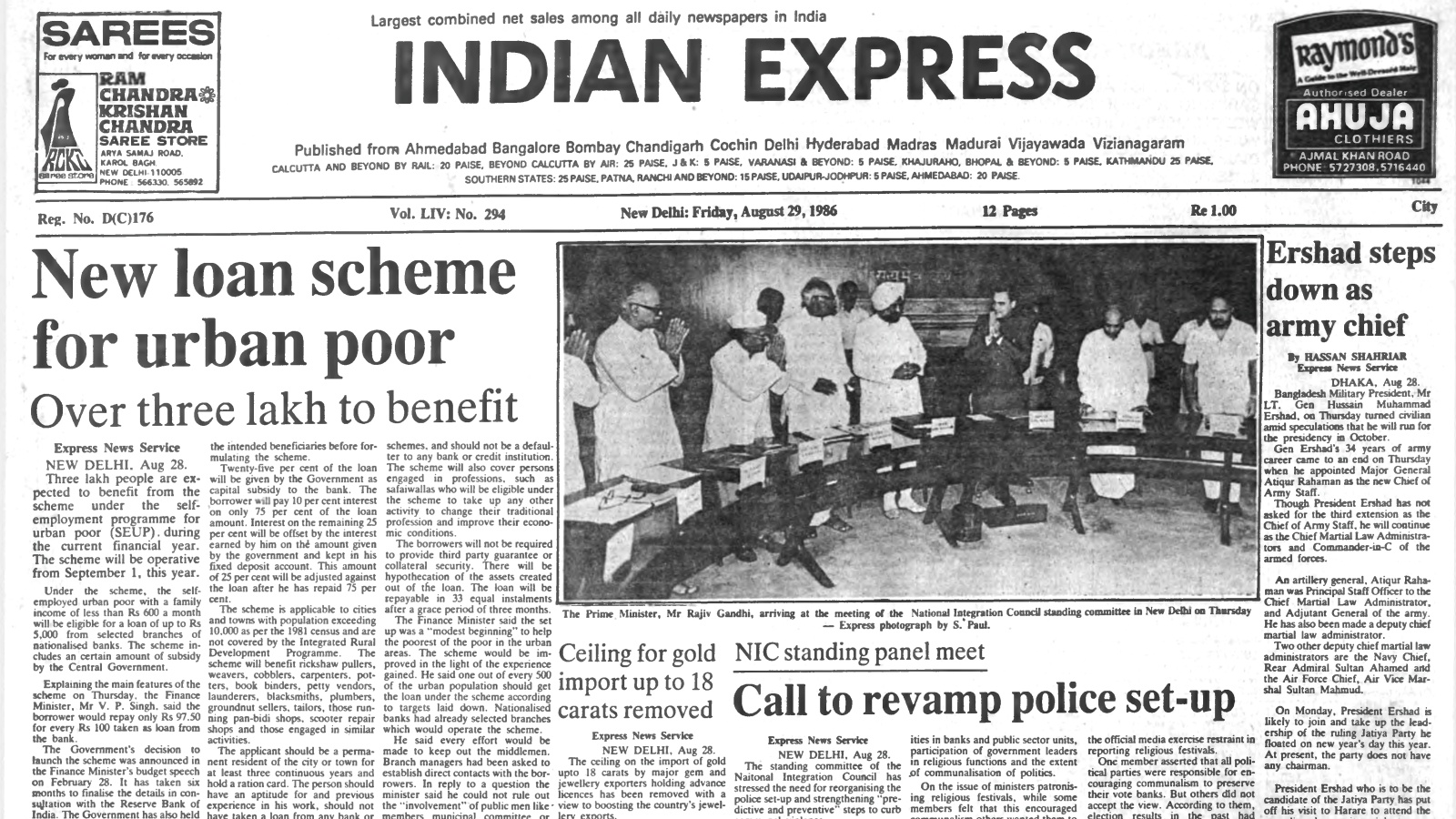
On August 29, 1986, Bangladesh President Lt Gen Hussain Muhammad Ershad transitioned to civilian status, paving the way for his presidential ambitions. This move marked the end of his formal military career while retaining his grip on power.
- Lt Gen Hussain Muhammad Ershad transitioned from military to civilian status.
- Major General Atiqur Rahman was appointed as the new Chief of Army Staff.
- Ershad maintained control as Chief Martial Law Administrator and Commander-in-Chief.
On August 29, 1986, a pivotal moment in the political landscape of Bangladesh unfolded as President Lt Gen Hussain Muhammad Ershad formally stepped down from his military duties. This transition occurred amidst intense speculation that Ershad intended to contest the upcoming presidential elections in October. By shedding his military uniform, Ershad aimed to rebrand himself as a civilian leader to bolster his political legitimacy.
The conclusion of his active military career was marked by the appointment of Major General Atiqur Rahman as the new Chief of Army Staff. However, it is crucial to note that while his formal military role ended, his command over the state machinery remained intact. Ershad continued to serve as the Chief Martial Law Administrator and Commander-in-Chief, ensuring that the transition from military to civilian persona did not diminish his executive authority.
Why This Matters
BozokMedia analysis shows that Ershad's maneuver was a strategic attempt to bridge the gap between military dictatorship and civilian governance. By transitioning to a civilian role, he sought to navigate the complexities of democratic expectations while maintaining the absolute control characteristic of his martial law administration.
The shift from military to civilian status is often a tactical move designed to sanitize a regime's image for electoral competition.
The historical context of this period was fraught with regional tension. At the same time, India expressed "deep dismay" over allegations made by Pakistan's President Zia-ul-Haq, who accused New Delhi of supporting the opposition movement led by Benazir Bhutto. Furthermore, Libya was actively calling for a UN investigation into US accusations regarding Muammar Gaddafi.
Historical Background
Hussain Muhammad Ershad's tenure was defined by his ability to navigate the volatile waters of Bangladeshi politics through both military might and political maneuvering. His decision in 1986 was a cornerstone of his long-term strategy to transform a military-led government into a civilian-led presidency, a process that would shape the nation's political trajectory for years to come.
Frequently Asked Questions
Question 1: Why did Ershad leave his military post?
Answer: He stepped down to transition into a civilian political role in anticipation of the presidential elections.
Question 2: Who succeeded him as the Chief of Army Staff?
Answer: Major General Atiqur Rahman was appointed to the position.