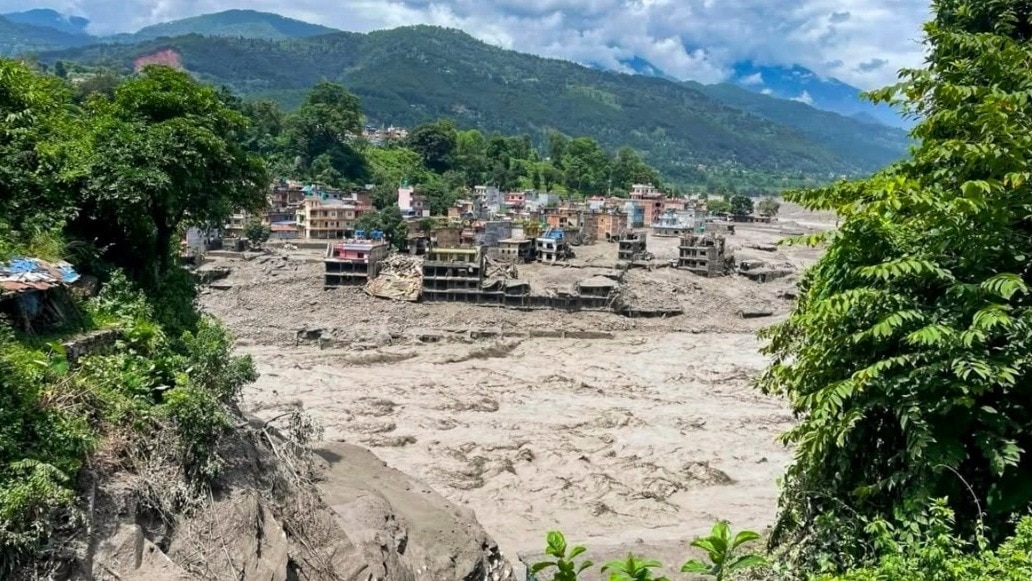
A catastrophic flash flood triggered by a glacial burst in Nepal has claimed nearly 600 lives, leaving 2,500 missing, including over 300 Indian nationals. As rescue operations intensify, authorities warn of a secondary flood threat from a newly formed artificial lake on the Bhote Koshi River.
- Death toll rises to 587, with around 2,500 people currently reported missing.
- Over 320 Indian nationals and 100 people of Indian origin remain untraceable.
- A newly formed landslide-dammed lake holding 2 million cubic meters of water poses an imminent threat.
Nepal is grappling with one of its worst natural disasters in recent history as devastating flash floods, triggered by a glacial lake outburst flood (GLOF), have ravaged mountainous terrains. The death toll has officially climbed to 587, with fears rising for the 2,500 individuals still missing. The catastrophe, which began in the high-altitude regions, has washed away entire villages, critical infrastructure, and key hydroelectric projects, leaving rescue teams struggling against hostile weather and destroyed transit routes.
The humanitarian crisis has crossed borders, deeply affecting neighboring India. According to the Ministry of External Affairs, approximately 320 Indian nationals and 100 people of Indian origin are currently unaccounted for. Many of these individuals were working on bilateral infrastructure initiatives, including the Trishuli hydroelectric project. On a positive note, officials confirmed that around 400 Indian citizens stranded in Tibet are safe, and 96 others have successfully crossed back into Nepal. India has dispatched two consignments of emergency relief materials to aid Kathmandu's desperate rescue efforts.
Preliminary investigations indicate that the disaster was initiated by a massive glacial collapse in the upper reaches of the mountains. A colossal mixture of ice, rock, and debris cascaded into the Lende River, creating a temporary block. When this natural dam breached under immense pressure, a violent torrent of mud and water surged downstream into the Bhote Koshi and Trishuli rivers, obliterating bridges, roads, and settlements in its wake.
Why This Matters
A specialized BozokMedia analysis shows that the escalating frequency of glacial lake outburst floods (GLOFs) in the Hindu Kush-Himalayan region is a stark indicator of rapid climate destabilization. Beyond the immediate humanitarian tragedy, this disaster exposes the extreme vulnerability of transboundary infrastructure, particularly the multi-billion-dollar hydroelectric projects that power South Asia. The destruction of over 13 hydropower plants highlights the urgent need for climate-resilient engineering and robust, real-time transboundary early warning systems between China, Nepal, and India.
"This tragedy underscores the terrifying reality of Himalayan climate vulnerability; without immediate transboundary cooperation on glacial monitoring, we are looking at an era of unavoidable downstream disasters." - Dr. Arbindra Shrestha, Senior Hydrologist.
The danger is far from over. Satellite imagery and aerial surveillance have revealed a highly unstable, newly formed landslide-dammed lake in the upper catchment of the Bhote Koshi River. Chinese authorities have warned their Nepalese counterparts that the lake currently holds approximately 2 million cubic meters of water, with an additional 3 million cubic meters expected to accumulate over the next three days. A sudden breach of this fragile barrier could trigger a secondary, even more destructive flash flood downstream.
| Region | Confirmed Deaths | Missing Persons | Key Infrastructure Damaged |
|---|---|---|---|
| Nepal | 587 | ~2,500 | 36+ bridges, 13 Hydro projects damaged |
| Tibet (China) | 5 | ~558 | Roads, power stations, Kathmandu-Lhasa route cut off |
The physical destruction of at least 36 key bridges has isolated dozens of mountainous villages, severely hindering the distribution of food, medical supplies, and clean drinking water. Nepal has mobilized 7,451 security personnel, including 2,391 army troops, to conduct search-and-rescue operations. To restore vital transport links, Kathmandu has officially requested assistance from both India and China to construct 42 tactical Bailey bridges.
Frequently Asked Questions
1. What caused the initial flash floods in Nepal?
The floods were triggered by a massive glacial collapse in the high-altitude mountains, which blocked the Lende River with debris before bursting and sending a torrent of water down the Bhote Koshi and Trishuli rivers.
2. How many Indian citizens are affected by this disaster?
Approximately 320 Indian nationals and 100 people of Indian origin are currently missing, while 400 stranded in Tibet have been confirmed safe, and 96 have successfully returned to Nepal.