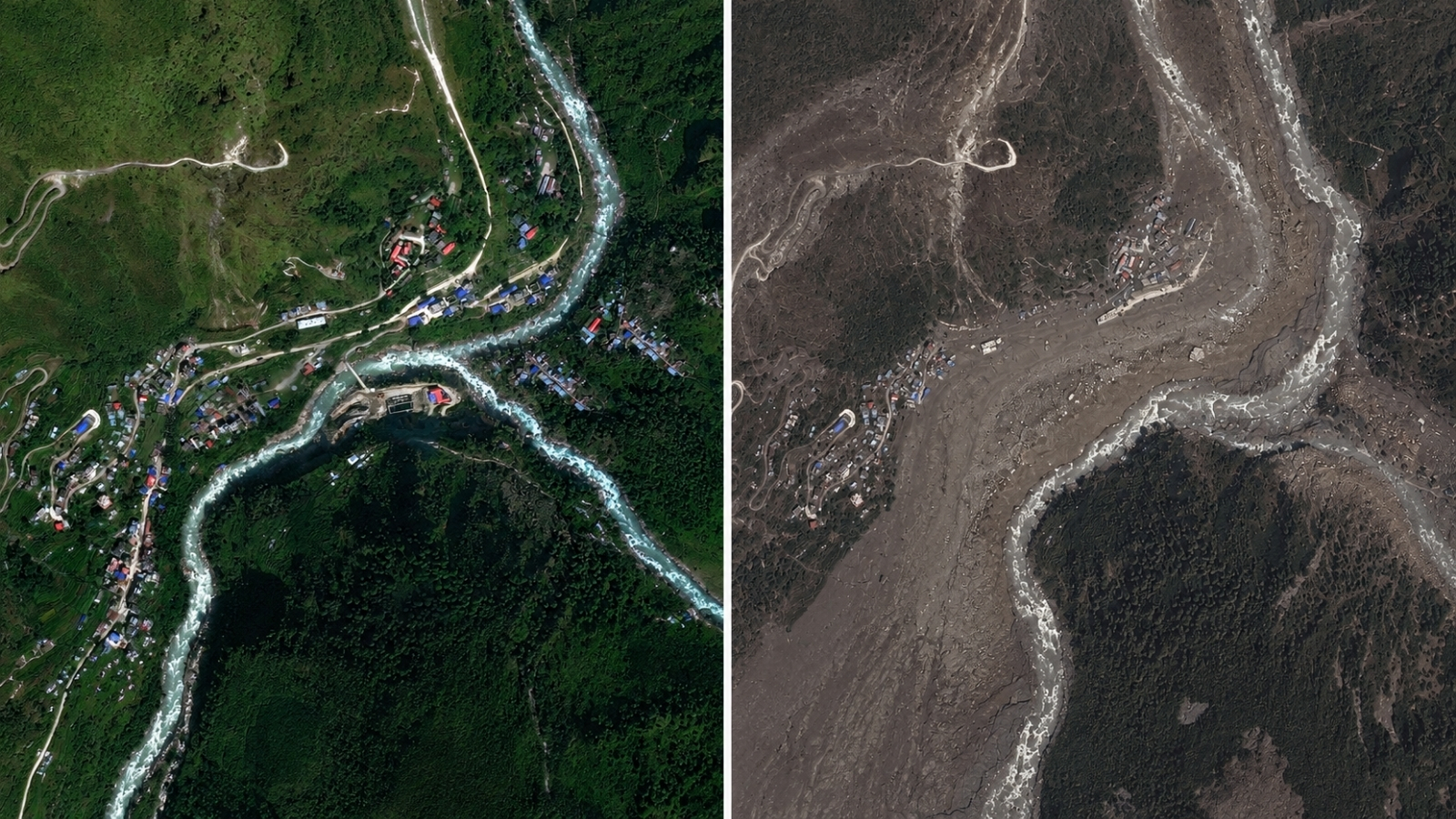
Sudden flash floods in Nepal's Nuwakot district have buried entire hamlets under mud, destroying homes, orchards, and livelihoods in an instant.
- Massive flash floods hit the '1 Number Pul' area in Nuwakot district, Nepal.
- Most of the 19 houses in the hamlet have been buried or destroyed by mud and debris.
- Agricultural lands, including rice, maize, and fruit orchards, are completely submerged.
- The disaster has impacted infrastructure near the Trishuli hydroelectric project.
Until Wednesday morning, the '1 Number Pul' area in Nepal’s Nuwakot district was a tranquil hamlet nestled along the banks of the Bhotekoshi River. Today, that idyllic landscape has been replaced by a desolate expanse of sludge and debris. The sudden flash floods have left the community in ruins, with most residents forced to flee to higher ground.
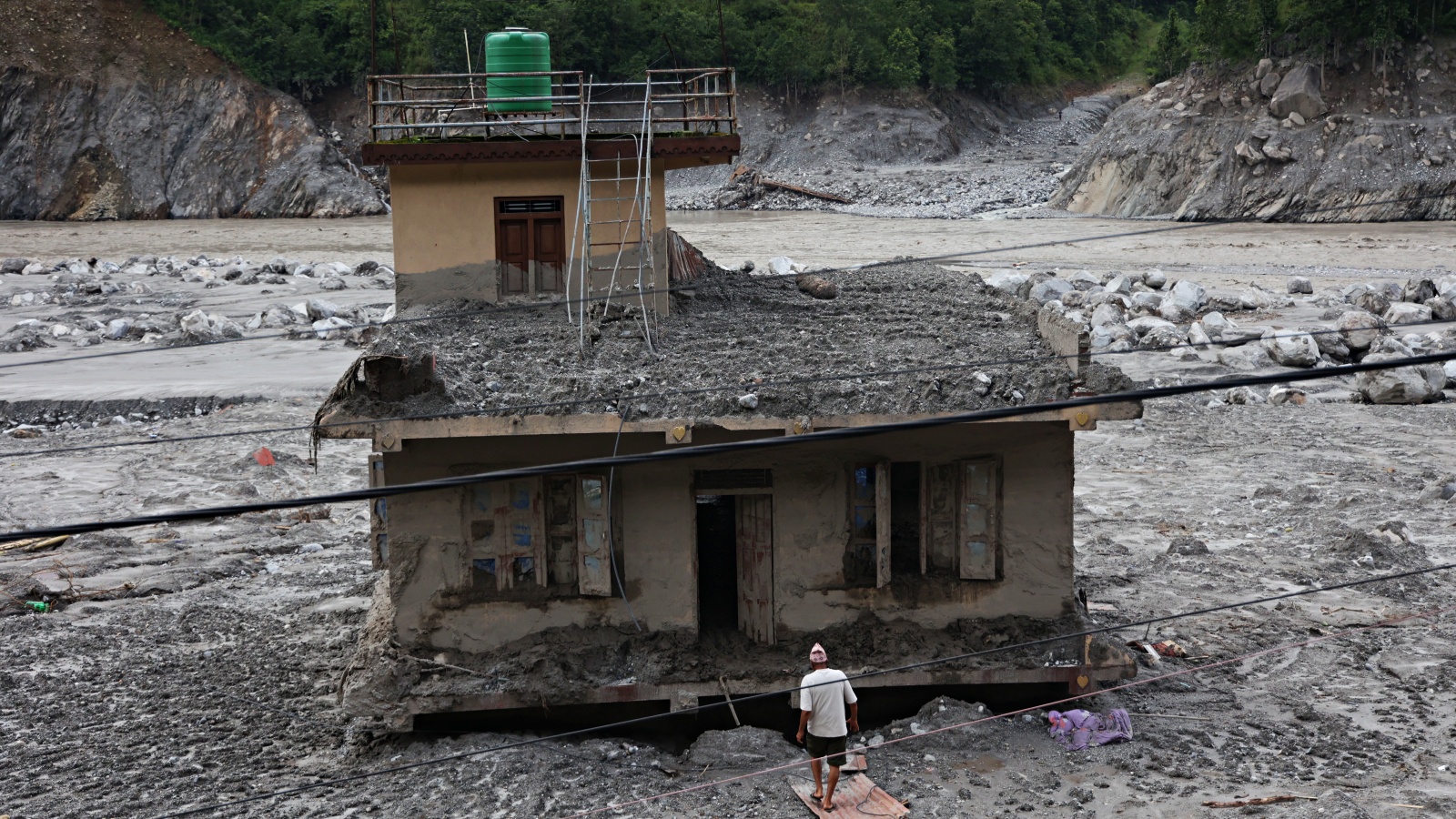
The scale of destruction is immense. Of the original 19 houses that made up this community, only seven remain standing, and even those are struggling against the elements; three are buried in mud up to their second floors. The livelihoods of the residents—vast fields of rice and maize, as well as lush banana and apple orchards—have been wiped out in a matter of minutes.
Why This Matters
BozokMedia analysis shows that the intensity of this flood highlights the increasing vulnerability of riverbank settlements in the Himalayan region. The sheer volume of 'black water' and debris described by survivors suggests a massive landslide upstream, which can turn a standard river overflow into a catastrophic wall of mud.
"I had never seen such a sight—a wall of what appeared to be black water was rushing down, swallowing everything in its path."
The geography of the area is deeply tied to the Trishuli hydroelectric project, a landmark joint venture between India and Nepal commissioned six decades ago. The flood has not only devastated homes but has also buried the vital bridge that gave the hamlet its name, along with the three-lane highway leading to the Rasuwa district, effectively severing critical transport links.
Survivor Dwarka Nath Pyakuryal, 60, shared a harrowing account of the event. While his family managed to escape to the third floor, they lost a family member and their entire source of sustenance. The sight of his half-eaten breakfast still sitting on a third-floor table, amidst a house surrounded by mud, serves as a haunting testament to the suddenness of the disaster.
Historical Background
The Trishuli hydroelectric project has been a cornerstone of regional energy cooperation for sixty years. The area around '1 Number Pul' has historically relied on the stability of the river and the infrastructure provided by the project to sustain its agricultural-based economy.
Frequently Asked Questions
1. How many people were affected in Nuwakot?
The hamlet alone had a population of about 150 people, many of whom have been displaced.
2. Is the Trishuli project damaged?
While the project is a major landmark, the immediate surrounding infrastructure, including roads and local bridges, has been heavily impacted by the silt.