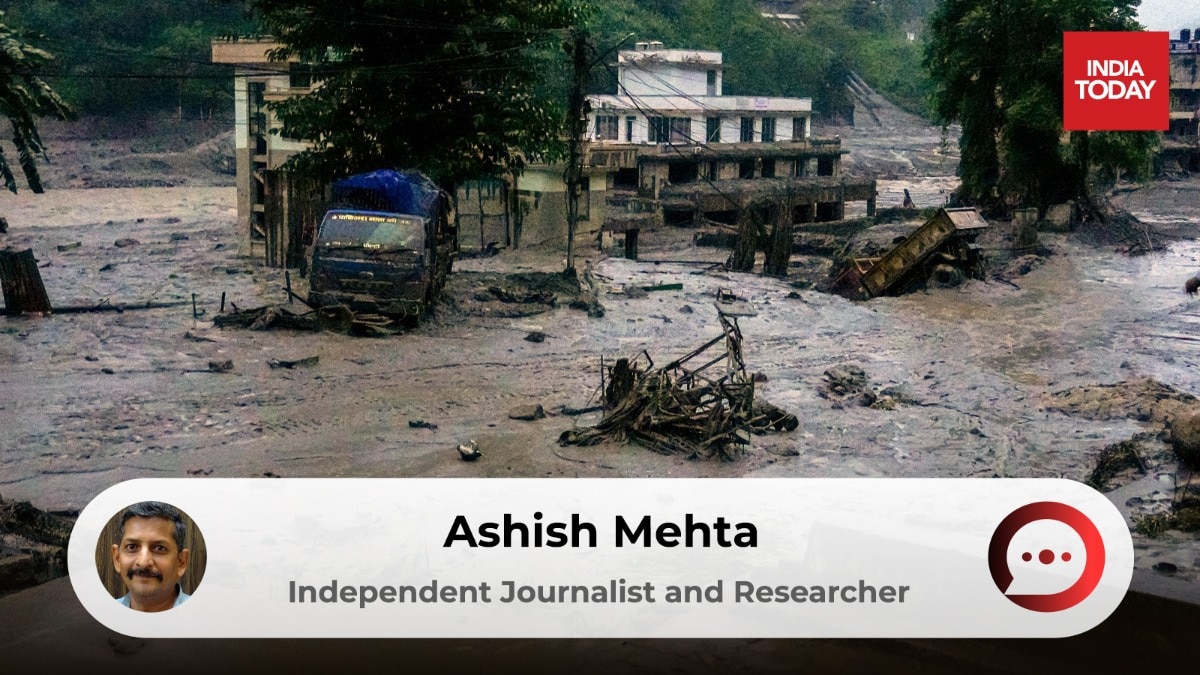
As flash floods devastate Nepal, the fate of Kailash-Mansarovar pilgrims raises haunting questions about the rising risks of Himalayan pilgrimages. Between shifting climates and treacherous terrains, the line between spiritual redemption and survival is blurring.
- Recent flash floods in Nepal have cast a shadow of uncertainty over the safety of Kailash-Mansarovar pilgrims.
- Climate change is significantly increasing the frequency of landslides and floods in the Himalayan region.
- Historical tragedies, such as the Malpa landslide, serve as a grim reminder of the terrain's volatility.
- The intersection of religious devotion and extreme environmental risks is creating a new era of collective tragedies.
The recent devastation caused by flash floods in Nepal has left the fate of Kailash-Mansarovar pilgrims hanging in a state of terrifying uncertainty. This tragedy serves as a stark reminder of the dual nature of the Creator—a force that can both inspire awe and instill absolute terror. As pilgrims navigate the most sacred and remote corners of the Himalayas, they are increasingly finding themselves pitted against an environment that is becoming more unpredictable by the day.
Historical Context: The Ghost of Malpa
The dangers of these trekking routes are not merely theoretical; they are etched in the blood of past travelers. In the late 1990s, the village of Malpa in Uttarakhand's Pithoragarh district served as a vital night camp for pilgrims. However, on August 18, 1998, a massive landslide at 3 am wiped the hamlet off the map, killing sixty pilgrims and approximately 200 residents. The tragedy, which claimed the life of prominent figures like dancer Protima Bedi, remains a haunting memory for those who traverse these paths, reminding them that the ground beneath their feet can turn hostile in an instant.
The journey to the holy mountain involves crossing passes exceeding 18,000 feet. While modern infrastructure has slightly eased the trek to the Lipulekh pass, the environment remains formidable. Pilgrims often depart in the dead of night, accompanied by ITBP personnel, to cross high-altitude passes before the fierce daytime winds take hold. The necessity of helicopter evacuations for medical emergencies has become a common sight in towns like Taklakot.
Why This Matters
BozokMedia analysis shows that the fundamental nature of Himalayan pilgrimage is shifting due to environmental instability. Routes that were once categorized as 'moderate,' such as the trek from Gangotri to Gaumukh, are now plagued by routine landslides. The 'difficult' routes, once reserved for the most dedicated monks and enthusiasts, have become life-threatening gauntlets due to the accelerating impact of climate change.
Nature, in its most inscrutable form, possesses a power to silence human reasoning and challenge the very core of religious conviction.
This raises a profound philosophical conundrum: Why must faith demand such extreme sacrifices? While some view the struggle against the elements as a form of spiritual purification, the increasing frequency of collective tragedies—reminiscent of the 2013 Kedarnath floods—suggests a more systemic crisis. The landscape is changing faster than our ability to adapt to it.
Frequently Asked Questions
Question 1: How has climate change impacted Himalayan pilgrimage routes?
Answer: Climate change has led to increased glacial melting and unpredictable weather patterns, resulting in more frequent flash floods and landslides on traditional trekking paths.
Question 2: Is the Kailash-Mansarovar Yatra still safe for elderly pilgrims?
Answer: While medical screenings are mandatory, the increased environmental volatility makes the journey significantly riskier than in previous decades.