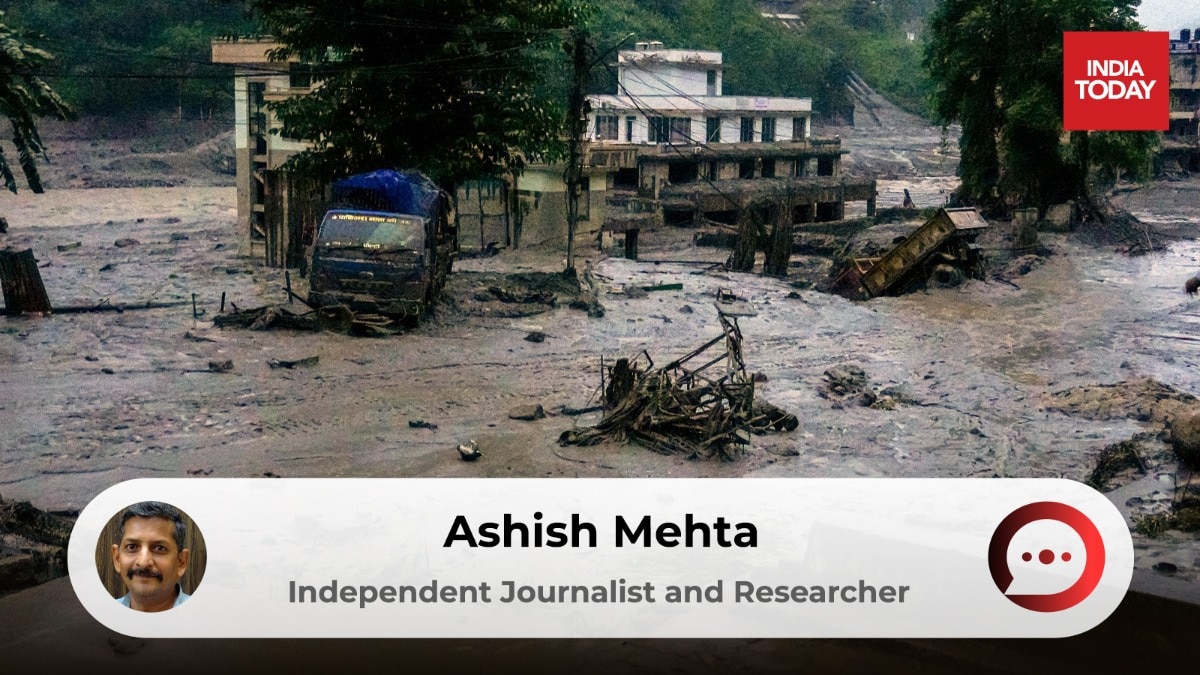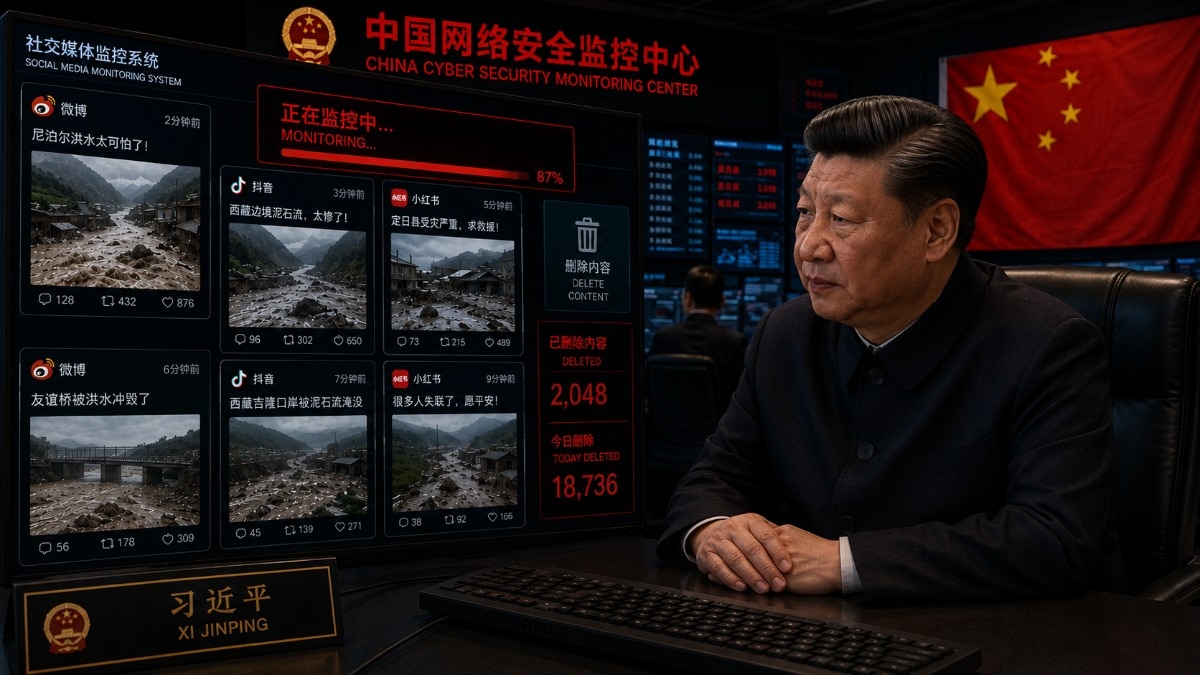
Reports suggest the Chinese regime is censoring social media posts from Tibetan locals showing the true scale of flash floods, opting instead to promote curated state rescue footage.
- Tibetan locals' videos showing devastating flash floods are being removed from Chinese social media.
- While Nepal reports 675 deaths and 2,400 missing, China claims only 5 deaths in Tibet.
- Experts compare this censorship to China's information control during the COVID-19 pandemic.
As devastating flash floods tear through the Nepal-Tibet frontier, a secondary disaster is unfolding in the digital realm. Reports indicate that the Xi Jinping-led regime is systematically deleting social media posts from local Tibetans that showcase the true scale of the destruction. Instead of raw, eyewitness accounts, Chinese state media is flooding platforms with tightly curated footage of official rescue operations.
The Information Vacuum in Gyirong
According to a report by The New York Times (NYT), videos capturing a massive mudslide engulfing the Gyirong border crossing were censored on Chinese platforms around August 27. This comes at a time when the sheer scale of the Himalayan disaster is shocking the international community. A high-altitude glacier collapse triggered a violent wall of water, mud, and rock that surged into the Bhote Koshi and Trishuli river basins in Nepal.
Discrepancy in Casualty Figures
The contrast between the narratives emerging from Nepal and China is striking. While journalists in Nepal are providing transparent, ground-level accounts, the data from China remains heavily filtered. News agency Reuters reported that the death toll in Nepal has risen to 675, with over 2,400 people missing. In stark contrast, Chinese state-sponsored agencies have reported only five deaths in the Tibet Autonomous Region (TAR).
| Metric | Nepal | China (Tibet) |
|---|---|---|
| Confirmed Deaths | 675+ | 5 |
| Missing Persons | 2,400+ | 558 (in Gyirong) |
| Media Approach | Independent & Transparent | State-controlled & Censored |
The lack of detail regarding affected villages in the Gyirong region has created a significant information vacuum. While Chinese authorities acknowledged that 558 people were missing in the area, they have provided no granular details about the settlements impacted by the deluge.
Why This Matters
BozokMedia analysis shows that such state-led censorship during humanitarian crises can be life-threatening. By restricting access to real-time, independently sourced information, the regime may be hindering the efficiency of rescue efforts and preventing the global community from understanding the true scale of the humanitarian need.
China is censoring information about the Nepal–Tibet flood disaster, raising serious concerns for humanitarian response and public accountability. - Brahma Chellaney, Strategic Affairs Expert
Geopolitical analysts have drawn direct parallels between this event and the early stages of the COVID-19 outbreak in Wuhan. Strategic expert Brahma Chellaney noted that controlling the narrative at the cost of accurate information creates a dangerous gap for those stranded or missing. Meanwhile, India's Ministry of External Affairs (MEA) has stated its readiness to assist Kathmandu in all rescue endeavors, highlighting the regional tension between transparency and opacity.
Frequently Asked Questions
1. Why are the videos being deleted in China?
While no official reason was given, analysts suggest the government is attempting to minimize the perceived scale of the disaster to maintain domestic stability and international image.
2. What caused the floods in the Nepal-Tibet region?
The floods were triggered by a catastrophic glacier collapse at high altitude, leading to massive mudslides and rapid water surges.