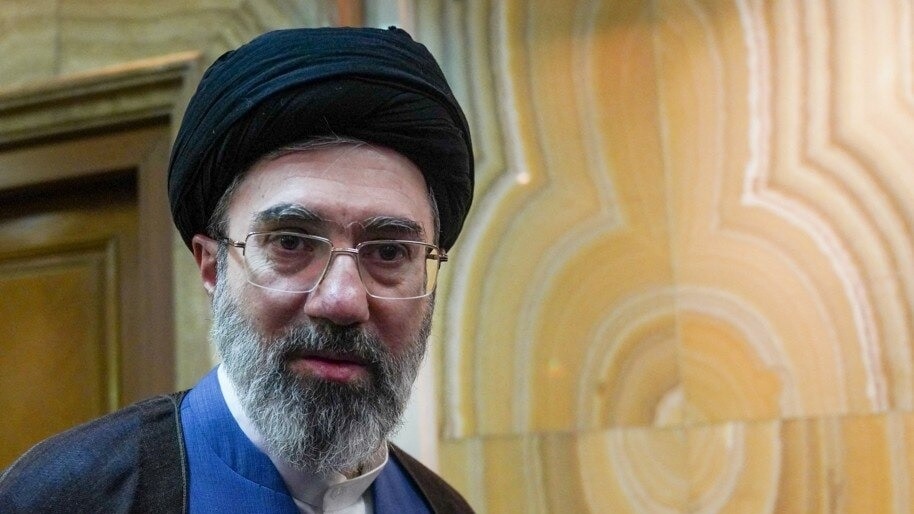
Iran's Supreme Leader Mojtaba Khamenei has issued a written appeal to Muslim nations and Gulf states to identify and confront their 'real enemy' to end regional instability.
- Mojtaba Khamenei urged Muslim nations, specifically Gulf states, to unite against a common 'real enemy'.
- He linked the suffering of Palestinians to the lack of unity among Islamic nations.
- The message was released via Telegram during the Islamic Unity Week celebrations.
Iran’s Supreme Leader Mojtaba Khamenei has issued a critical written appeal to Muslim countries, with a specific focus on the Gulf states, urging them to unite against what he termed their “real enemy.” He warned that existing divisions among Muslim nations are strategically serving the interests of their adversaries, leaving the region vulnerable to external interference.
The message was disseminated via his official Telegram account during Islamic Unity Week, coinciding with the birthday of Prophet Muhammad. Khamenei called for comprehensive cooperation across various sectors and a mutual defense pact, stating that anyone contributing to division—whether consciously or unconsciously—is effectively aiding the enemies of Islam.
Why This Matters
BozokMedia analysis shows that this outreach is a calculated attempt to pivot the regional narrative. By framing the conflict as a struggle for 'Islamic Unity,' Tehran seeks to isolate Western influence in West Asia and build a defensive bloc that could neutralize the strategic advantages currently held by the US-Israeli alliance.
Khamenei specifically challenged the rulers of the Gulf Arab states, questioning if "rogues without identity" would have dared to covet their lands and resources had the governments of the Gulf remained united under the banner of Islam. He emphasized that identifying the true enemy's plan is the only way to ensure regional sovereignty.
The call for unity is a high-stakes gamble; it attempts to leverage religious identity to bridge a decades-long geopolitical chasm between Tehran and the Gulf monarchies.
This communication comes at a time of extreme fragility for the Iranian leadership. Mojtaba Khamenei has not made a public appearance since being injured in US-Israeli airstrikes six months ago. Those same strikes resulted in the death of his father and predecessor, Ayatollah Ali Khamenei, triggering a period of intense instability and war.
Historical Background
Since the 1979 Islamic Revolution, the relationship between Iran and the Gulf Arab monarchies has been defined by mutual suspicion. The revolutionary ideology of Tehran, which openly challenged monarchical systems, was viewed as an existential threat by the ruling families of the Gulf. This ideological rift has been exacerbated by proxy wars and competition for regional hegemony.
The current tension is further heightened by Tehran's recent strikes on US military facilities and critical infrastructure within Gulf states, creating a paradox where Iran calls for unity while simultaneously engaging in military aggression against the very neighbors it seeks to align with.
Frequently Asked Questions
Q1: Why did Mojtaba Khamenei use Telegram for this announcement?
Due to his injuries from airstrikes, he has been unable to appear in public, making digital platforms his primary tool for leadership communication.
Q2: What is the significance of mentioning the Palestinians in this context?
By linking regional disunity to the Palestinian cause, Khamenei is attempting to use a deeply emotional and unifying pan-Islamic issue to pressure Gulf leaders into alignment.