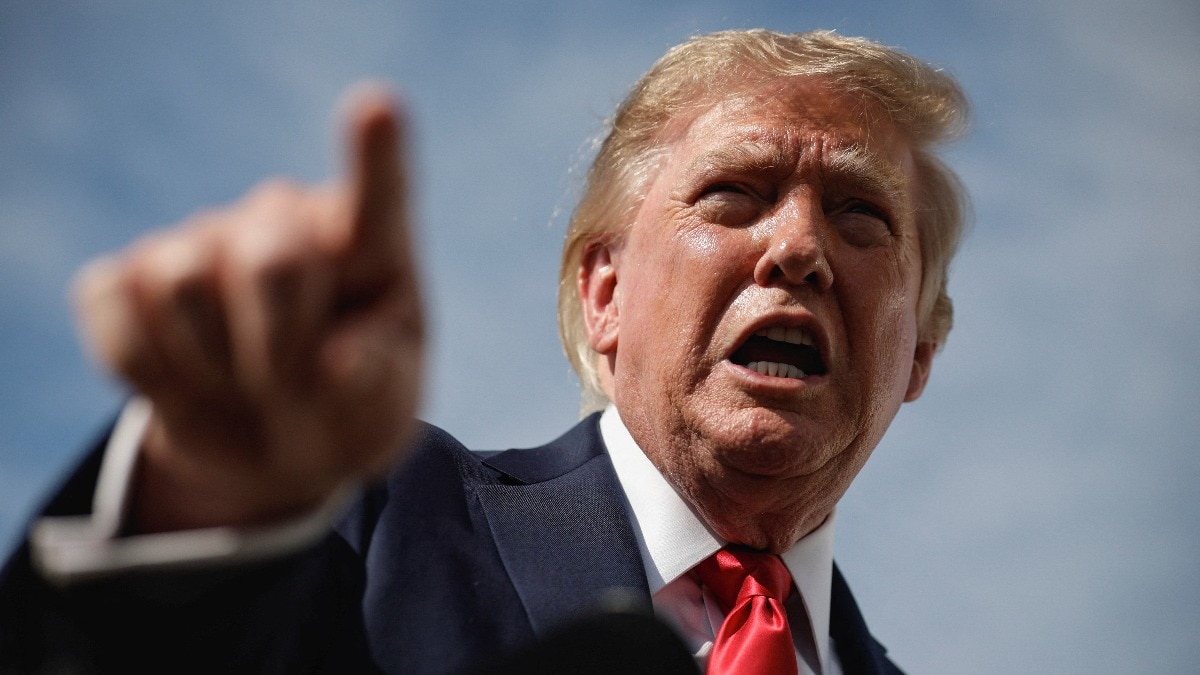
Former US President Donald Trump has intensified his rhetoric against Tehran, claiming Iran is 'dead' and promising a crushing response after recent exchanges of fire between US and Iranian forces.
- Donald Trump labels Iran as a 'dead' entity following military friction.
- Claims of over 100,000 protesters being killed by the Iranian regime.
- Vows to 'hit them hard' in response to renewed clashes.
The geopolitical tension between the United States and Iran has surged once again as former President Donald Trump unleashed a series of scathing attacks on the Iranian leadership. Following recent reports of exchanges of fire between US and Iranian forces, Trump asserted that Iran is effectively 'dead,' suggesting that the regime's internal stability and regional power have completely eroded.
Trump's outbursts were not limited to military threats. He specifically highlighted the internal turmoil within Iran, alleging that the regime has slaughtered over 100,000 of its own protesters. In a characteristic display of aggressive rhetoric, he dismissed the Iranian government's denials as a 'good line of bullsh*t,' further painting the Tehran administration as a failing state devoid of legitimacy.
Why This Matters
BozokMedia analysis shows that this rhetoric serves as a calculated attempt to project strength and instability. By framing Iran as a spent force, Trump is signaling to global markets and regional allies that the 'Maximum Pressure' campaign is the only viable path, potentially disregarding the nuances of diplomatic negotiation in favor of decisive military action.
"The transition from diplomatic sanctions to an existential declaration—calling a nation 'dead'—indicates a high-risk strategy that could trigger unpredictable responses from Tehran."
To understand the current friction, one must look at the Historical Background. The US-Iran rivalry escalated significantly during Trump's first term, most notably with the 2020 assassination of General Qasem Soleimani. This event brought the two nations to the brink of full-scale war. The current clashes are a continuation of this cycle of retaliation, involving proxy groups in the Middle East and direct naval or aerial confrontations.
Critics argue that Trump's 'morning meltdown' and foul-mouthed approach to international diplomacy could alienate allies and embolden adversaries. However, supporters view this as the necessary toughness required to handle a regime that sponsors terrorism. The global community now watches closely to see if these threats translate into policy or remain as campaign-style rhetoric.
Frequently Asked Questions
1. Why did Trump call Iran 'dead'?
He refers to the regime's perceived economic collapse and the loss of internal control due to widespread protests.
2. Is there an immediate risk of war?
While a full-scale war is not currently underway, the renewed clashes and aggressive rhetoric significantly increase the risk of miscalculation.