A devastating flash flood in Nepal has claimed over 900 lives, with thousands still missing. Critical shortages of helicopters, thermal cameras, and body bags are severely hindering rescue operations in treacherous terrains.
- Death toll exceeds 900; over 4,000 people reported missing.
- Severe shortage of thermal cameras, body bags, and specialized helicopters.
- India and China providing critical forensic and tunnel rescue support.
- Systemic failure in NDRRMA due to lack of experts and insufficient funding.
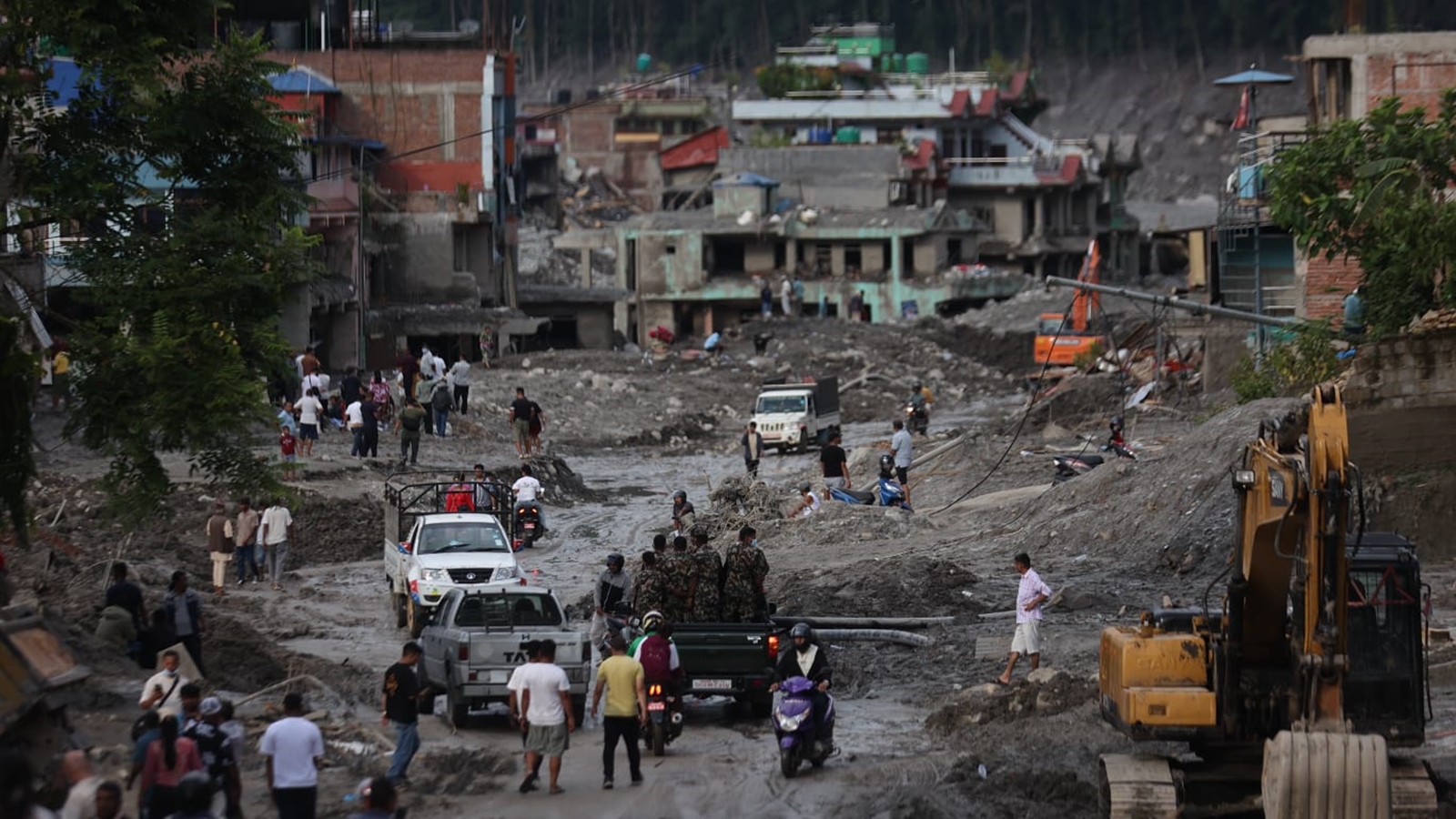
Nepal's rescue forces are currently battling a race against time to locate survivors of the catastrophic flash floods that struck on August 26. Triggered by a massive collapse of ice and rock near the Nepal-Tibet border, the resulting surge tore through the Bhotekoshi river corridor, obliterating homes, bridges, and critical hydropower infrastructure. According to the National Disaster Risk Reduction and Management Authority (NDRRMA), the death toll has now crossed 900.
The operation is being crippled by a shocking lack of essential equipment. Security personnel from the Nepal Army, Nepal Police, and Armed Police Force have reported a critical deficit of thermal cameras, acoustic life-detection devices, and specialized cutting tools. Even basic necessities, such as body bags and high-grade climbing ropes, are in short supply, leaving rescuers struggling to manage the recovery of mortal remains.
BozokMedia analysis shows that this crisis exposes a profound systemic failure in Nepal's disaster preparedness. The fact that the NDRRMA has operated without a single geological expert for a year, coupled with a budget that is largely consumed by administrative salaries rather than equipment procurement, reveals a dangerous gap between policy and practice. In a region prone to seismic and climatic volatility, such negligence costs lives.
"The shortage of specialized equipment is a longstanding systemic issue; international market gaps and procurement delays often leave us vulnerable during peak crises."
Despite the resource gaps, a massive mobilization is underway. A total of 19,895 security personnel have been deployed. The Armed Police Force has utilized trained sniffer dogs, which have been instrumental in locating 5-7 bodies daily. Teams are specialized in diverse operations, including drone surveillance, diving, and rope rescue.
International aid has become a lifeline. India has deployed a 19-member forensics team to Kathmandu to assist in DNA identification and a specialized tunnel rescue team to the Chilime and Langtang hydropower sites. These teams are working to locate over 930 workers believed to be trapped in tunnels since the initial disaster.
| Agency | Personnel Deployed | Primary Responsibility |
|---|---|---|
| Nepal Army | 8,399 | Heavy Rescue & Logistics |
| Nepal Police | 7,293 | Frontline Emergency Response |
| Armed Police Force | 4,203 | Canine Search & Diving |
1. What caused the flash floods in Nepal?
The floods were triggered by an avalanche or collapse of ice and rock near the Nepal-Tibet border on August 26, causing a sudden surge in the Bhotekoshi river.
2. How is the international community assisting?
India has provided forensic experts for DNA analysis and tunnel rescue specialists, while China is also assisting in tracing missing hydropower workers.