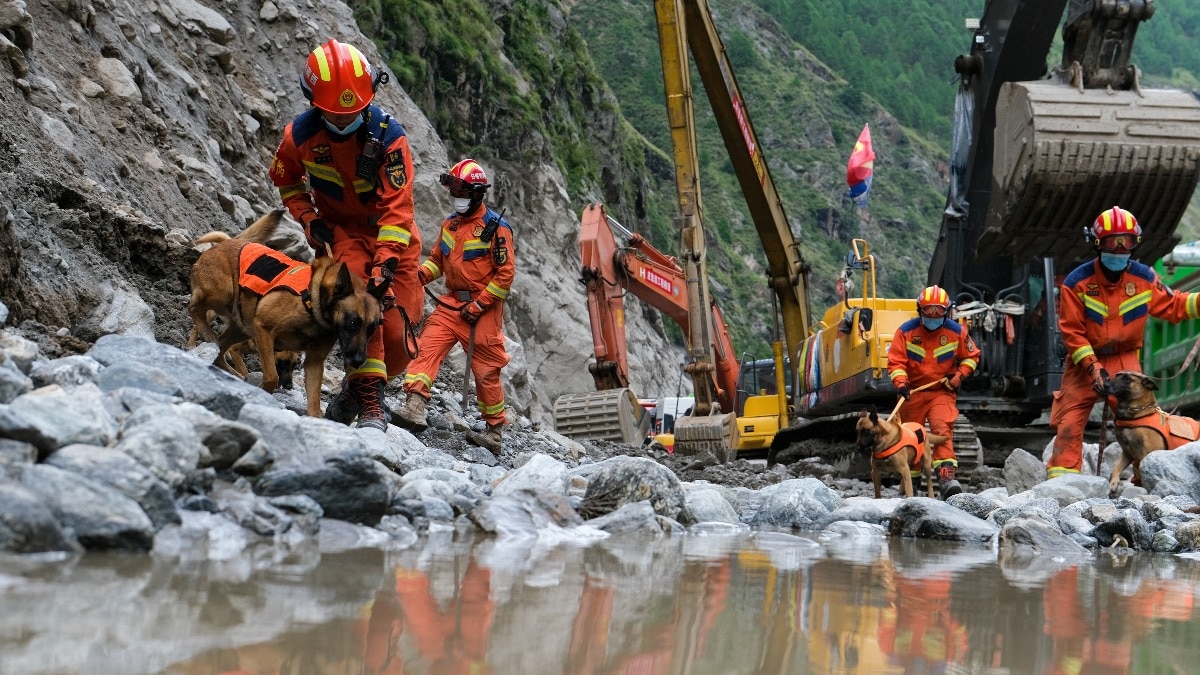
Following devastating flash floods in Nepal, spiritual leader Sadhguru has called for a collaborative five-nation board to manage the fragile Himalayan ecosystem. He emphasizes that environmental disasters transcend political borders and require a unified geopolitical response.
- Sadhguru proposes a joint Himalayan Board comprising India, China, Pakistan, Nepal, and Bhutan.
- The call comes after catastrophic flash floods in Nepal resulting in over 900 deaths.
- Isha Foundation has pledged ₹1 crore to Nepal’s Prime Minister Disaster Relief Fund.
- 77 Isha Foundation pilgrims remain missing near the China-Nepal border.
In the wake of a catastrophic natural disaster that has claimed over 900 lives, Indian spiritual leader Sadhguru Jagadish Vasudev has issued an urgent plea for international cooperation. Addressing a gathering titled “In Solidarity With Nepal” in Kathmandu, Sadhguru advocated for the creation of a five-nation Himalayan Board. This proposed body would include India, China, Pakistan, Nepal, and Bhutan, aimed at synchronizing disaster response and environmental preservation in one of the world's most fragile ecological zones.
The proposal arises from a grim reality: the Himalayas do not adhere to man-made political boundaries. According to Sadhguru, the scale of recent flash floods and mudslides in Nepal is a stark reminder that no single nation, especially a smaller one like Nepal, can shoulder the burden of such immense disasters alone. He argued that the mountains are a shared heritage and a shared vulnerability, necessitating a collective responsibility that transcends diplomatic frictions.
Why This Matters
BozokMedia analysis shows that the Himalayan region is increasingly becoming a hotspot for 'GLOFs' (Glacial Lake Outburst Floods) and cloudbursts due to climate change. The proposed board is not merely about rescue operations but about transboundary water management and early warning systems. If India, China, and Pakistan—nations often at geopolitical odds—can collaborate on ecological survival, it could set a global precedent for environmental diplomacy over political rivalry.
"The mountains don't know your political affiliation; they only know the fragility of the earth we share."
The human cost of the current crisis is staggering. The National Disaster Risk Reduction and Management Authority (NDRRMA) has confirmed the death toll has surged past 903. Adding to the tragedy, a group of 77 pilgrims from the Isha Foundation, who were on a Kailash Mansarovar pilgrimage, remain missing near the China-Nepal border. Three volunteers are also unaccounted for, highlighting the extreme risks associated with trekking in these volatile terrains during the monsoon season.
Historically, the Himalayas have seen sporadic cooperation, but never a formalized, five-nation governing body dedicated specifically to disaster mitigation. The region has suffered from an "infrastructure building spree," as warned by geo-scientist C.P. Rajendran, which has further destabilized the slopes, making flash floods more lethal when they occur.
| Aspect | Current Approach | Proposed Himalayan Board |
|---|---|---|
| Coordination | Bilateral/Unilateral | Multilateral (5 Nations) |
| Response Time | Delayed by Borders | Integrated Early Warning |
| Funding | National Budgets | Shared Regional Resource Pool |
Frequently Asked Questions
Which countries would be part of the proposed Himalayan Board?
The board would consist of India, China, Pakistan, Nepal, and Bhutan.
What triggered this proposal by Sadhguru?
The devastating flash floods in Nepal that killed over 900 people and left many missing, including 77 pilgrims from the Isha Foundation.