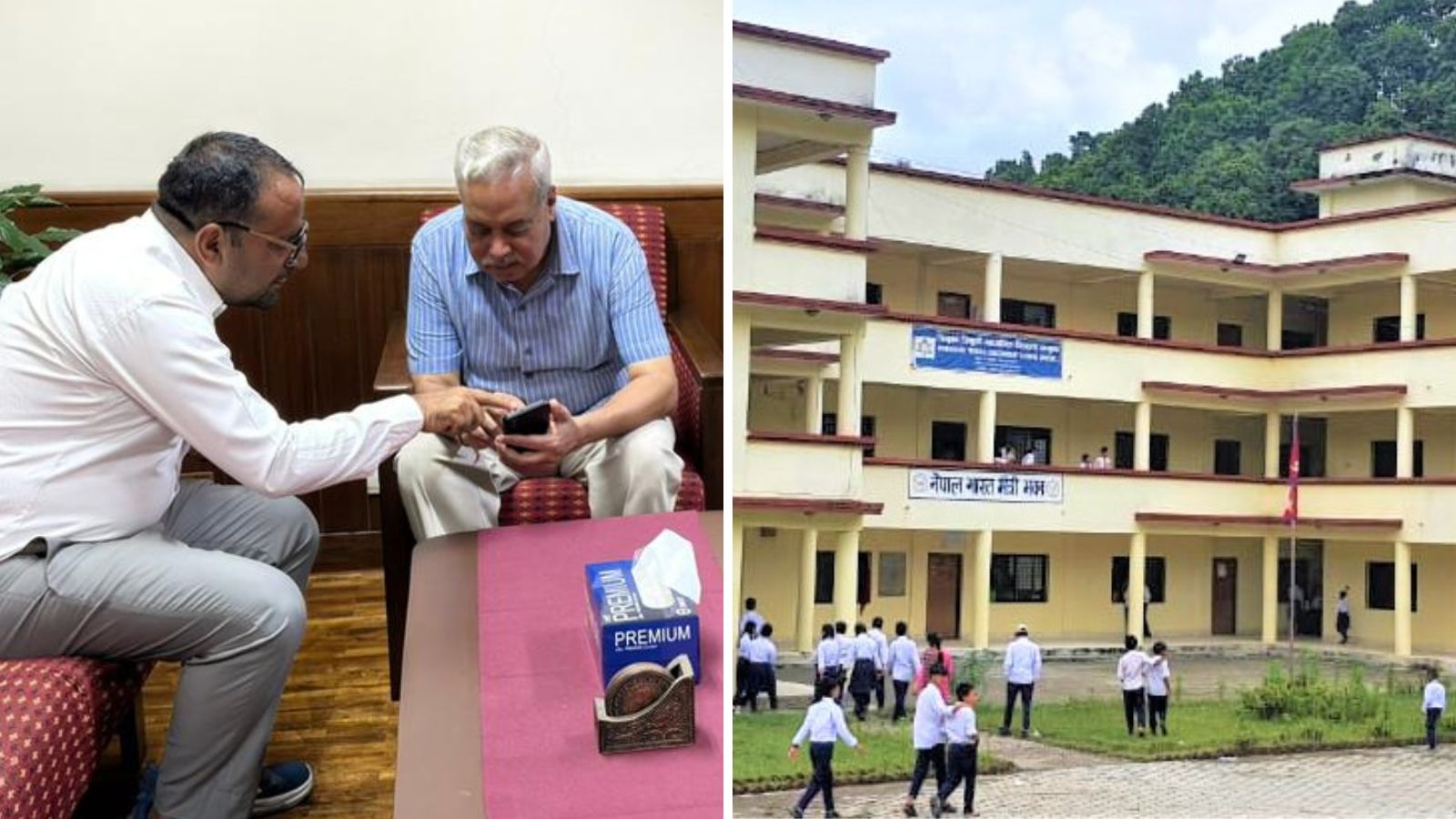
The principal of Tribhuvan Trishuli Secondary School evacuated over 1,600 students just before flash floods devastated the campus. India has pledged to fully reconstruct the school, strengthening Indo‑Nepal cooperation.
- Principal ordered immediate evacuation
- More than 1,600 students rescued
- India promises complete school reconstruction
Main Events
India’s Ambassador to Nepal, Naveen Srivastava, met with Rajendra Dawadi, principal of Tribhuvan Trishuli Secondary School in Bidur, Nuwakot, on Tuesday. He praised Dawadi’s swift action during the August 26 flash floods that threatened to engulf the campus.
After receiving multiple flood warnings, Dawadi rang the school bell and moved over 1,600 children to higher ground. Within minutes, raging waters swept away the school building, but the students were safe.
Dawadi told the BBC, “I decided I shouldn’t delay any more. Even if the flood was not coming, it was just a matter of a single day’s classes.” A 16‑year‑old student, Yunisha, added, “We survived by just ten seconds; the market vanished before our eyes.”
Historical Background
Tribhuvan Trishuli School was originally established in the 1950s with Indian assistance and was designed by engineers linked to the Trishuli Hydropower Project. In 2022, the school’s newer building was constructed under India’s High Impact Community Development Programme (HICDP).
The recent destruction underscores the long‑standing educational cooperation between India and Nepal, now poised for a new chapter as India pledges to fund a full rebuild.
Why This Matters
BozokMedia analysis shows that this commitment bolsters India’s soft‑power narrative in the Himalayas and reinforces disaster‑response credibility amid rising climate‑induced risks.
“Protecting educational infrastructure is protecting the future,” says climate‑policy expert Dr. Anjali Mehta.
Frequently Asked Questions
Q1: How long will the reconstruction take?
A: The project is expected to be completed within two years, subject to terrain and weather conditions.
Q2: Will the school resume operations at the same location?
A: Yes, once rebuilt, the school will serve the same student body with upgraded facilities.