U.S. President Donald Trump downplayed the ongoing tensions with Iran, labeling the military conflict as 'small potatoes' and aligning himself with VP JD Vance's refusal to call it a 'war'.
- President Trump described the Iran conflict as 'small potatoes' for the United States.
- VP JD Vance rejected the term 'war', citing a lack of active shooting.
- The conflict has cost U.S. taxpayers over $37.5 billion and resulted in 18 deaths.
- Trump claims the military action has successfully neutralized Iran's nuclear ambitions.
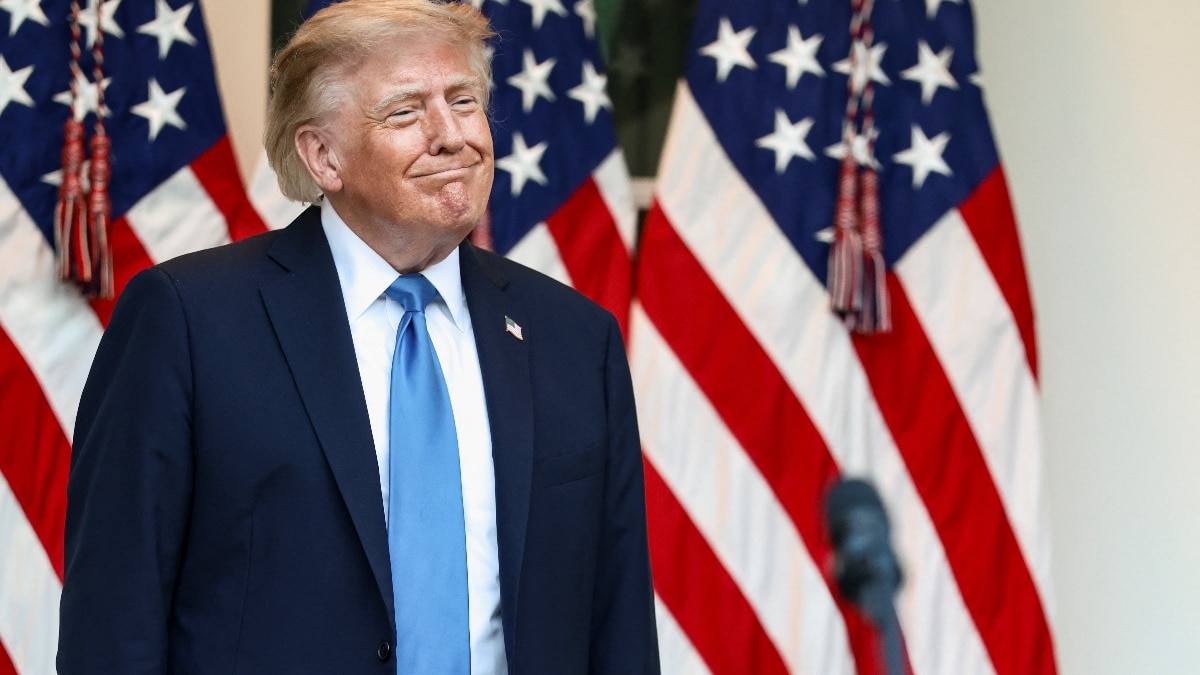
WASHINGTON: In a move that has sparked intense debate, U.S. President Donald Trump on Friday characterized the ongoing military engagement with Iran as "small potatoes." His comments served as a defense of Vice President JD Vance, who recently asserted that the intermittent strikes in West Asia do not constitute a full-scale "war."
Speaking during an exchange in the Oval Office, Trump noted that U.S. operations against Iran are currently "intermittent." By using the term "small potatoes," the President appeared to minimize the scale of a conflict that has already claimed the lives of 18 U.S. service members and incurred costs exceeding $37.5 billion.
Why This Matters
BozokMedia analysis shows that this rhetoric is likely a calculated move ahead of the November midterm elections. By reframing a costly military engagement as a mere "military conflict" rather than a "war," the administration aims to mitigate political backlash regarding military spending and casualties, attempting to project strength without the baggage of an active war footing.
The refusal to use the word 'war' is a sophisticated linguistic strategy designed to manage public perception and minimize domestic political fallout.
The controversy stems from comments made by JD Vance during a White House press briefing on Thursday. When asked if the fighting would conclude before the November 3 congressional elections, Vance replied, "I wouldn't call it a war," adding that there is currently "no active shooting." This assertion comes amidst heightened tensions, following Iranian retaliatory strikes on Kuwait, a key U.S. Gulf ally.
Trump further attempted to contextualize the casualties by comparing the Iran conflict to historical U.S. military engagements. He contrasted the 18 deaths in Iran with the massive losses during the Vietnam War, where approximately 58,220 Americans died. He also cited a January operation in Venezuela, where no U.S. lives were lost, to argue that the current scale of loss is relatively minimal.
Addressing critics who questioned the "small potatoes" label in light of the 18 service members killed, Trump pivoted to the strategic success of the mission. He argued that the primary objective—the neutralization of Iran's nuclear program—is being achieved. "Iran will not have a nuclear weapon because if they did you probably wouldn't be standing here," Trump asserted.
Frequently Asked Questions
1. Why is the administration avoiding the word 'war'?
Vice President Vance suggests that because there is no continuous, large-scale active shooting, the term 'military conflict' is more accurate than 'war.'
2. What is the primary goal of the U.S. actions in Iran?
According to President Trump, the central objective is to ensure Iran cannot develop or possess nuclear weapons.