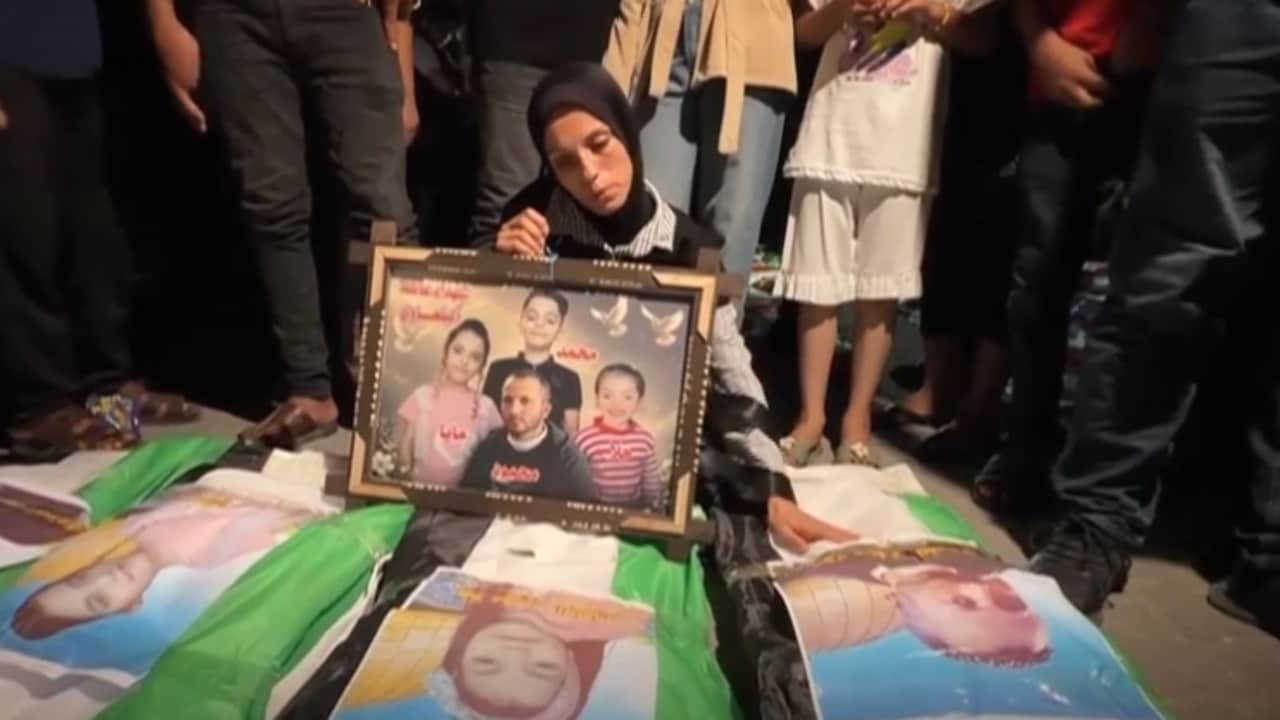
A Palestinian woman faces unimaginable grief as she receives the remains of her husband and children a year after they were killed in Israeli strikes.
- Recovery operations are ongoing to find Palestinians buried under war rubble.
- A woman received the remains of her family after a year of waiting.
- The psychological impact on surviving children is profound and lasting.
The devastating toll of the ongoing conflict in Gaza continues to surface in harrowing ways. In a recent and deeply moving account, a Palestinian woman shared the agony of losing her husband and children to Israeli military operations. For an entire year, her family remained lost under the ruins, only to be recovered recently during ongoing recovery efforts.
The survivor, a mother who has lost almost everything, shared that her surviving daughter cries for her father every single day. This highlights the deep-seated psychological trauma inflicted upon the children of war-torn regions, where the loss is not just physical but emotional and generational.
Why This Matters
BozokMedia analysis shows that the scale of urban destruction in the region has created a secondary crisis: the inability to recover the deceased. This delay in recovering bodies prevents families from finding closure and complicates the humanitarian task of managing mass casualties.
The recovery of remains is not just a logistical operation; it is a fundamental requirement for the dignity of the deceased and the healing of the living.
The current military operations are part of a broader, desperate effort to recover Palestinians believed to still be buried under buildings that were reduced to rubble during the intense combat. Search teams are working amidst unstable structures to retrieve those lost to the destruction.
Historical Background
The region has been plagued by cycles of violence for decades. Modern urban warfare, characterized by heavy bombardment in densely populated areas, has led to unprecedented levels of structural collapse, making the recovery of victims an extremely dangerous and slow process for rescue teams.
Frequently Asked Questions
Question 1: Why is it taking so long to recover the bodies?
Answer: The sheer volume of rubble, combined with ongoing instability and the risk of secondary collapses, makes recovery operations incredibly slow and hazardous.
Question 2: What is the humanitarian impact of these delays?
Answer: Delays prevent families from performing religious burial rites and cause prolonged psychological suffering for survivors.