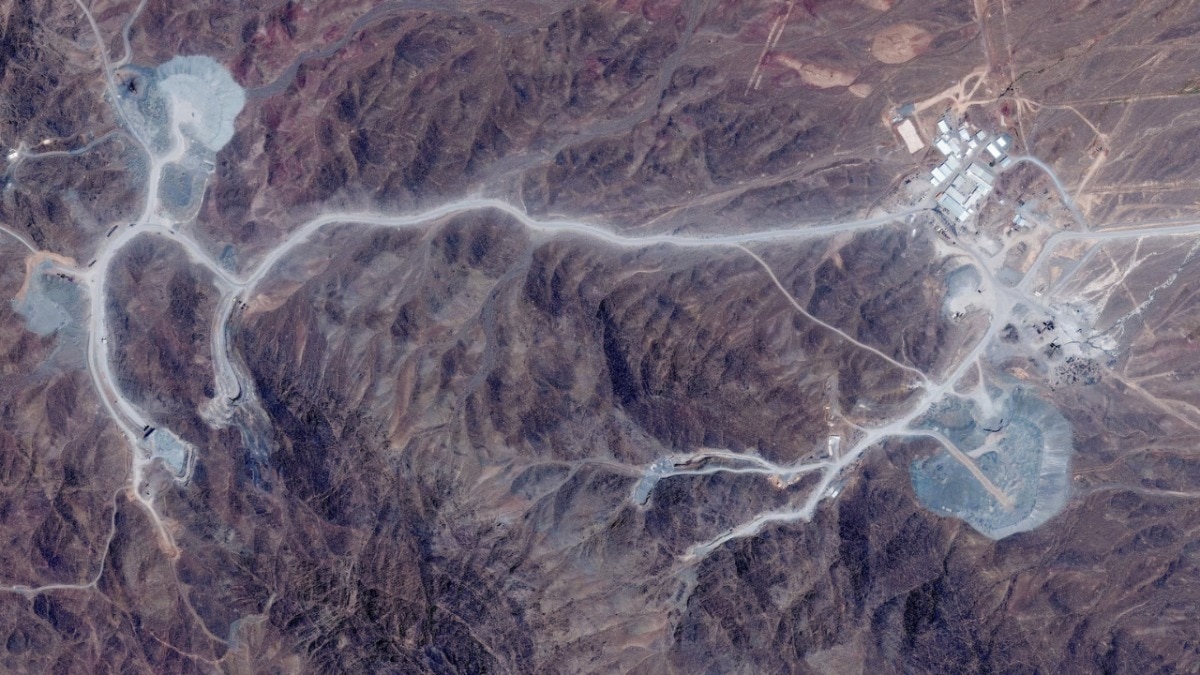
Satellite imagery reveals a surge in construction at Iran's heavily fortified Pickaxe Mountain facility. In response, the US is testing next-generation bunker-busting capabilities to penetrate the granite-shielded site.
- Construction activity has spiked at Iran's Pickaxe Mountain facility, likely a protected nuclear hub.
- The US administration, including Donald Trump, has signaled potential strikes on the buried site.
- The Pentagon is investing in 'next-generation penetrators' to defeat granite-reinforced defenses.
- Tit-for-tat attacks on commercial shipping in the Strait of Hormuz have escalated regional tensions.
In a dangerous escalation of Middle Eastern hostilities, a suspected Iranian nuclear facility buried deep beneath a granite mountain has emerged as a critical flashpoint. Recent satellite imagery analyzed by the Center for Strategic and International Studies (CSIS) indicates a sharp increase in construction activity at the Pickaxe Mountain facility, located approximately 140 miles south of Tehran.
The facility's strategic importance lies in its geological placement. Built inside a massive granite mountain, the site is designed to withstand conventional airstrikes. Analysts suggest the complex could serve as a centrifuge assembly plant or a highly protected uranium enrichment site. Israeli intelligence reports further suggest that Tehran may be moving sensitive nuclear equipment to this location to ensure survival against potential preemptive strikes.
Why This Matters
BozokMedia analysis shows that the shift toward 'deep-mountain' fortification represents a strategic pivot by Iran to neutralize US air superiority. By moving assets into granite shielding, Iran effectively raises the cost and risk of a US military intervention, forcing the Pentagon to develop specialized, high-cost munitions that may or may not be effective.
"The granite composition of Pickaxe Mountain poses a significant challenge even to the most powerful non-nuclear bunker-busting weapons in the US arsenal."
Responding to this threat, the US is aggressively upgrading its subterranean strike capabilities. Reports indicate a $1.2 million emergency contract was approved for the White Sands Missile Range in New Mexico to conduct 'live-fire' tests. These tests are specifically aimed at validating classified capabilities against 'rapidly emerging threats'—a clear reference to Iran's deep-buried facilities.
Parallel to the nuclear tension, a maritime war is unfolding. The US and Iran have engaged in a series of tit-for-tat attacks on commercial shipping near the Strait of Hormuz. With Iran claiming strikes on 10 vessels and the US destroying five Iranian tankers, the risk to global energy corridors has reached an all-time high.
| Feature | Pickaxe Mountain Facility | Conventional Nuclear Sites |
|---|---|---|
| Shielding | Natural Granite Mountain | Reinforced Concrete/Underground |
| Strike Difficulty | Extreme (Deep Target) | Moderate (Bunker Buster capable) |
| Strategic Goal | Survival & Continuity | Production & Research |
Frequently Asked Questions
1. Why is the Pickaxe Mountain site so hard to hit?
The natural granite mountain acts as a massive shield, absorbing the impact of most conventional munitions before they reach the internal facilities.
It is a specialized weapon being developed by the Pentagon to reach deeper underground targets than current bunker-busters can reliably penetrate.