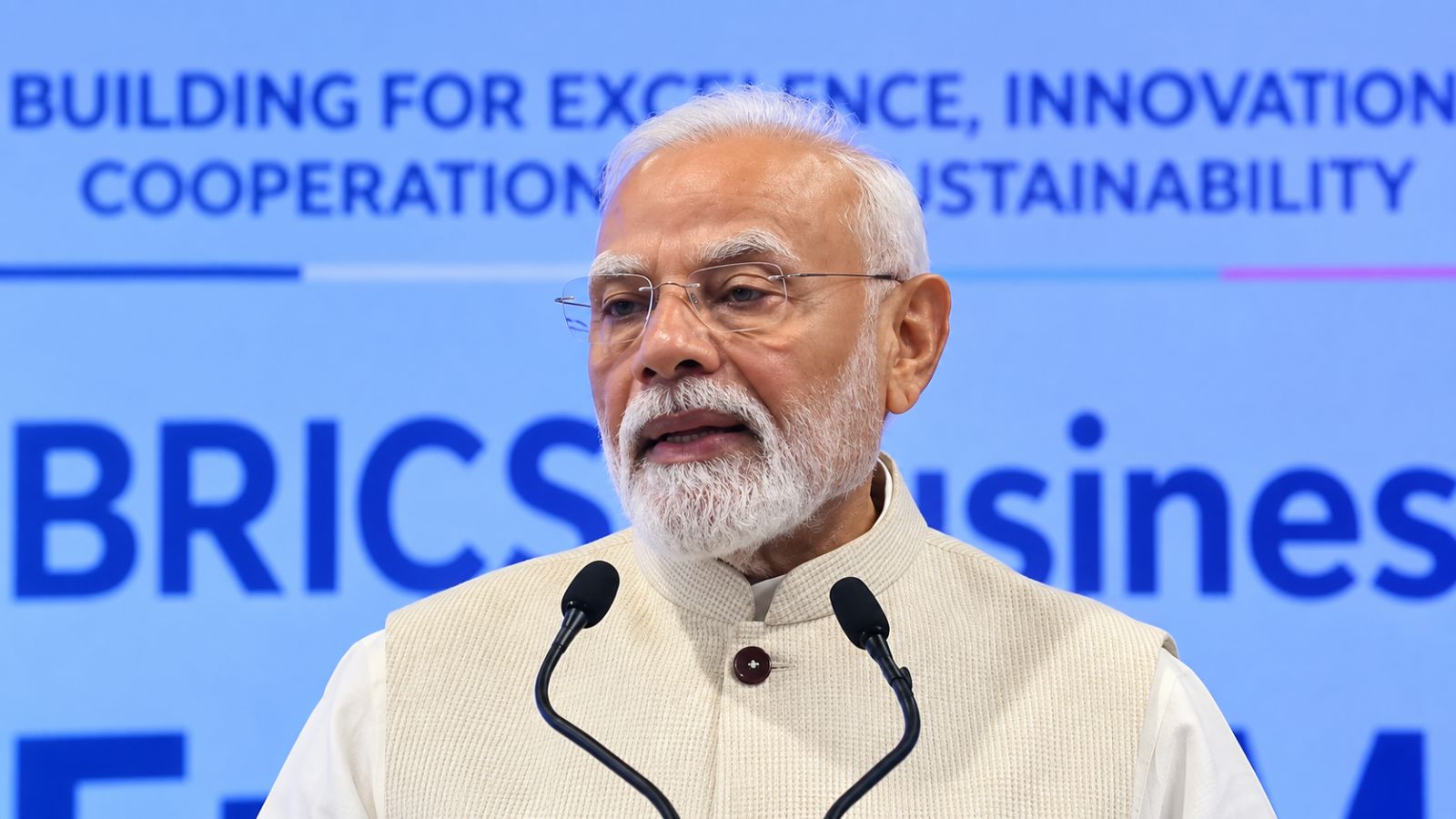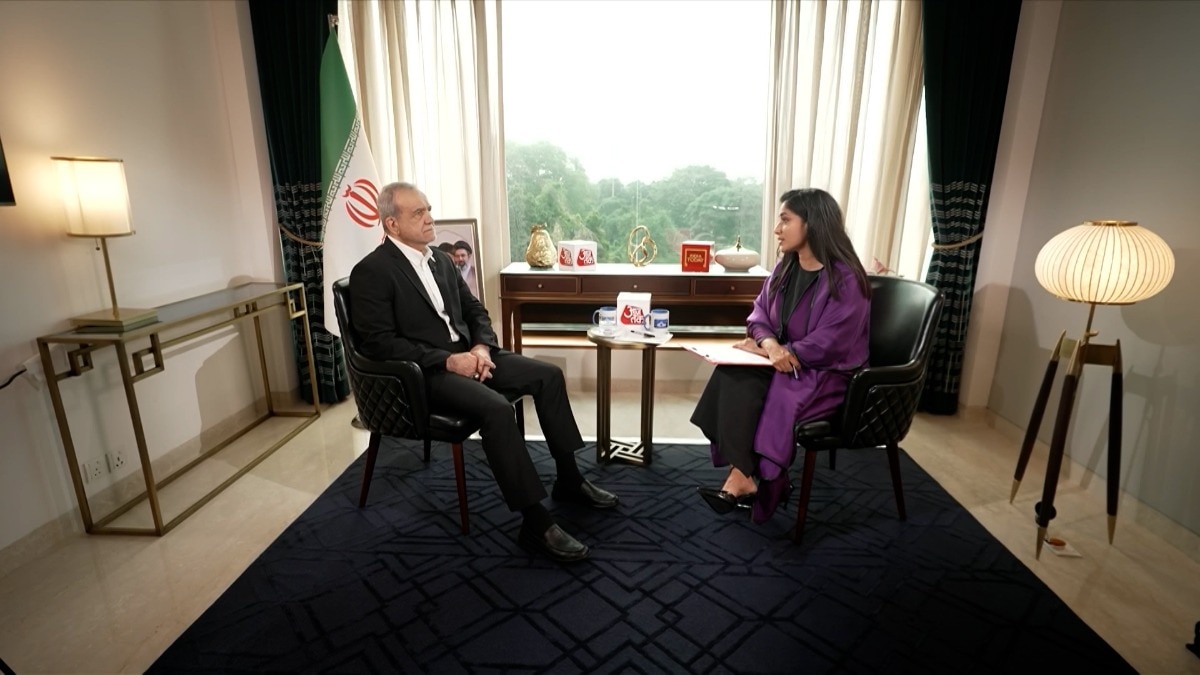
In a high-stakes interview at the BRICS Summit, Iranian President Masoud Pezeshkian slammed the US and Israel, calling them the true aggressors and terrorists of the region.
- President Pezeshkian labeled the US and Israel as the 'real terrorists' in the region.
- The interview was conducted exclusively by Geeta Mohan at the BRICS Summit in India.
- Iran remains defiant despite ongoing conflicts and economic sanctions.
- Strong emphasis was placed on strengthening India-Iran ties via Chabahar.
New Delhi: At a pivotal moment for global geopolitics, Iranian President Masoud Pezeshkian has delivered a stinging rebuke to the Western powers. Speaking exclusively to India Today Global during the BRICS Summit, the Iranian leader characterized the United States and Israel as the "real terrorists" and aggressors in the Middle East.
The President's remarks come as Iran navigates a period of intense volatility, grappling with the aftermath of conflicts with Israel and the United States, alongside severe economic pressures caused by international sanctions. "We are alive, and we will respond," Pezeshkian stated, signaling Iran's intent to maintain its stance despite external pressures.
Why This Matters
BozokMedia analysis shows that Iran's strategic pivot toward the BRICS bloc is a calculated move to challenge the existing unipolar world order. By seeking alliances with emerging economies, Tehran aims to create a multipolar structure that mitigates the impact of Western-led sanctions and military interventions.
"Pezeshkian's rhetoric marks a significant escalation in Iran's diplomatic defiance, aiming to galvanize the Global South against Western hegemony."
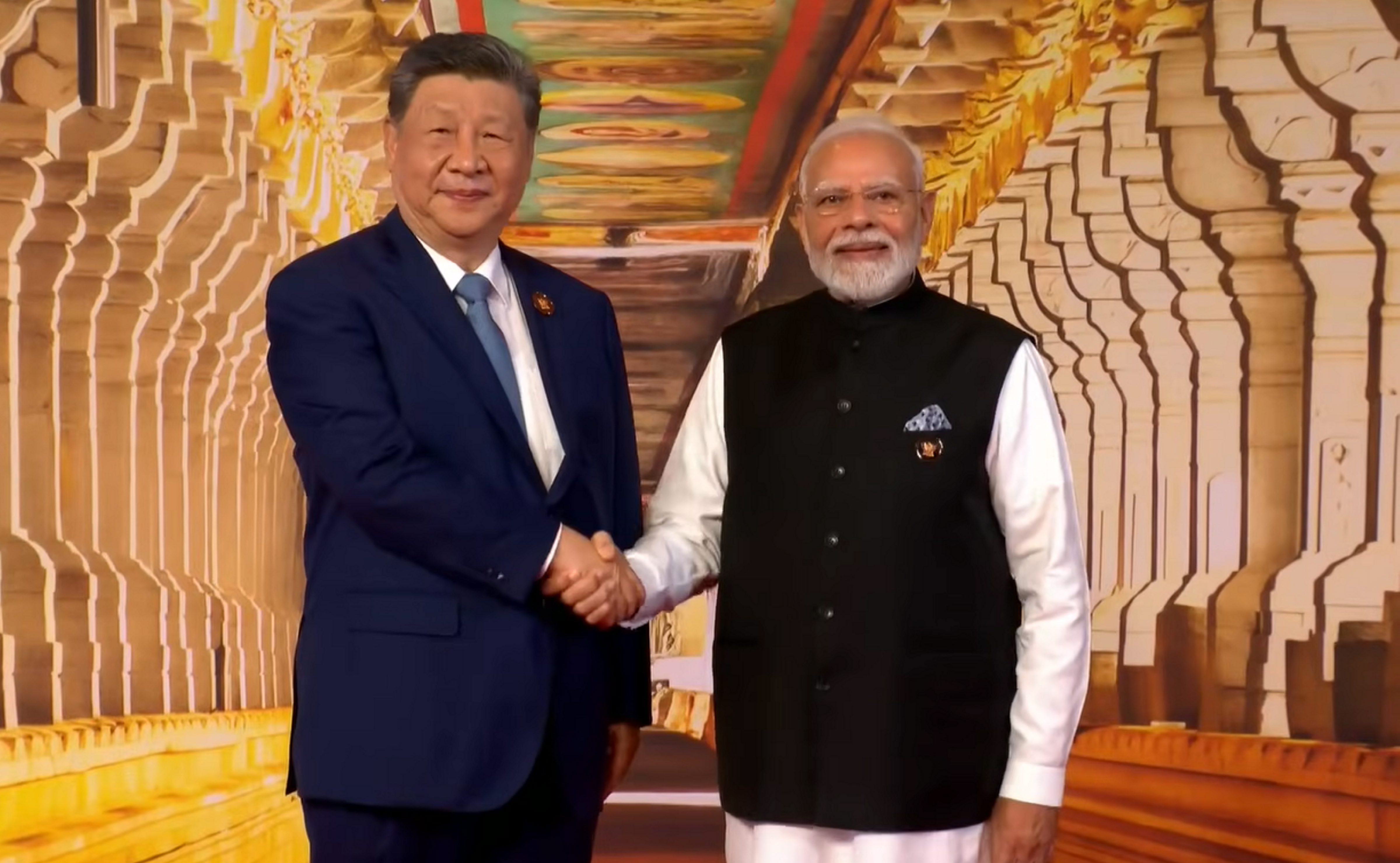
During the discussion, Pezeshkian also highlighted his bilateral meeting with Indian Prime Minister Narendra Modi. He emphasized the deep-rooted cultural and historical ties between India and Iran, noting that their relationship is evolving to counter global totalitarianism. He specifically addressed the Chabahar Port, asserting that Iran's geographical position makes it a vital crossroads for regional connectivity, akin to the ancient Silk Road.
Historical Background
The tension between Iran and the West has been a defining feature of Middle Eastern politics for decades. From the 1979 Revolution to the current nuclear standoff and recent direct military exchanges between Iran and Israel, the region remains a flashpoint for global security, particularly concerning the stability of the Hormuz Strait.
Frequently Asked Questions
1. What was the main message of President Pezeshkian's interview?
He accused the US and Israel of terrorism and expressed Iran's resilience and commitment to a multipolar world through BRICS.
2. How does India fit into Iran's current strategy?
India is a key strategic partner, especially through the Chabahar Port, which facilitates vital regional connectivity and economic ties.