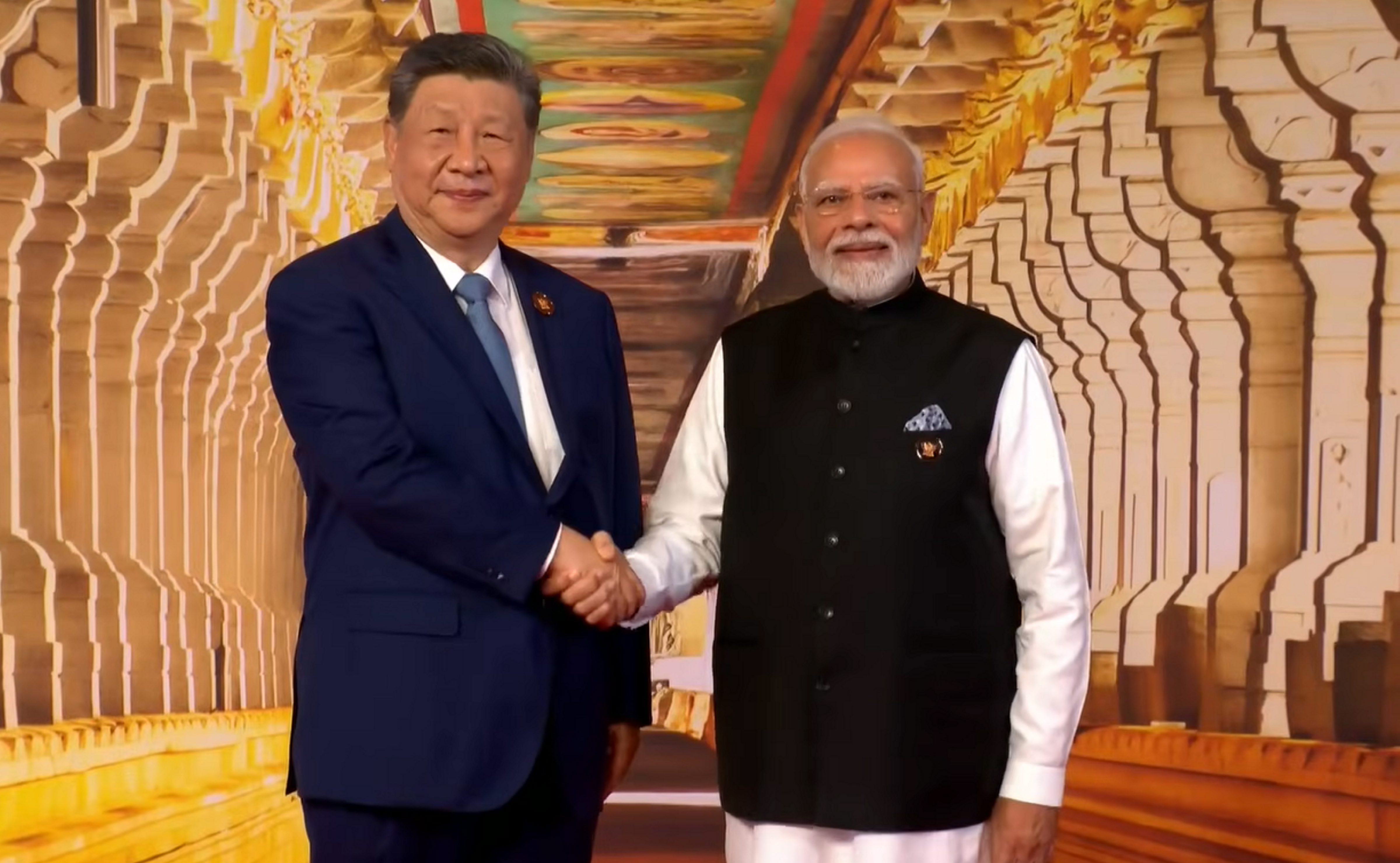
In a landmark meeting during the BRICS Summit in New Delhi, PM Narendra Modi and President Xi Jinping discussed stabilizing bilateral relations and managing border tensions through dialogue.
- First bilateral meeting between PM Modi and President Xi on Indian soil in nearly seven years.
- Both leaders agreed to approach relations from a strategic and long-term perspective.
- PM Modi emphasized mutual respect, sensitivity, and interest as core principles.
On the sidelines of the high-profile BRICS Summit in New Delhi, Prime Minister Narendra Modi and Chinese President Xi Jinping held a significant bilateral meeting on Saturday. This marks the first time in nearly seven years that the two leaders have engaged in a bilateral dialogue on Indian soil, signaling a potential thaw in the frosty relations between the two Asian giants.
The meeting served as a crucial follow-up to their previous discussions in Tianjin in August 2025, aimed at reviewing the progress made in stabilizing ties following years of intense border tensions. The Ministry of External Affairs (MEA) highlighted that the core message of the talks was clear: "Differences should not become disputes."
Why This Matters
BozokMedia analysis shows that this meeting is a pivotal moment for regional stability in Asia. As both nations navigate complex geopolitical landscapes, the ability to manage friction through structured dialogue rather than military posturing is essential. Rebuilding trust is not just a bilateral necessity but a global imperative, given the economic weight of both India and China.
The transition from managing conflict to fostering cooperation depends entirely on the adherence to mutual sensitivity.
During the discussions, PM Modi underscored that the future of India-China relations must be anchored in three fundamental principles: mutual respect, mutual sensitivity, and mutual interest. By framing the relationship within these parameters, India seeks to ensure that its sovereignty is respected while exploring avenues for economic and strategic cooperation.
Historical Background
The relationship between India and China has faced severe strain over the last several years, primarily due to unresolved issues along the Line of Actual Control (LAC). While previous summits like the one in Tianjin in 2025 laid the groundwork for de-escalation, the New Delhi summit represents a more direct attempt to institutionalize stability and prevent localized skirmishes from escalating into full-scale diplomatic crises.
Frequently Asked Questions
1. Where did this bilateral meeting take place?
The meeting took place in New Delhi on the sidelines of the BRICS Summit.
2. What are the three principles mentioned by PM Modi?
The three principles are mutual respect, mutual sensitivity, and mutual interest.