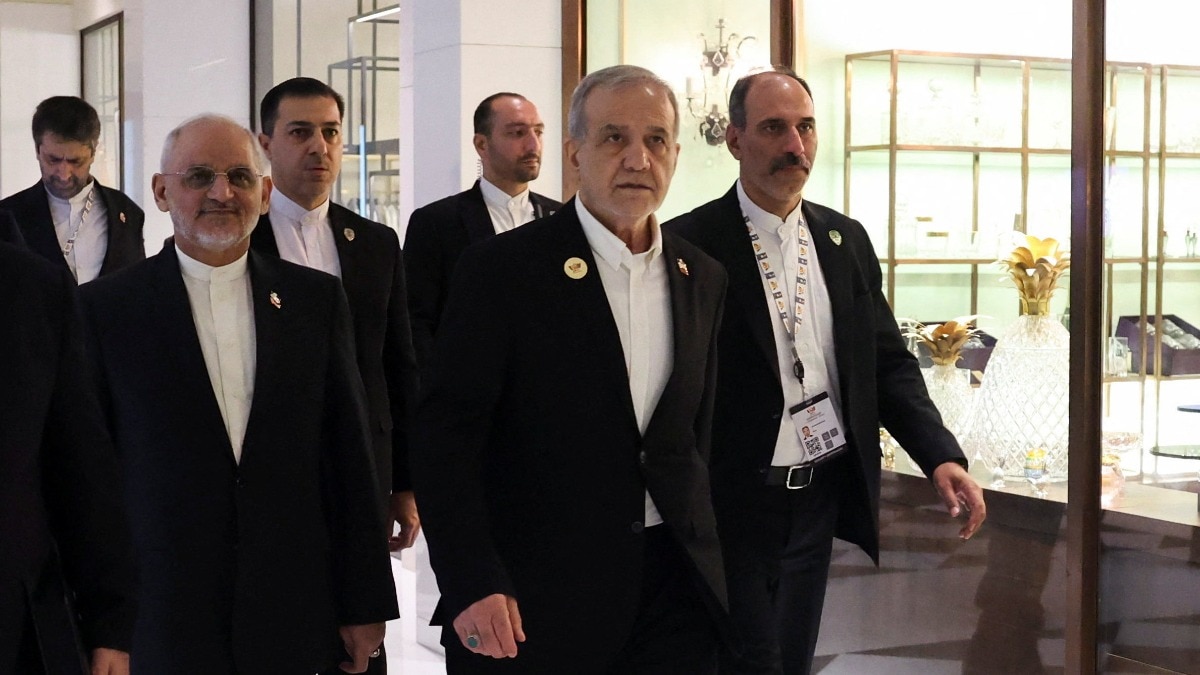
Iranian President Masoud Pezeshkian has issued a stern warning to the United States, asserting that Iran cannot be bullied into submission following strikes on civilian targets.
- President Pezeshkian condemned US military actions targeting civilian infrastructure.
- Iran reaffirmed its stance that external intimidation will not lead to surrender.
- The statement highlights escalating tensions in the Middle East region.
In a forceful diplomatic stance, Iranian President Masoud Pezeshkian has lashed out at recent US military strikes, accusing them of targeting civilian populations. Pezeshkian emphasized that Iran will not be intimidated into surrendering through military coercion or bullying tactics. His remarks come at a time of heightened geopolitical volatility in the Middle East, where the risk of direct confrontation remains high.
The Iranian leadership has characterized these strikes as direct violations of international norms, asserting that the focus has shifted from strategic military objectives to the harm of innocent civilians. Pezeshkian maintained that Iran remains committed to defending its sovereignty and territorial integrity, regardless of the external pressures applied by Western powers.
Why This Matters
BozokMedia analysis shows that Pezeshkian's rhetoric is designed to consolidate domestic support while sending a clear deterrent signal to Washington. This defiance suggests that the window for purely diplomatic solutions may be narrowing, as Iran prepares for a more assertive defensive posture. The implications for global energy security and regional stability are profound if these hostilities escalate.
The Iranian presidency is signaling that military coercion will only result in deeper resistance rather than political concessions.
The relationship between Iran and the United States has been defined by decades of mutual distrust and strategic rivalry. Since the 1979 revolution, the two nations have engaged in a complex dance of sanctions, proxy conflicts, and diplomatic standoffs. Pezeshkian’s administration is navigating this legacy by blending traditional resistance with a modern emphasis on the humanitarian impact of US-led military operations.
Historical Background
The geopolitical rift between Tehran and Washington has been a cornerstone of Middle Eastern instability for over forty years. Following the collapse of the nuclear deal (JCPOA) and the subsequent imposition of heavy sanctions, the frequency of military incidents has increased, often leaving civilian infrastructure caught in the crossfire of regional power struggles.
Frequently Asked Questions
Question 1: What was the core message of Pezeshkian's statement?
Answer: He stated that Iran will not be bullied into surrender and condemned attacks on civilians.
Question 2: How do these strikes affect regional stability?
Answer: They increase the risk of a wider conflict involving multiple regional actors and impact global markets.