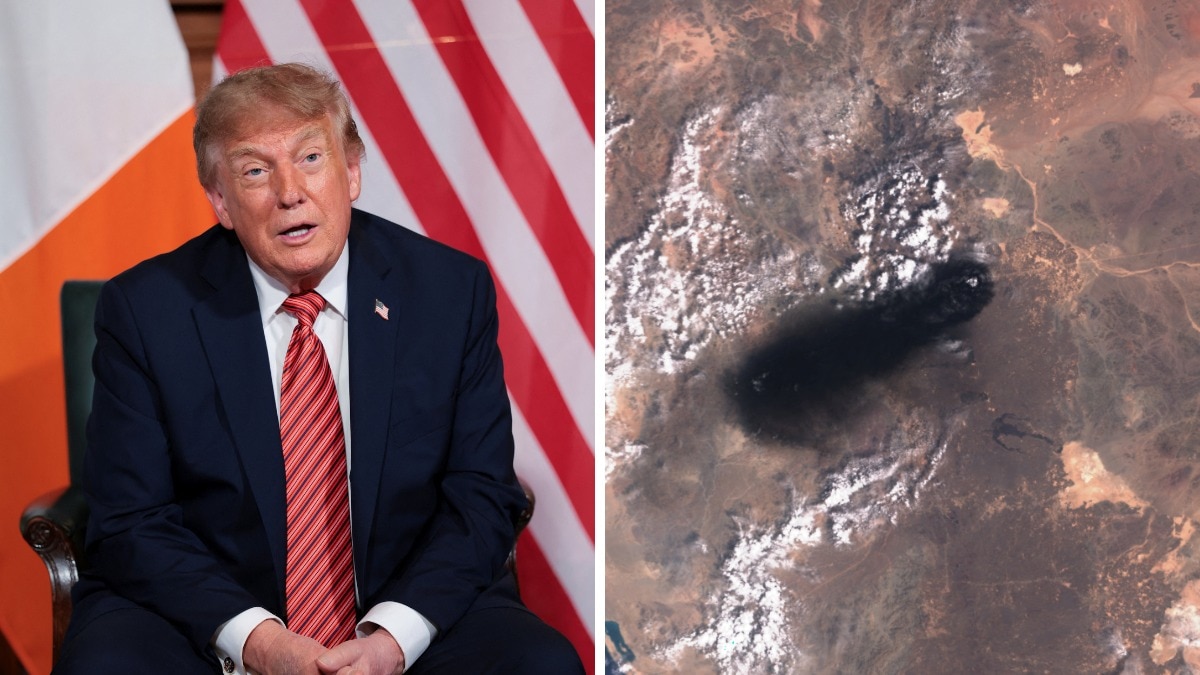
US President Donald Trump has pointed toward Iran as the likely architect behind the drone strikes on Saudi Arabia's critical East-West oil pipeline. The attack, originating from Iraqi territory, has sparked regional tensions and sent global oil prices soaring.
- President Trump identifies Iran as the probable mastermind behind the aerial attack on Saudi infrastructure.
- The East-West pipeline, vital for bypassing the Strait of Hormuz, was temporarily shut down.
- Drones were launched from Iraq's Maysan province, leading to the dismissal of a local Iraqi commander.
- Global oil prices have surged past $100 per barrel following the disruption.
In a high-stakes diplomatic development, US President Donald Trump has stated that Iran is "probably" responsible for the aerial assault on Saudi Arabia's strategic East-West oil pipeline. Speaking to reporters in Dublin, the President indicated that while the evidence points toward Tehran, he remains in close coordination with Saudi Crown Prince Mohammed bin Salman to manage the crisis.
The attack targeted the critical conduit that links Abqaiq on the Gulf coast to Yanbu on the Red Sea. This pipeline is of paramount importance to Riyadh as it allows the kingdom to export crude oil while completely bypassing the Strait of Hormuz, a volatile chokepoint often threatened by Iranian naval activity. The Saudi Foreign Ministry confirmed that drones originating from Iraq struck the Riyadh and Medina regions, causing injuries and significant infrastructure damage.
Why This Matters
BozokMedia analysis shows that this attack is not merely a regional skirmish but a calculated move to weaponize global energy markets. By targeting a pipeline that bypasses the Strait of Hormuz, the attackers are attempting to close every viable exit for Saudi crude. With oil prices already crossing the $100 mark and US diesel prices hitting record highs of $6 per gallon, this escalation places immense economic pressure on the Trump administration ahead of critical midterm elections.
The targeting of the East-West pipeline represents a strategic shift toward attacking the 'back-door' of Saudi oil exports, signaling a dangerous escalation in asymmetric warfare.
The Iraqi government has admitted that the drones were launched from its territory, specifically the southern province of Maysan. In a swift response to the diplomatic fallout, Baghdad dismissed the commander responsible for the province. However, Saudi Arabia has opted not to retaliate immediately, following a request from Iraqi Prime Minister Ali al-Zaidi, choosing instead to support Baghdad's internal security efforts.
Further complicating the geopolitical landscape are the Houthi rebels in Yemen. President Trump noted that the Iran-aligned group has contacted his administration, expressing a desire to avoid direct military confrontation with Washington. Despite this, the Houthis continue to maintain a maritime blockade against Saudi tankers in the Red Sea and the Bab al-Mandab Strait.
| Feature | Strait of Hormuz Route | East-West Pipeline Route |
|---|---|---|
| Risk Level | High (Iranian Naval Control) | Moderate (Drone/Insurgent Risk) |
| Destination | Global Markets via Gulf | Red Sea / Yanbu Port |
| Strategic Value | Primary Export Route | Critical Alternative/Bypass |
Frequently Asked Questions
1. Why is the East-West pipeline so important?
It allows Saudi Arabia to move oil from the east coast to the west coast (Red Sea), avoiding the Strait of Hormuz, which is a frequent flashpoint for conflict with Iran.
2. How did the US respond to the attack?
President Trump has publicly blamed Iran and is coordinating with Saudi leadership, while maintaining a diplomatic channel with Houthi rebels to prevent a wider war.