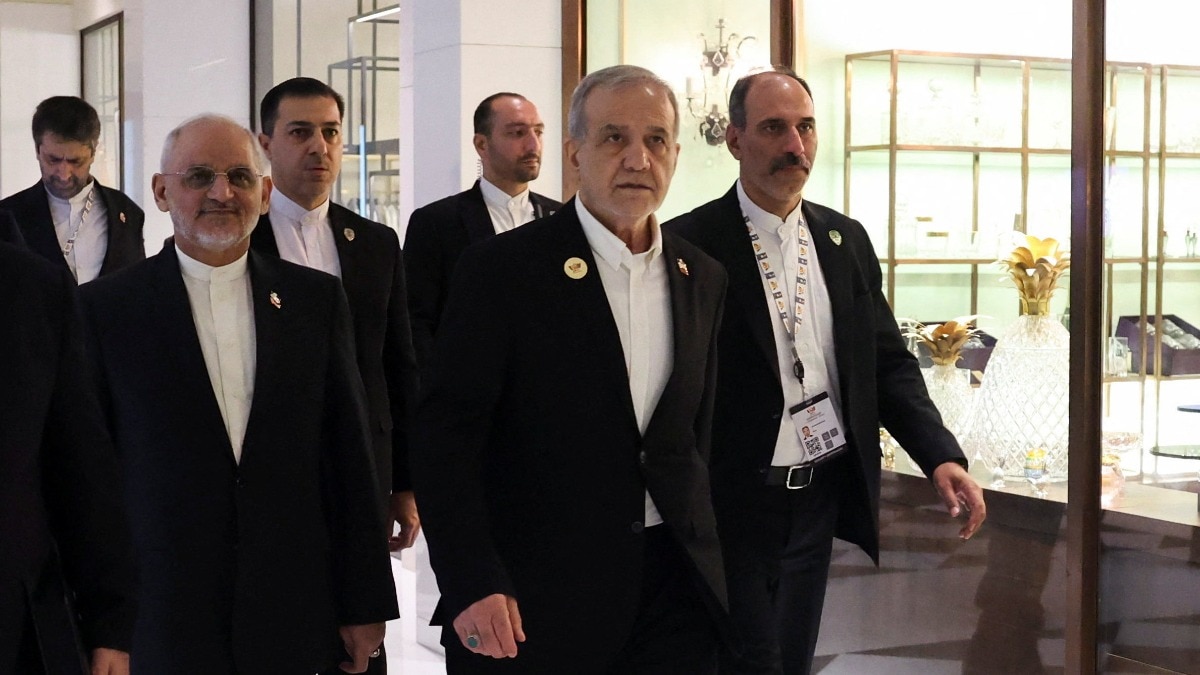
Iranian President Masoud Pezeshkian has accused the United States of actively working to create divisions among brotherly Muslim nations. He emphasized that West Asia no longer requires an American 'policeman'.
- President Pezeshkian accused the US of plotting to fracture Muslim unity.
- Iran declared that West Asia has no need for an American 'policeman'.
- Tehran vowed to resist aggressors until they regret their actions.
In a scathing critique of Western foreign policy, Iranian President Masoud Pezeshkian has stated that the United States is attempting to turn brotherly Muslim nations against one another. According to the Iranian leader, these divisive tactics are designed to weaken regional solidarity and maintain American hegemony in the Middle East.
Addressing the current geopolitical climate, Pezeshkian argued that West Asia has outgrown the need for a U.S. 'policeman'. He suggested that regional stability can only be achieved through internal diplomacy among local powers rather than through external intervention. Furthermore, he labeled the actions of the US and Israel as those of 'real terrorists'.
Why This Matters
BozokMedia analysis shows that Pezeshkian's rhetoric signals a significant hardening of Iran's diplomatic stance. By framing the US as a disruptive force rather than a stabilizer, Tehran is attempting to rally support among other Islamic nations. This shift could lead to increased regional polarization and a more complex landscape for international diplomacy.
The Iranian presidency's stance highlights a growing movement toward regional autonomy and a rejection of Western-led security architectures.
Taking to the social media platform 'X', the President also issued a stern warning, stating that Tehran will continue its resistance until 'aggressors are regretful'. This statement is widely interpreted as a direct response to ongoing tensions and military activities involving US and Israeli interests in the region.
Historical Background
The relationship between the United States and the Islamic Republic of Iran has been characterized by profound hostility since the 1979 Revolution. For decades, the US has implemented various sanctions aimed at curbing Iran's influence, while Iran has consistently viewed US military presence in the Middle East as a direct threat to its national sovereignty and regional security.
Frequently Asked Questions
Question 1: What is Iran's primary accusation against the US?
Answer: Iran accuses the US of attempting to create friction and division among Muslim-majority countries.
Question 2: How does Iran view US involvement in the Middle East?
Answer: Iran views US involvement as unnecessary and harmful, advocating for regional solutions instead.