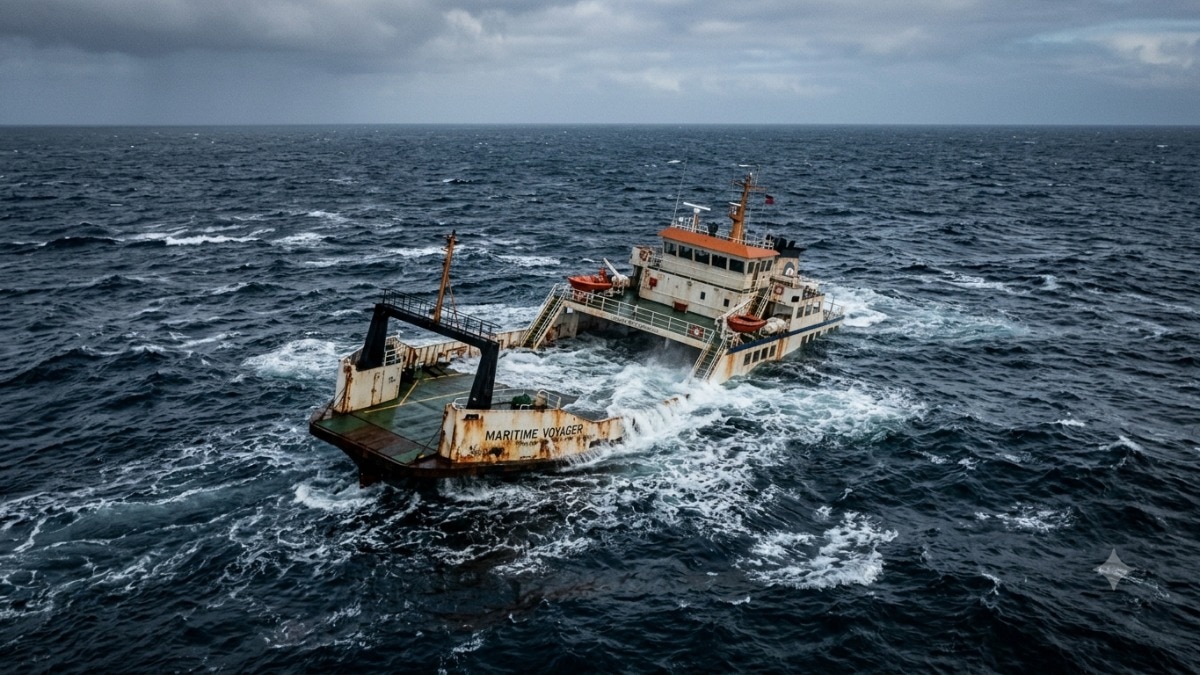
Houthi fighters have seized Yemen's entire Red Sea coast and Mayun Island, threatening the critical Bab al-Mandeb strait. In response, Saudi Arabia has shut down a major oil pipeline as crude prices soar past $100.
- Houthi fighters have successfully seized all remaining government-held towns on Yemen's Red Sea coast.
- The strategic Mayun Island in the Bab al-Mandeb strait is now under Houthi control.
- Saudi Arabia has suspended operations on its critical East-West oil pipeline following drone strikes.
- Global crude oil prices have surged above $100 per barrel due to heightened regional tensions.
The conflict in Yemen has escalated to a critical new phase as Houthi fighters have successfully seized control of the entire Red Sea coastline. Following a rapid offensive that began on Thursday, September 10, Houthi forces pushed through the coastal town of Mokha and secured the last remaining government-held territories by Friday morning. This marks a significant shift in the territorial landscape of the Yemeni civil war.
Most alarmingly, Houthi forces have landed on Mayun Island (also known as Perim), situated directly in the middle of the Bab al-Mandeb strait. This narrow waterway serves as the vital gateway between the Red Sea and the Gulf of Aden. By controlling this island, the Houthi group now possesses the capability to directly threaten international shipping lanes that are essential for global trade and energy security.
Why This Matters
BozokMedia analysis shows that this development represents a 'worst-case scenario' for Western maritime security. The ability of Iran-aligned forces to hold influence over both the Bab al-Mandeb and the Strait of Hormuz simultaneously creates a massive vulnerability in the global oil supply chain. This is no longer just a localized civil war; it is a high-stakes geopolitical confrontation with direct consequences for the global economy.
The seizure of Mayun Island places the world's most critical maritime chokepoint under direct militant influence.
In a direct response to the escalating violence, Saudi Arabia has taken significant defensive measures. Following drone strikes attributed to regional militias, Riyadh announced the precautionary shutdown of its vital East-West pipeline. This infrastructure is a cornerstone of Saudi energy strategy, allowing crude to bypass the Strait of Hormuz. Additionally, Saudi jets conducted airstrikes on the Mokha airport to counter Houthi advances.
The economic ripples of this conflict were felt immediately in the energy markets. Crude oil prices climbed past the $100 per barrel threshold, driven by fears of prolonged disruptions in Middle Eastern oil flows. The International Energy Agency (IEA) has warned that normal maritime flows in the region may not return until at least 2027, adding long-term uncertainty to global markets.
| Feature | Impact of Houthi Advance |
|---|---|
| Strategic Location | Control of Bab al-Mandeb Strait |
| Energy Market | Oil prices exceeding $100/barrel |
| Saudi Infrastructure | East-West pipeline shutdown |
Frequently Asked Questions
1. What is the significance of Mayun Island?
Mayun Island sits in the middle of the Bab al-Mandeb strait, making it a strategic point for controlling or disrupting shipping traffic in the Red Sea.
2. How has the conflict affected oil prices?
The threat to major oil routes has caused crude oil prices to rise above $100 per barrel due to increased supply risks.