For the first time in 30 years, NASA is bypassing traditional rovers in favor of the SkyFall drone fleet and the SR-1 Freedom nuclear propulsion mission.
- NASA has no firm plans for new Mars landers or rovers for the first time in three decades.
- The 'SkyFall' mission aims to deploy a fleet of three helicopters by late 2028.
- The SR-1 'Freedom' mission will test Nuclear Electric Propulsion with an estimated cost of $2.1 billion.
In a historic strategic pivot, NASA has revealed that for the first time in over 30 years, it has no concrete plans to deploy new landers or rovers on the Martian surface. Instead, the agency is betting its near-term future on aerial drones—a mode of exploration that was considered a distant dream until very recently.
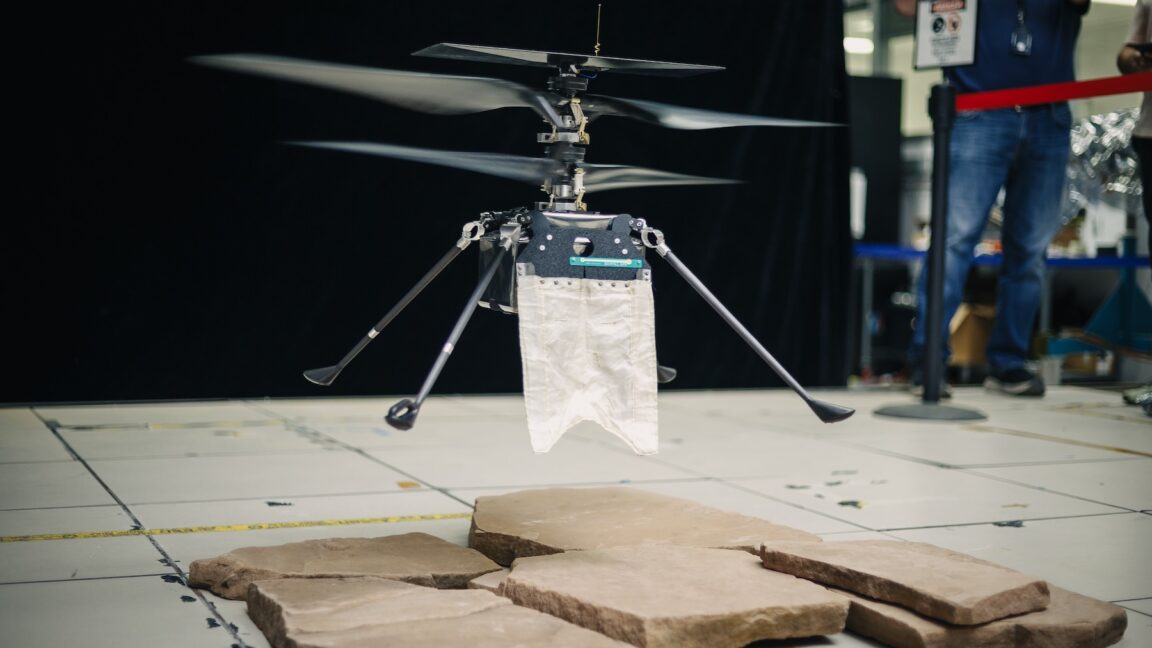
The vanguard of this new era is the SkyFall mission. Scheduled for launch as early as late 2028, SkyFall will deploy a fleet of three sophisticated helicopters. These drones are designed to transcend the limitations of wheeled vehicles, providing high-resolution aerial mapping and accessing terrains that were previously unreachable by traditional rovers.
The SkyFall fleet will hitch a ride with the Space Reactor-1 (SR-1) "Freedom" mission. The primary objective of SR-1 Freedom is to demonstrate the viability of nuclear electric propulsion in deep space. With an estimated price tag of $2.1 billion, the mission represents a massive investment in the infrastructure of deep-space travel.
Why This Matters
BozokMedia analysis shows that NASA is moving away from the 'incremental discovery' model of rovers toward a 'rapid reconnaissance' model. By integrating nuclear propulsion, NASA aims to drastically reduce transit times and increase power availability for scientific instruments. This shift is critical for the eventual goal of human colonization, as it tests the very power sources that would sustain a human colony.
"The transition from surface crawling to aerial surveying marks the maturity of Martian exploration; we are moving from merely surviving on the surface to dominating the airspace."
To optimize costs, NASA is repurposing the core module of the canceled Gateway lunar space station to serve as the testbed for the SR-1 Freedom mission. This resourceful approach allows the agency to accelerate a project that wasn't even in the official portfolio six months ago. The foundation for this ambition was laid by the Ingenuity helicopter, which proved in 2021 that powered flight on another planet is not only possible but highly effective.
| Feature | Traditional Rover Missions | New Drone/Nuclear Missions |
|---|---|---|
| Mobility | Slow, Surface-bound | Fast, Aerial Capability |
| Power Source | Solar/RTG | Nuclear Electric Propulsion |
| Exploration Range | Limited Path-based | Wide-area Reconnaissance |
Frequently Asked Questions
1. What is the SkyFall mission?
It is a mission to send three helicopters to Mars by 2028 to conduct aerial scientific research.
2. How much does the SR-1 Freedom mission cost?
The estimated cost is $2.1 billion, excluding the additional costs of the SkyFall helicopters.