Nepal's Rasuwa district has become a disaster hotspot due to a lethal combination of rapid glacial melting and unplanned riverside construction. The region faces an existential threat from escalating climate-induced floods.
- Rasuwa district witnessed five major floods between 2022 and 2026, with 20 deaths recorded in 2025 alone.
- Glacial Lake Outburst Floods (GLOF) and accelerated ice melt are the primary drivers.
- Narrow valley topography and encroachment on floodplains have intensified the damage.
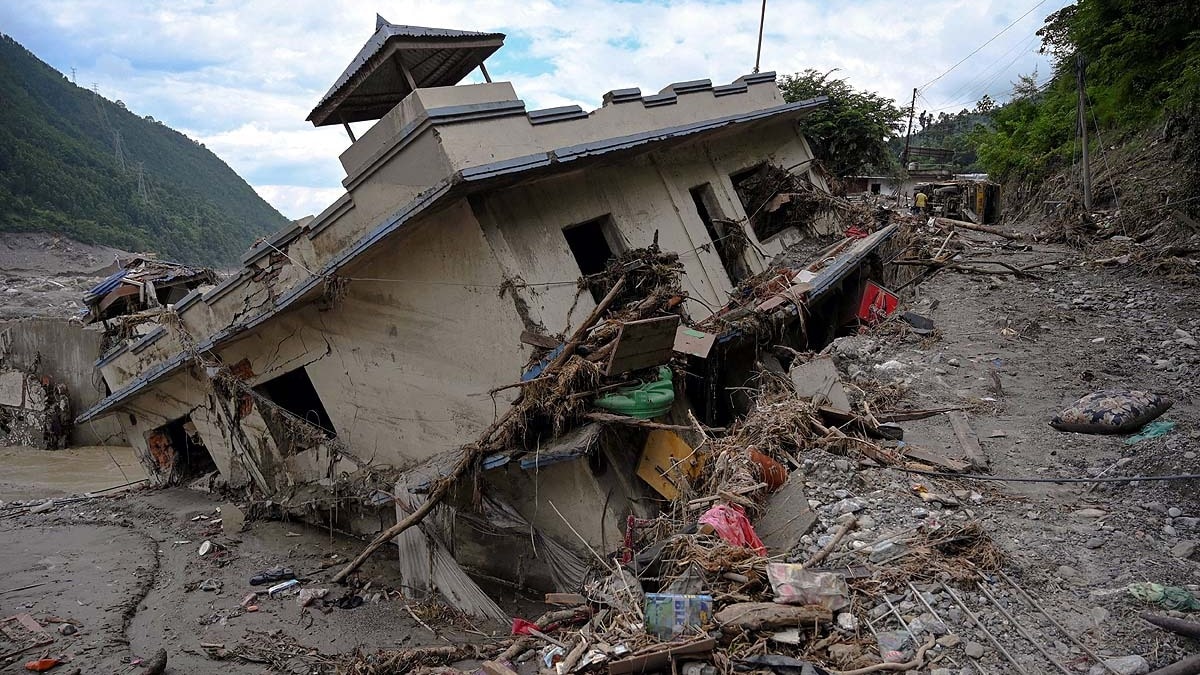
The Rasuwa district of Nepal is currently trapped in a cycle of recurring environmental catastrophes. Having endured five massive floods in just five years, the region has become a textbook example of climate vulnerability. The most recent flash flood on August 26, 2026, has once again devastated the local infrastructure, leaving residents in a state of constant anxiety.
Geographically, Rasuwa is situated in the high altitudes near the Nepal-China border. The region is characterized by steep mountains and a severe lack of flat land. When massive volumes of water descend from glaciers or heavy rainfall, the water is funneled through narrow gorges. This prevents the water from spreading or slowing down, resulting in high-velocity torrents that obliterate villages, bridges, and roads in their path.
Why This Matters
BozokMedia analysis shows that the crisis in Rasuwa is not a localized weather event but a systemic failure of climate resilience. The intersection of rapid glacial melting and unplanned urban expansion along riverbeds creates a lethal combination. When high-velocity water hits concrete structures in narrow valleys, the destructive power is magnified exponentially.
"The doubling of the glacial melt rate in the Himalayas is not just an environmental statistic; it is a direct existential threat to millions living downstream."
The most dangerous phenomenon currently affecting the region is the Glacial Lake Outburst Flood (GLOF). A stark example occurred in 2025, when a lake near the Pyurpu Glacier in Tibet breached its banks, sending a wall of water 35 kilometers downstream into Nepal. According to a 2026 report by ICIMOD, the rate of glacial melting has doubled since 2000, with 89% of glaciers losing ice over the last 50 years.
Adding to the natural peril is the surge in human encroachment. In areas like Timure, Rasuwagadhi, and Syaphrubesi, hydroelectric projects, roads, and residential buildings have been constructed dangerously close to the riverbanks. These structures not only face total destruction during floods but also act as obstructions that increase the turbulence and power of the floodwaters.
| Year | Event Type | Impact/Outcome |
|---|---|---|
| 2023 | Bhote Koshi Water Rise | Minimal casualties due to timely evacuation |
| 2024 | Kerung River Flash Flood | Significant infrastructure damage |
| 2025 | GLOF (Pyurpu Glacier Lake) | 20+ Deaths, catastrophic destruction |
Frequently Asked Questions
Q1: Why does Rasuwa experience floods so frequently?
A: The primary reasons are accelerated glacial melting, narrow valley topography, and unplanned construction along riverbeds.
Q2: What is GLOF and why is it so dangerous?
A: GLOF stands for Glacial Lake Outburst Flood. It is extremely dangerous because it happens suddenly, with immense force, often providing very little warning time for evacuation.