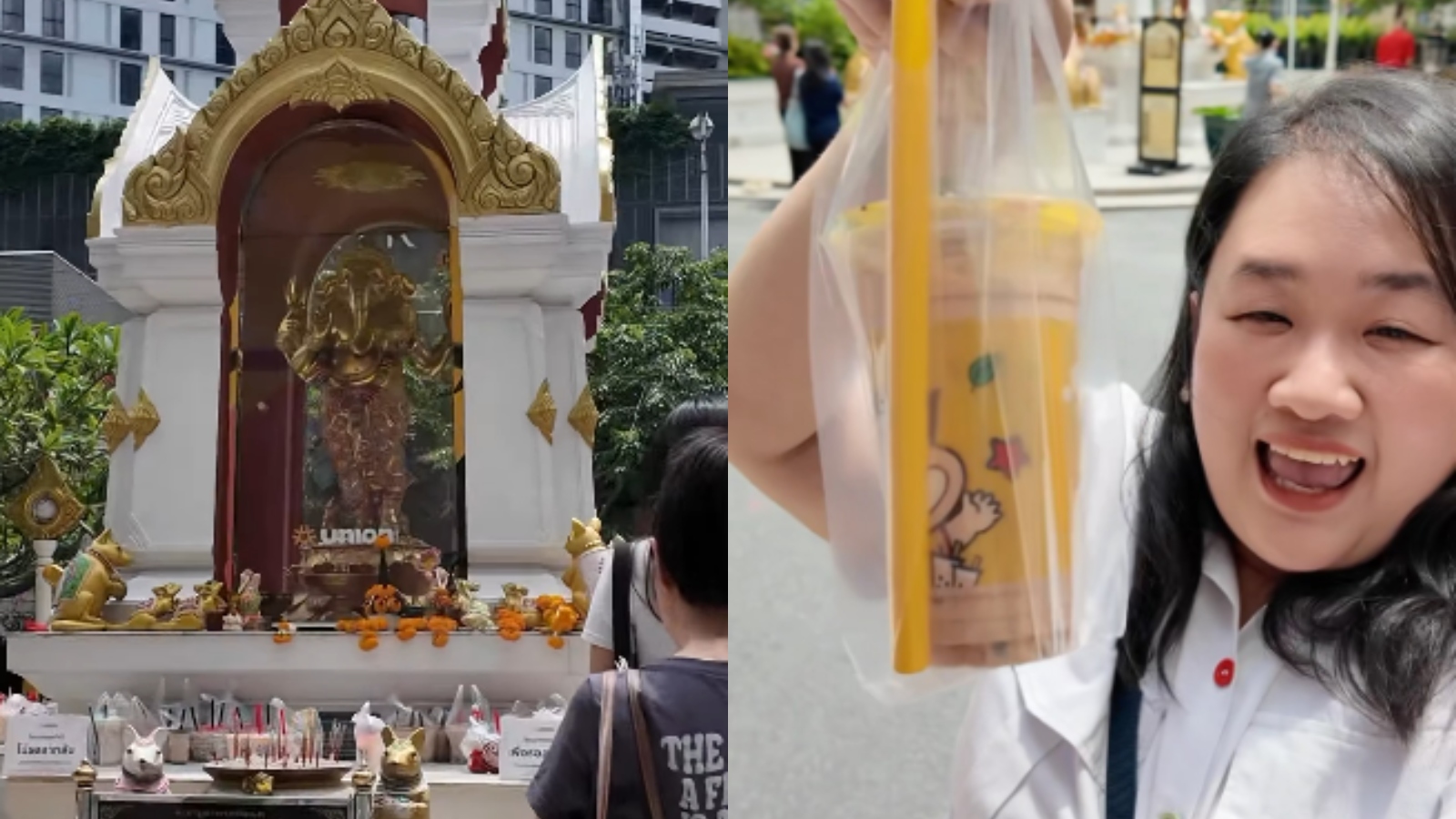
In a fascinating blend of tradition and modern trends, devotees in Bangkok are swapping traditional laddoos for bubble tea at Lord Ganesha shrines. Discover the cultural reason behind this viral phenomenon.
Bangkok, Thailand: The global spread of Hinduism has led to unique cultural adaptations across Asia. A recent viral video from Bangkok has captured the world's attention, showcasing a modern twist on ancient worship. At a shrine located near the popular Union Mall, devotees are seen offering dozens of cups of bubble tea (Boba) to the deity Lord Ganesha.
In Thailand, the deity is known as Phra Phikanet or Phra Phikanesuan. He is deeply associated with good fortune, success, and the removal of obstacles. While Indian devotees are accustomed to seeing laddoos and modaks at Ganesh shrines, the sight of colorful tapioca-pearl-filled drinks has created a massive buzz on social media.
Why This Matters
BozokMedia analysis shows that this phenomenon is a perfect example of 'cultural localization.' Religious practices are not static; they evolve to incorporate local preferences and modern lifestyles. For many Thai devotees, bubble tea is a beloved local staple, making it a meaningful offering that reflects their contemporary reality while maintaining spiritual devotion.
Religious traditions often blend with local culture to create new, meaningful expressions of faith.
Content creator Piya Ping, who shared the viral footage, explained the logic behind the increasing number of cups. Devotees follow a pattern where they increase their offerings as their prayers are answered—moving from 3 cups to 6, or 6 to 12, as a gesture of gratitude.
Historical Background
The worship of Ganesha in Southeast Asia is a result of centuries of trade and cultural exchange. As Indian influence spread through maritime routes, Hindu deities became integrated into the local spiritual fabric of Thailand. This has led to a unique overlap where Ganesha is respected not just by Hindus, but also by many Thai Buddhists.
Frequently Asked Questions
Question 1: What is Ganesha called in Thailand?
Answer: He is commonly referred to as Phra Phikanet or Phra Phikanesuan.
Question 2: Why do they offer bubble tea specifically?
Answer: It is a popular local drink, and devotees offer it as a sign of gratitude, often increasing the quantity as their wishes are fulfilled.